The Shift from Dipping to Digital
For decades, the manufacturing of rubber gloves has remained largely stagnant, relying on the 'dipping' method. This industrial-scale process involves massive production lines where ceramic molds, known as formers, are submerged repeatedly into various chemical baths. The process is inherently rigid, energy-intensive, and requires significant drying time between layers, leaving little room for design alterations once a line is operational.
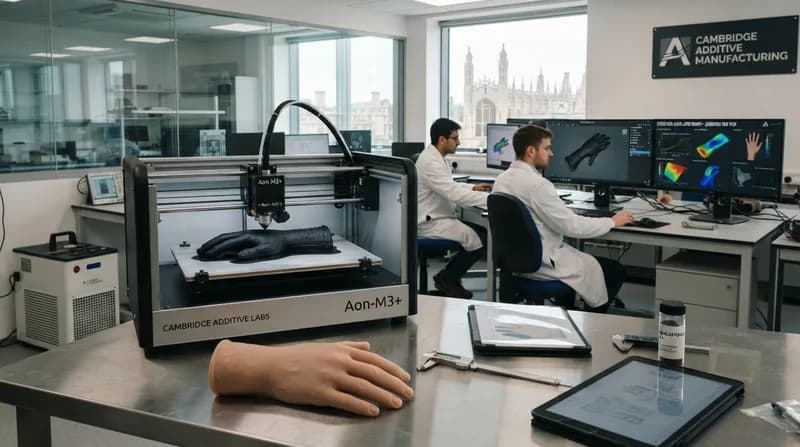
A team at Cranfield University is looking to disrupt this status quo with their new 3D-PEP (3D printer for elastomeric products) technology. Instead of dipping, the system utilizes a specialized spray deposition technique that applies rubber directly onto a mold. Crucially, the machine simultaneously heats the material from both the inside and outside, vulcanizing the rubber in real-time. This digital approach allows manufacturers to adjust parameters on the fly, such as varying the thickness of the material in high-stress areas like the fingertips or palms, providing a level of precision that traditional dipping simply cannot match.
Sustainability and Personalization
One of the most compelling aspects of the 3D-PEP method is its focus on material efficiency and environmental stewardship. By moving away from massive, resource-heavy production lines, companies can scale operations to meet demand in smaller batches, significantly reducing waste. The researchers have specifically integrated natural rubber into the process, a material that is not only biodegradable—degrading in approximately a year compared to decades or centuries for synthetics—but also benefits from the carbon-sequestering properties of rubber trees.
Furthermore, the technology opens the door to high-end customization. Because the printing process is controlled by digital instructions rather than physical molds, manufacturers could theoretically scan an individual's hand to produce a perfectly fitted glove. This is a game-changer for high-stakes fields like surgery, where long hours of use require ergonomic comfort to reduce hand fatigue. Concerns regarding natural rubber allergies are also being addressed through modern protein-isolation techniques that 'switch off' the reactive proteins, making the material safe for a wider range of users.
Supply Chain Resilience
Beyond material science, the Cranfield project highlights a critical shift in industrial geography. Current glove production is highly concentrated in Southeast Asia, creating a single point of failure in global supply chains—a vulnerability that was laid bare during the COVID-19 pandemic. The compact nature of 3D-printing arrays allows for 'micro-factories' that can be situated in urban centers or closer to end-users in Europe and North America.
By reducing the reliance on massive, centralized infrastructure, manufacturers can start production much faster, as they no longer need to wait for the construction of extensive, permanent assembly lines. While Southeast Asia currently holds a monopoly on natural rubber sourcing, researchers are already looking toward alternative domestic sources, such as guayule and Russian dandelion, which could eventually allow for fully localized, circular production models that are immune to international shipping disruptions.
Why It Matters
- Supply Chain Stability: Decouples manufacturing from regional hubs, allowing production to occur closer to the point of use.
- Waste Reduction: Digital control ensures precise material usage and eliminates the need for the excessive chemical baths found in traditional dipping.
- Enhanced Ergonomics: Enables bespoke, custom-fit gloves for medical professionals, potentially increasing comfort and reducing hand strain.
- Environmental Impact: Utilizes biodegradable natural rubber, offering a path to sustainable, potentially carbon-negative manufacturing.