A Neighborhood Anomaly
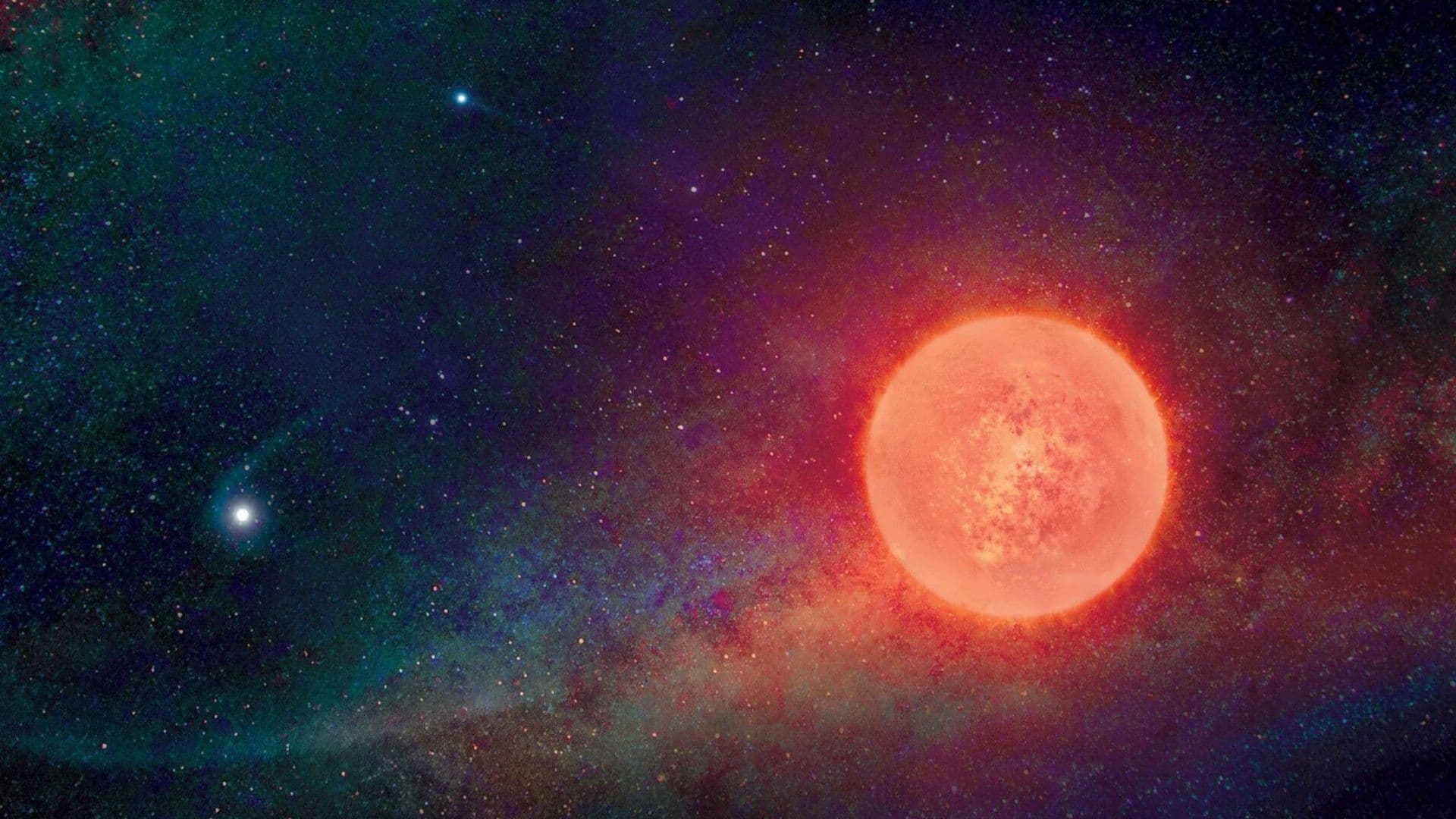
In a discovery that has left the astronomical community baffled, researchers have identified a rare triple-star system sitting just 28 light-years from Earth. Dubbed 'Welopō'ai'—a Hawaiian term reflecting a path of family traits—the system consists of a dim red dwarf star accompanied by two white dwarfs. The discovery was completely accidental; researchers were utilizing the SPIRou instrument on the Canada–France–Hawaii Telescope to scan for exoplanets when they picked up unexpected, high-velocity gravitational tugs that suggested something much more massive than a planet was in orbit.
Typically, astronomers can easily categorize stellar systems, but Welopō'ai defies conventional models of stellar evolution. The system is so unique that there are no comparable configurations within at least 100 light-years of our solar system. Lead researcher Étienne Artigau of the Université de Montréal noted that the team was searching for life-bearing worlds and instead stumbled upon a cosmic puzzle that experts believe should not exist in its current form.
The Anatomy of Welopō'ai
The architecture of the system is the primary source of the mystery. It is comprised of an inner pair—a red dwarf and a white dwarf—and a second, more distant white dwarf orbiting the pair from afar. White dwarfs are the dense, cooling remnants left behind when sun-like stars exhaust their nuclear fuel, shed their outer layers, and collapse under their own gravity. The fact that two of these remnants are present in such a stable, close-knit relationship with a red dwarf has forced scientists to rethink the history of the system.
The team utilized the Gemini North telescope to confirm the identity of the secondary objects. By measuring the gravitational interactions and the specific mass of these stellar corpses, researchers found that the inner white dwarf is about 62% the mass of our sun, while the red dwarf maintains 42% of the solar mass. Because these white dwarfs are positioned at relatively close, measurable distances—roughly 4.6 astronomical units—they provide a rare laboratory for testing theories regarding electron degeneracy pressure and the extreme physics of stellar remnants.
Why it Matters
- Rewriting Stellar History: Standard models suggest that when stars evolve into red giants, the massive expansion of their outer shells should have destabilized the red dwarf's orbit or caused a collision. The survival of the red dwarf is currently unexplained.
- Proximity Advantage: Being only 28 light-years away allows for unprecedented high-precision measurements, offering scientists a perfect testbed for refined stellar evolution models.
- Physics at the Limit: By accurately defining the mass of these white dwarfs, researchers can better understand how matter behaves when it is compressed to densities that test the very limits of quantum mechanics.
An Unsettled Conclusion
The central question driving future observation is survival. How did the red dwarf remain in a stable, predictable orbit while two of its neighbors underwent the violent transition into red giants and finally collapsed into white dwarfs? The sheer lack of disruption to the red dwarf suggests a history that current astrophysics models have yet to account for. As researchers continue to monitor the gravitational dynamics of this trio, they hope to unlock the secrets behind how these objects arrived at their current positions. For now, Welopō'ai stands as a stark reminder that even our own cosmic backyard still holds profound, unexpected mysteries waiting to be solved.