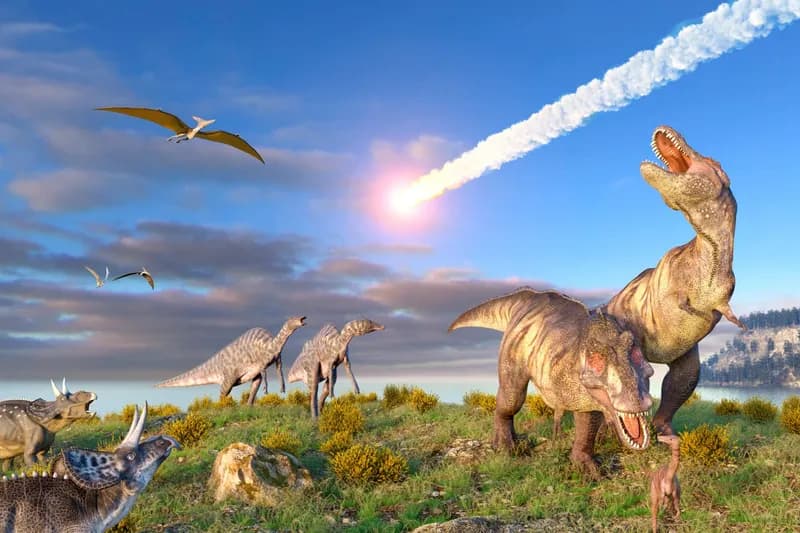
New scientific insights into the Chicxulub impact, which occurred 66 million years ago, suggest that the extinction of the dinosaurs was accelerated by a catastrophic global firestorm. The initial collision launched trillions of tonnes of vaporized rock into the upper atmosphere and beyond.
A Ballistic Heat Blast
As this debris fall back toward Earth at ballistic speeds, the friction generated enough thermal energy to create a worldwide heat pulse. Researchers describe this event as a global blast of heat strong enough to effectively broil life on land. This intense thermal radiation likely ignited widespread wildfires and caused temperatures to soar, leaving little chance for survival for species unable to find immediate shelter underground or underwater.
This mechanism explains the rapid transition from a thriving ecosystem to a mass extinction event, highlighting the violent atmospheric changes that followed the primary impact in the Yucatan Peninsula.