A Crisis at the Nuremberg Plant
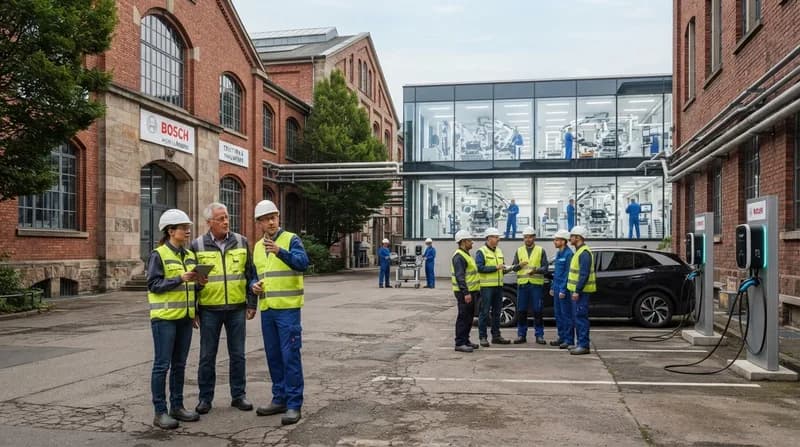
In a move that has sent shockwaves through the German manufacturing sector, Bosch has announced plans to cut 900 jobs at its Nuremberg facility—effectively halving the plant's 1,800-strong workforce by 2029. The announcement follows a broader trend of downsizing within the Bosch Group, which has already seen significant staff reductions across its global mobility division. The Nuremberg site, historically a cornerstone of the company’s internal combustion engine (ICE) supply chain, is now squarely in the crosshairs of the automotive industry’s shift toward battery-electric vehicles.
The announcement has drawn immediate and fierce condemnation from the IG Metall trade union and the local works council. Union leaders have described the strategy as a “massive layoff” that threatens the very existence of the facility. According to IG Metall, the plant could face a total closure post-2029 if these restructuring measures are pushed through without a viable plan for future-oriented product integration.
The Weight of Legacy Infrastructure
The core of the issue lies in the Nuremberg plant’s specialization: the production of high-pressure fuel pumps for petrol engines. As the automotive market pivots rapidly toward electrification, the demand for traditional combustion components has stagnated, leading to what the union describes as a “ruinous price war” between Bosch’s various international production sites. Because the Nuremberg plant is bound by higher social standards and local collective bargaining agreements, it struggles to compete on price against Bosch’s facilities in regions with lower overheads.
Union representatives, including First Authorised Representative Andreas Weidemann, have accused management of shortsightedness. Despite warnings and proactive calls from the workforce to pivot toward new, future-proof technologies, union leaders claim that management has failed to invest in necessary product innovation for the site. The current proposal, which allegedly includes demands for an additional 15% reduction in personnel costs, is being viewed as an attempt to force the remaining employees to subsidize the company’s transition at the expense of their own livelihoods.
Why It Matters
This situation serves as a bellwether for the wider "Mobility Transition" currently challenging legacy auto suppliers. The implications are stark:
- Structural Obsolescence: Facilities that lack product diversification are highly vulnerable as the ICE market enters its terminal decline phase.
- Labor Tensions: The friction between long-standing labor agreements and the rapid need for corporate restructuring is leading to heightened industrial action across Germany.
- Strategic Pivot: Bosch’s difficulty in balancing global cost-competitiveness with local social obligations highlights the immense pressure top-tier suppliers face while trying to remain profitable during the EV transition.
As the site’s current security agreement approaches its expiration on December 31, 2026, the coming months will likely see a tense standoff between labor representatives and corporate leadership, as the works council prepares to table alternative proposals to secure the plant’s future.