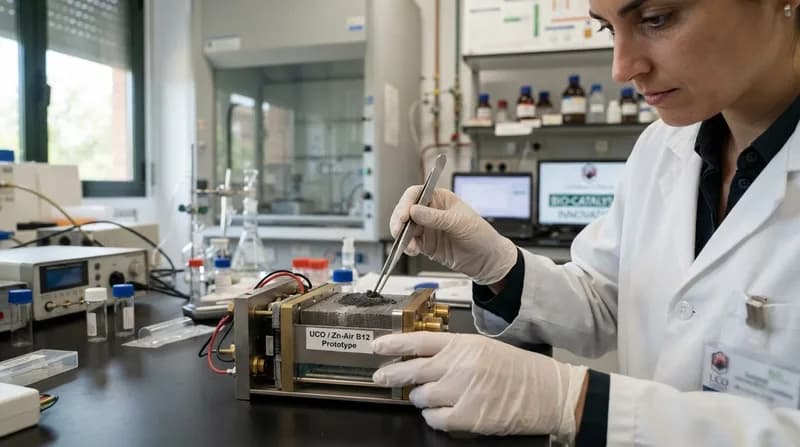
The Vitamin B12 Innovation
In a surprising convergence of biology and energy science, researchers from the University of Córdoba have developed a rechargeable battery prototype that leverages the essential nutrient Vitamin B12. Published in the Journal of Materials Chemistry A, this breakthrough utilizes cobalamin—the chemical name for B12—as a critical catalyst for electrochemical reactions. By integrating this biological molecule into a zinc-air battery architecture, the team has created a system that is not only potentially cheaper and safer than current industry standards but also significantly more environmentally friendly.
The technical challenge of using B12 lay in its high solubility; because the vitamin dissolves in water, it would typically leach out of a battery using a water-based electrolyte. To circumvent this, the Physical Chemistry research group (FQM-204) anchored the B12 molecules onto single-walled carbon nanotubes. This structural approach, which mimics the way amino acids bond to form complex proteins, effectively traps the catalyst within the battery, enabling it to survive up to 250 charge and discharge cycles.
The Mechanics of Zinc-Air Energy Storage
The battery functions by utilizing zinc and oxygen from the ambient air to generate electricity. At the core of this reaction is the cobalt (III) center found within the Vitamin B12 molecule. This metal center serves as the catalyst that drives the necessary redox reactions. During the discharge phase, the B12 catalyst facilitates the reduction of oxygen into water; conversely, during the recharge phase, it promotes the evolution of oxygen. This dual-function capability is essential for a rechargeable system and represents a significant step forward in zinc-air technology.
Zinc-air batteries offer several distinct advantages over the ubiquitous lithium-ion cells that power modern electronics. Because they utilize atmospheric oxygen, they require less active material to be stored internally, leading to lighter energy storage solutions. Furthermore, these batteries rely on abundant, recyclable zinc and non-flammable, water-based electrolytes, drastically reducing fire hazards and the complex environmental and ethical challenges often associated with extracting and processing lithium and cobalt ores.
Why It Matters
- Sustainability: By moving toward biological catalysts, researchers can reduce dependency on rare and ecologically taxing raw materials.
- Safety: Aqueous, water-based electrolytes provide a non-flammable alternative to the volatile liquid electrolytes found in traditional lithium-ion batteries.
- Cost-Efficiency: Zinc is a widely available and affordable metal, which could democratize access to high-performance energy storage.
- Grid-Scale Potential: If scaled, this technology could provide a viable, cost-effective way to store excess energy from intermittent renewable sources like solar and wind power.
Future Outlook
While the prototype has successfully demonstrated 250 cycles, the research team views this as a foundational step rather than the final product. The integration of biological molecules into battery hardware opens a new chapter in material science, suggesting that nature may hold the key to the next generation of energy storage. As global demand for reliable, sustainable energy surges, the ability to produce high-performance batteries from earth-abundant materials and biological catalysts could be a decisive factor in meeting climate targets and supporting the energy grid of the future.