The Divergent Paths of Electric Heavy Transport
As the European Union pushes toward its ambitious climate goals, the heavy-duty transportation sector is undergoing a quiet but significant transformation. Fresh data from the German Federal Statistical Office (Destatis), utilizing Eurostat records, has shed new light on the adoption rates of battery-electric vehicles (BEVs) weighing over 3.5 tonnes. The findings reveal a stark contrast between two primary vehicle categories: rigid, fixed-chassis trucks and the more powerful tractor units used for long-haul logistics.
For rigid trucks—where the cab and cargo bed form a single unit—electrification is gaining steady ground. In 2025, the market share for battery-electric models in this category climbed to 7.7 percent, nearly doubling from 4.1 percent in 2024. Out of 126,600 new truck registrations across the EU last year, roughly 9,800 were fully electric. This momentum suggests that for shorter, urban, and regional distribution routes, electric powertrains are becoming an increasingly viable alternative to traditional diesel engines.
The Tractor Unit Challenge
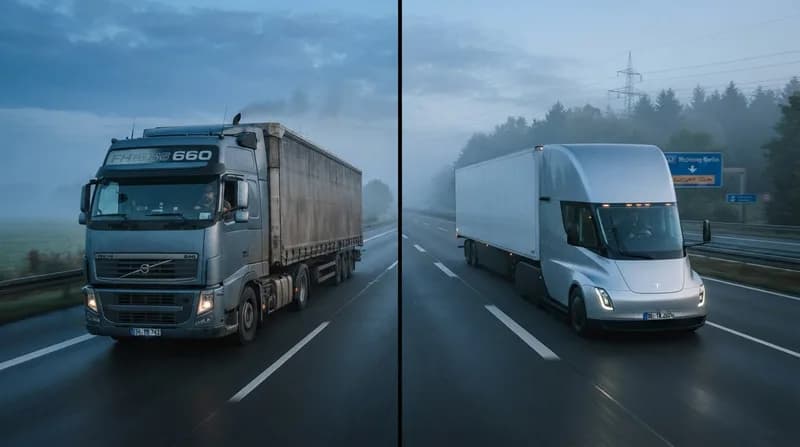
While rigid trucks are finding their footing in the electric era, the segment for tractor units—the powerhouse workhorses of international freight—remains firmly in the grip of diesel technology. According to the analysis, diesel still accounts for a staggering 94.7 percent of new registrations in the tractor unit class. Despite this dominance, the transition to electricity is technically underway, even if starting from a very low base.
In 2025, the share of battery-electric tractor units among all new registrations rose to 1.6 percent, up from 0.7 percent the previous year. Out of 157,500 total units registered across the EU, approximately 2,500 were electric. This slower adoption rate likely reflects the unique challenges of long-haul transport, where energy density, charging speed, and range remain critical technical hurdles that currently favor liquid fuels.
A Regional Snapshot of Adoption
National performance varies wildly across the European bloc, indicating that local subsidies, charging infrastructure development, and logistical needs are dictating the speed of the shift. In the rigid truck category, the Netherlands leads with an impressive 45.6 percent electric share, followed by Denmark at 27.1 percent. Germany, while trailing in percentage terms at 11.7 percent, stands out for having the highest volume, with approximately 4,200 new electric trucks hitting the road.
The landscape for tractor units paints a different picture. Greece unexpectedly leads the EU with an 11.2 percent share of electric tractor unit registrations, followed by Sweden and the Netherlands. Germany again dominates the absolute numbers, registering 926 electric tractor units, demonstrating the country’s massive footprint in European logistics despite the relatively low market share percentage for that specific category.
Why it Matters
- Diesel Persistence: Despite growth, diesel remains the bedrock of European freight with nearly 90-95% market share, underscoring the massive scale of the challenge for decarbonizing the transport sector.
- Sector Specifics: Rigid trucks are proving easier to electrify, likely due to duty cycles that allow for return-to-depot charging, whereas tractor units face higher barriers for long-haul duty.
- Policy and Infrastructure: The variance in country-by-country adoption suggests that national incentives and the deployment of high-power charging corridors are the primary catalysts for adoption.
Overall, when combining both categories, the EU saw 12,300 new battery-electric units over 3.5 tonnes. While industry associations like ACEA have reported slightly higher figures—likely due to differing classifications between plug-in hybrids and pure battery electrics—the overarching trend is undeniable. Growth is accelerating, with total sales in these categories jumping by approximately 71 percent year-over-year. As battery energy density improves and charging infrastructure becomes more robust, the coming years will be pivotal in determining whether this momentum can move beyond the current "isolated gains" and into widespread commercial standardization.