The Evolution of the Cockpit Interface
The automotive industry has spent the better part of the last decade racing toward a future dominated by glass. As screens grew larger and dashboards became increasingly flush with piano-black surfaces, the tactile satisfaction of physical knobs and switches began to vanish. However, recent backlash from consumers and design critics has sparked a reversal, with major automakers acknowledging that touch-sensitive controls can often be a distraction rather than a convenience. Audi, long considered a benchmark for interior quality and switchgear, appears to have found a sophisticated middle ground through a newly unearthed patent.
The concept, detailed in filings with the German Patent and Trade Mark Office, envisions a dynamic interface that does not force drivers to choose between high-tech aesthetics and ergonomic efficiency. Instead of opting for one or the other, Audi is proposing a motorized, retractable panel that can deploy physical buttons from behind the primary infotainment touchscreen, effectively merging the two worlds into a singular, adaptable experience.
How the Retractable Panel Functions
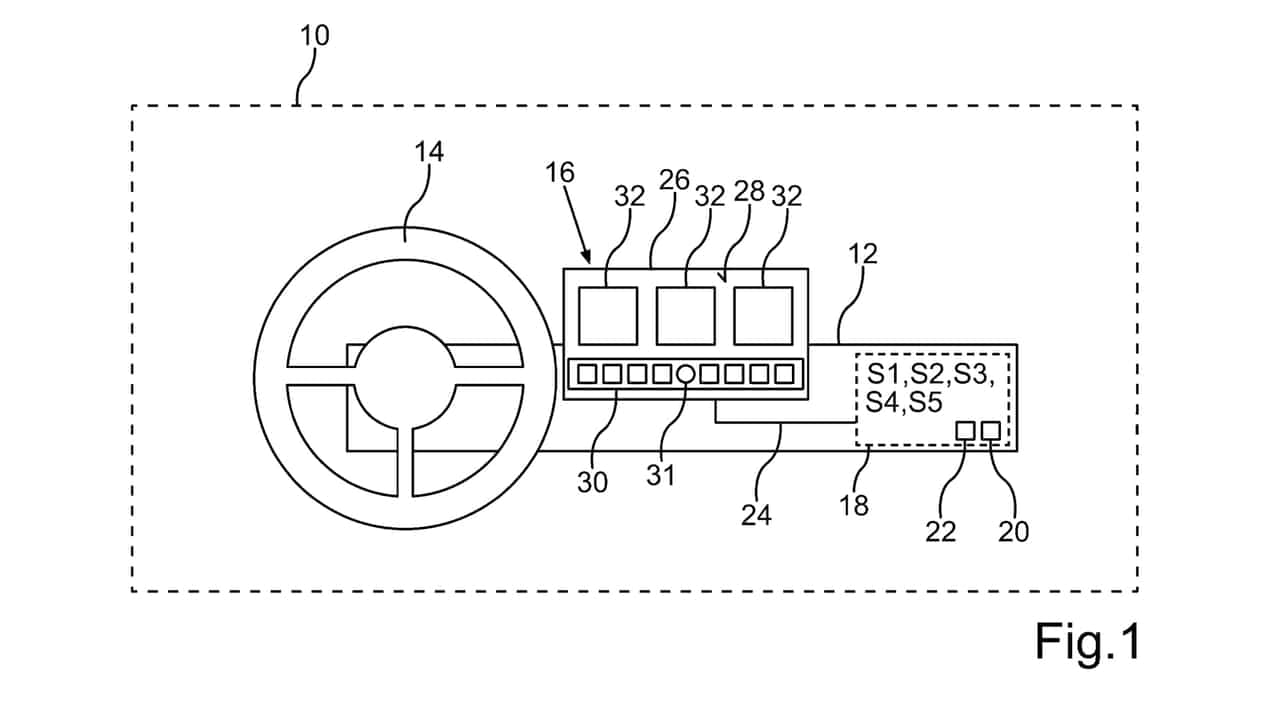
At the heart of this innovation is a hidden physical interface located beneath the touchscreen display. This strip features a series of dedicated buttons and at least one central rotary knob, likely intended for primary functions such as volume control, climate adjustment, and seat heating. When the driver prefers a cleaner, more minimalist look, the panel retracts behind the screen, leaving the dashboard completely smooth.
Crucially, the system is designed to be intelligent. When the physical buttons retract, the touchscreen interface automatically reconfigures to display a digital equivalent of those controls at the bottom of the panel. This ensures that no functionality is lost regardless of whether the physical hardware is visible or concealed. Users can trigger the movement of the panel through the screen itself or via voice commands, allowing for a cockpit that adapts to the driver's current needs or stylistic preferences on the fly.
Why it matters
- Ergonomics vs. Aesthetics: The design solves the 'distraction' problem of flat touch-panels by offering blind-operable physical controls that can be memorized by muscle memory.
- Dual-Mode Utility: It satisfies modern demands for minimalist cabin design without sacrificing the high-quality, tactile feedback that Audi is historically famous for.
- Contextual Versatility: By pairing hardware with a digital mirror, the system ensures that the car remains fully functional and intuitive even when the physical buttons are hidden.
A Return to Tactile Excellence
For long-time fans of the brand, this development is a promising nod to Audi's heritage. During the 1990s and 2000s, Audi was widely praised for producing some of the most satisfying switchgear in the automotive world, characterized by precise, weighted clicks and high-quality materials. Moving away from that legacy toward flush-mounted, fingerprint-prone touch surfaces felt like a regression to many enthusiasts. By integrating this retractable system, Audi may be able to reclaim that reputation for premium ergonomics while still keeping its interior designs on the cutting edge of digital integration. While the patent does not guarantee a production vehicle launch, it represents a significant shift in thinking that prioritizes the user experience above pure dashboard simplicity.