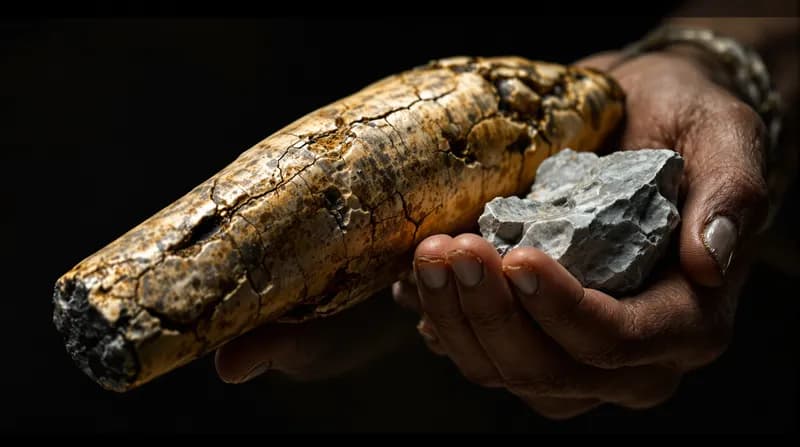
Archaeologists have uncovered a remarkable artifact in England that suggests early humans were far more sophisticated toolmakers than previously understood. The find, a hammer crafted from a 500,000-year-old elephant bone, indicates a level of resourcefulness and advanced planning that challenges existing timelines of human cognitive development.
A Specialized Tool for Precision
The bone hammer was not a crude implement but a specialized tool designed for the precision task of sharpening stone tools. By utilizing the dense material of an elephant bone, ancient craftsmen created a reusable device capable of maintaining the edges of their flint weaponry and scrapers. This discovery highlights that early inhabitants of the region possessed a deep understanding of material properties and their specific applications in tool maintenance.
Evidence of Advanced Planning
Researchers note that the creation of such a tool suggests a high degree of foresight. Rather than relying solely on immediate environment-sourced stones, these early humans identified, shaped, and preserved bone tools for long-term use. This behavior points to a structured approach to survival and technology that predates many later evolutionary milestones.