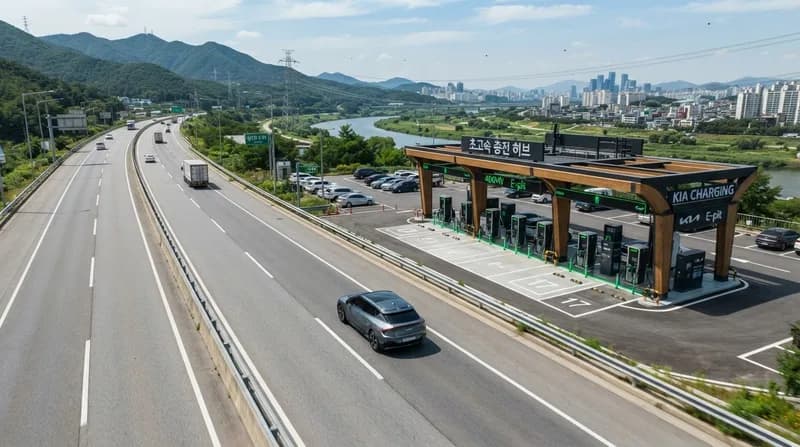
Revolutionizing South Korean Highway Charging
As the electric vehicle transition accelerates, the demand for high-capacity, lightning-fast charging infrastructure has never been more critical. Water, the specialized EV charging arm of renewable energy firm Brite Energy Partners, is taking a massive leap forward by announcing the deployment of 23 new high-speed charging hubs strategically positioned along South Korea’s major highway arteries. This initiative, part of a collaboration with the Korea Expressway Corporation, addresses the primary pain point for long-distance electric travel: the time spent tethered to a charger.
By prioritizing top-tier power delivery, Water is significantly reducing the time drivers need to remain at rest areas. The first facility, located at the Cheongju Rest Area on the busy Gyeongbu Expressway, has already opened its doors. It serves as a blueprint for the remaining sites, offering a robust mix of charging technology designed to handle everything from modern 800-volt battery architectures to legacy EV systems.
Hardware Specifications and Infrastructure
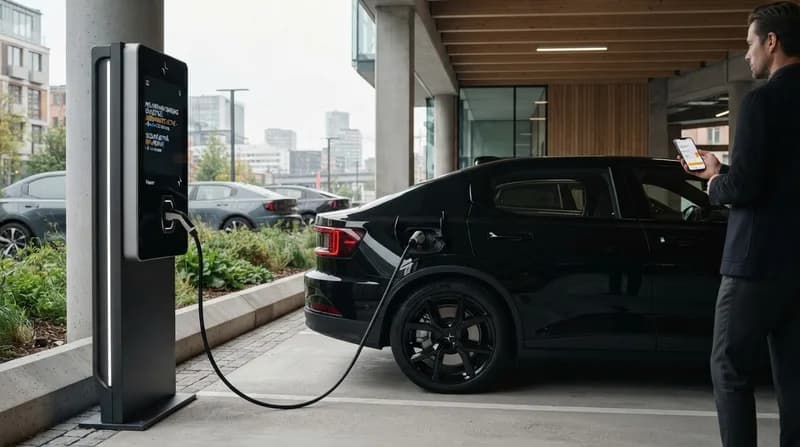
The core of this expansion lies in a total of 123 new chargers, carefully categorized by power capacity to optimize the grid and user accessibility. At the top of the spectrum are 62 units capable of a staggering 400 kW output. These units are specifically engineered to support the latest generation of high-voltage EVs, enabling rapid charging sessions that can replenish significant range in just a few minutes. Complementing these are 46 units rated at 200 kW and 15 units at 100 kW, ensuring a comprehensive range of compatibility for different vehicle makes and models.
Furthermore, Water has taken a forward-thinking approach to connector standards. Every single one of the 123 new chargers is equipped with dual-standard support, offering both NACS and DC Combo connections. This inclusive design ensures that virtually every EV driver on the road today can utilize these facilities. Tesla owners, in particular, will see a performance boost, as the NACS integration allows for optimized power delivery between 120 and 200 kW, depending on the specific vehicle model, marking a notable upgrade over many existing third-party network alternatives.
Why It Matters
For EV owners in South Korea, these charging stations represent more than just hardware; they represent a fundamental change in the reliability of long-range electric travel. Yoo Dae-won, Head of the Electric Vehicle Charging Business Unit at Bright Energy Partners, noted that at highway rest areas, charging speed is the most critical factor in a driver's experience. By deploying 400 kW chargers, Water is effectively removing the "time penalty" often associated with cross-country electric driving.
- Strategic Coverage: New stations will be distributed across the Gyeonggi, Chungcheong, Gangwon, and Gyeongsang regions.
- Pricing Incentive: Water is introducing a promotional rate of 294 won per kWh for members, providing a cost-effective alternative to standard government-regulated roaming tariffs.
- Network Density: Once these 23 sites are fully operational, Water’s total footprint will grow to 397 chargers spread across 73 highway rest areas.
This expansion underscores the industry's shift toward high-voltage infrastructure. As manufacturers continue to release vehicles with 800-volt battery systems, the availability of 400 kW chargers will likely become the gold standard for highway rest stops, setting a high bar for competitors and public utilities alike.