A Titan Takes the Field
The landscape of heavy construction is undergoing a radical shift as the first fleet of Volvo A40 Electric articulated haulers makes its debut at the Lower Thames Crossing project in the United Kingdom. These massive machines are currently the largest battery-electric dump trucks in series production, proving that heavy-duty civil engineering can move away from diesel without sacrificing the raw power required for earthmoving.
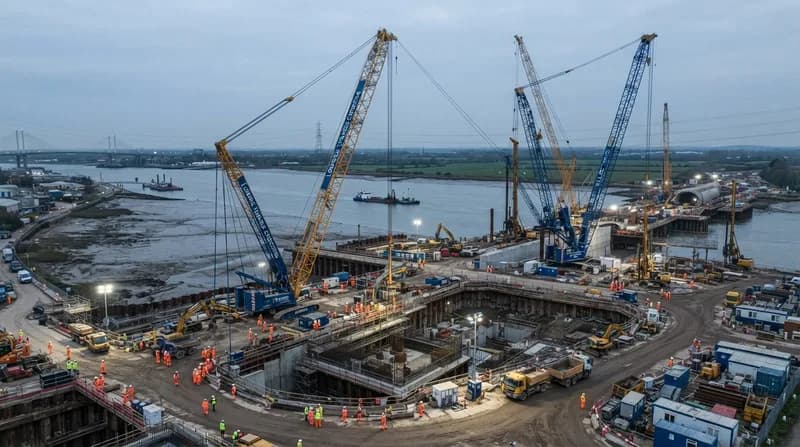
Deployed by a joint venture between Bouygues Travaux Publics and Murphy (BMJV), the four trucks are tasked with the demanding logistics of foundation and tunnel entrance work near East Tilbury. With a payload capacity of 39 tonnes, the A40 Electric is a formidable replacement for traditional combustion-engine haulers, designed specifically for the intense pressures of mining and large-scale infrastructure sites.
Technical Specifications
- Payload Capacity: 39 tonnes
- Battery Capacity: 540 kWh
- Motor Power: 350 kW
- System Features: Regenerative braking and high-capacity battery storage
- Production Origin: Manufactured in Braås, Sweden
The Hydrogen-Powered Ecosystem
Powering such heavy equipment requires more than just a wall plug. At the Lower Thames Crossing site, charging logistics are handled by an innovative on-site energy solution. The vehicles are charged during shift breaks and overnight using electricity generated from locally produced green hydrogen. This closed-loop approach ensures that the energy fueling the trucks remains carbon-neutral, fitting into the project’s goal of becoming the UK’s first carbon-neutral major construction effort.
Efficiency is further bolstered by a sophisticated regenerative braking system, which captures kinetic energy during deceleration and feeds it back into the 540 kWh battery pack. This feature is particularly useful in the stop-start environment of a construction site, helping to extend the operational range between charges and optimizing energy consumption patterns.
Why It Matters
The deployment represents more than just a successful vehicle launch; it signifies a fundamental shift in the economics of construction equipment. National Highways, the body overseeing the project, has projected that the A40 Electric will ultimately prove more cost-effective than diesel or HVO-fueled machinery. While the upfront investment for such high-capacity electric hardware remains substantial, the lower costs associated with electricity—versus volatile fossil fuel prices—combined with the reduced maintenance complexity of electric drivetrains, provide a compelling long-term financial case.
As construction projects worldwide face stricter environmental mandates, the success of the A40 Electric in Essex will likely serve as a blueprint for the industry. By proving that zero-emission tech can handle the grueling 39-tonne demands of modern infrastructure, Volvo CE is effectively removing the final excuses for the reliance on diesel power in heavy industry.