Scaling Digital Sophistication
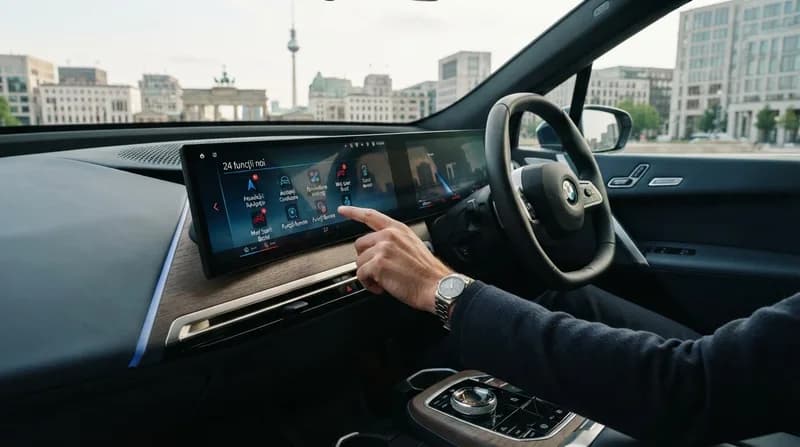
BMW is continuing its aggressive expansion into software-defined vehicle territory, announcing a significant update, version 11/2026.3, arriving this December. Spanning 16 million vehicles across 88 countries, the deployment marks one of the most widespread over-the-air (OTA) rollouts in the brand's history. By focusing on both the cutting-edge OS X and the robust legacy platforms of OS 8.5 and OS 9, the automaker is ensuring a broad spectrum of its fleet benefits from modern performance and usability improvements.
The update comprises 24 distinct feature changes, ranging from essential charging infrastructure integrations to high-end infotainment flair. According to Development Board Member Joachim Post, the initiative underscores a fundamental shift in automotive ownership, where the vehicle's capability evolves long after it has left the showroom floor, regardless of the underlying drivetrain.
Refined Charging and Navigation for EVs
Electric vehicle owners stand to gain the most from this update, particularly regarding the ecosystem surrounding public charging. BMW is enhancing its route planning logic to provide more accurate, real-time data on the utilization of charging stations, effectively reducing "range anxiety" by predicting whether a charger will be occupied upon arrival. Furthermore, the system now enables direct user feedback loops, allowing drivers to report issues immediately if a charging session fails to initiate, creating a more reliable network for all users.
Navigation itself is seeing a comprehensive upgrade. The interface now supports a combined 3D display that meshes route guidance with live sensor data from the vehicle’s exterior, providing a clearer "God's-eye" view of the driver assistance status. Additionally, the integration of Google Maps Places data into the destination search allows for a more contextual experience, offering real-time information such as business hours, user ratings, and contact details directly on the infotainment screen.
Advancing Driver Assistance and UX
The update brings tangible improvements to the Highway Assistant in Germany, expanding its functional scope to more roads with physically separated lanes. Meanwhile, in the United States, the system is becoming smarter in urban settings; it can now handle stop-and-go traffic at red lights, automatically braking to a halt and resuming movement when the light turns green. For those interested in their efficiency metrics, the iX3 will now offer a sophisticated driving-style analysis tool, tracking acceleration, braking, and steering data for review within the My BMW App.
Infotainment is also receiving a polish, with BMW introducing more flexible widget layouts in the Panoramic Vision display, easily manipulated via steering wheel controls. Entertainment options are expanding with the inclusion of Amazon Prime Video, while personalization reaches new heights; users can now leverage an interior camera and AI to generate a custom digital avatar based on their personal photos. Finally, convenience features have been tweaked to allow drivers to disable automatic unlocking and welcome light sequences within a 500-meter radius of specific locations, such as home or the office, offering a quieter, more discreet entry experience.
Why it Matters
- Lifecycle Management: By providing 24 meaningful updates since 2018, BMW is moving toward a "software-first" model that keeps hardware relevant for longer periods.
- Market-Specific AI: The focus on natural language processing in French and Spanish markets shows BMW is prioritizing localized AI interactions over generic, one-size-fits-all voice assistants.
- Data-Driven Ownership: The My Trips analysis feature represents a trend toward gamifying driving efficiency, encouraging users to adopt smoother driving habits.