The Arrival of the ID. Tiguan
Volkswagen has officially commenced series production of its latest electric SUV, the ID. Tiguan, at its manufacturing hub in Emden, Germany. This milestone marks a critical shift in the company’s EV roadmap as it retires the ID.4 and ID.5 model lines in favor of a vehicle that bridges the gap between traditional combustion-engine reliability and modern electric performance. With pre-orders already numbering in the thousands, the ID. Tiguan aims to leverage the historical prestige of the Tiguan nameplate, which has sold over eight million units globally as a gas-powered vehicle.
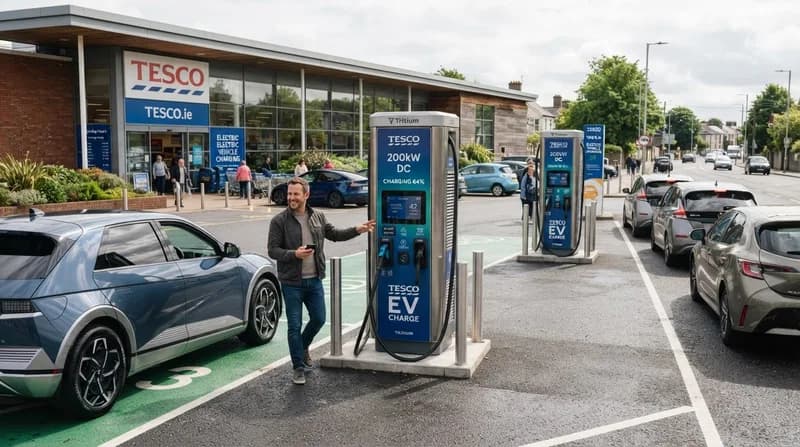
Under the hood, the ID. Tiguan promises a robust driving experience with powertrain options delivering up to 220 kW. The vehicle is engineered for utility, boasting an impressive towing capacity of up to two tonnes and a projected range of up to 600 kilometers. While the design and performance specs are intended to attract loyal Tiguan fans to the electric fold, some industry critics have noted that the charging architecture is somewhat conservative compared to modern high-voltage standards. The 58-kWh LFP battery configuration caps at 105 kW, while the 77-kWh NMC version reaches a peak of 165 kW at a DC fast charger.
Plant Transition and Production Realities
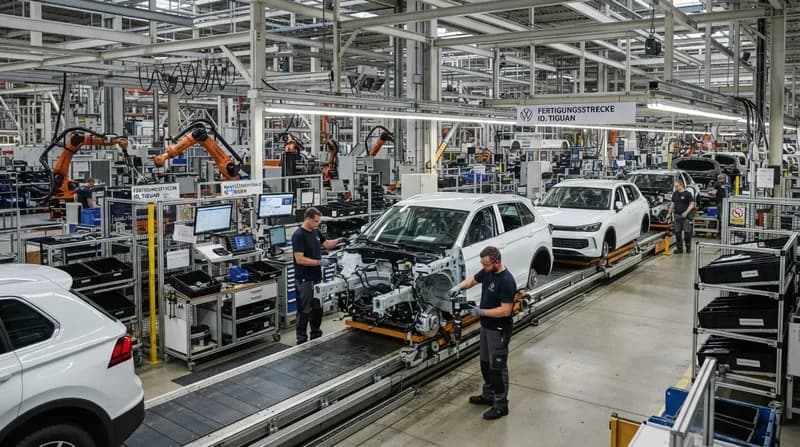
The Emden plant, a facility that has been dedicated solely to the assembly of electric vehicles for roughly two years, has undergone significant process adaptations to facilitate the ID. Tiguan rollout. This factory has previously served as the home base for the ID.4, the ID.7, and the ID.7 Tourer. With the commencement of the new model’s production line, it appears that the assembly of the ID.4 has been quietly discontinued, as Volkswagen is currently clearing remaining stock and no longer allowing custom factory configurations for that model.
The production launch was celebrated with high-level appearances from VW brand chief Thomas Schäfer and Lower Saxony’s minister-president Olaf Lies. Despite the technical achievements in retooling the facility, the atmosphere remains tempered by the broader economic climate facing Volkswagen. The Emden plant is currently listed as one of the sites facing potential future uncertainty regarding utilization beyond 2031, making the successful launch of the ID. Tiguan a vital strategic imperative for both the workforce and the regional government.
Why the ID. Tiguan Launch Matters
- Strategic Branding: By naming the vehicle the ID. Tiguan, Volkswagen is betting that the brand equity of its best-selling combustion SUV will act as a bridge for mainstream consumers hesitant to transition to electric vehicles.
- Industrial Stability: The Emden plant has produced over 500,000 EVs, and its ability to maintain high output—currently 780 vehicles per day—is central to the company’s efforts to maintain its market share in the competitive European electric SUV segment.
- Competitive Positioning: While the vehicle offers strong utility and towing specs, its charging speed will be a key point of evaluation for consumers comparing it against rivals offering faster 800V charging architectures.
Outlook for the Emden Site
Looking ahead, the road to 2027 and beyond remains complex. While the ID. Tiguan is expected to be a staple of the company’s portfolio for the next decade, the long-term future of the Emden factory is still under scrutiny. Local political figures and labor representatives are actively lobbying to ensure that the site remains operational well beyond the next several years, with upcoming labor negotiations set to address job security and production stability. The success of the ID. Tiguan in the marketplace will undoubtedly play a decisive role in these high-stakes discussions regarding the future of Volkswagen’s domestic manufacturing footprint.