Strategic Expansion into U.S. Public Transit
VinFast is signaling a major pivot in its North American strategy, announcing plans to introduce its fleet of electric buses to the U.S. market. With initial deliveries of homologated vehicles slated for the first quarter of 2028, the company aims to move beyond consumer passenger vehicles to become a significant player in the heavy-duty electric mobility sector. This expansion is designed to address the increasing demand for sustainable urban transit solutions across American municipalities.
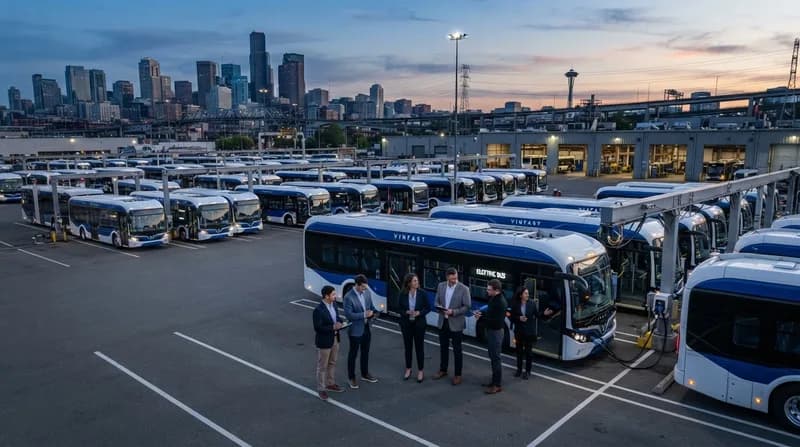
To navigate the complex regulatory and operational landscape of U.S. public transportation, VinFast has entered a strategic partnership with NexMove Certified—a joint venture between Transportation Management Services and Zeem Solutions. This collaboration will introduce a comprehensive 'vehicle-as-a-service' model, providing transit agencies with more than just the hardware. The offering bundle includes end-to-end charging infrastructure, routine maintenance, and operational support, with a stated performance target of 97% vehicle uptime.
The Tech Behind the Fleet
While specific U.S. model configurations are still pending final approval, VinFast’s current international portfolio offers a glimpse into the performance capabilities arriving on American shores. The company’s buses are engineered for intensive urban duty cycles, utilizing advanced Lithium Iron Phosphate (LFP) battery technology, which is prized for its thermal stability and long-cycle life. The vehicles also feature integrated digital suites that manage real-time charging telemetry, diagnostic monitoring, and predictive maintenance.
The current global lineup includes two primary models that showcase the company's hardware capabilities. The larger EB 12 is a high-capacity unit equipped with a 422 kWh battery, capable of carrying up to 90 passengers. It delivers a range exceeding 400 kilometers (approx. 248 miles) under SORT 2 testing conditions and supports DC fast charging at rates up to 140 kW. The more compact EB 8 model offers a 359 kWh battery pack with a range of approximately 290 kilometers (180 miles), designed for smaller transit routes with a 60-passenger capacity and 120 kW fast-charging support.
Building for American Requirements
A critical component of this deployment is adherence to Federal Transit Administration (FTA) standards, which mandate specific manufacturing requirements for vehicles utilized in public service. VinFast has confirmed that local production is a key objective, aligning with its broader plans to restart its North Carolina facility later this year. By establishing a domestic manufacturing base, the company aims to meet 'Buy America' requirements, ensuring that its electric buses are eligible for federal subsidies and grant programs that are essential for large-scale transit fleet procurement.
Why it Matters
- Beyond Passenger Cars: The move represents a strategic diversification for VinFast, shielding the company from the volatility of the consumer retail market by pivoting toward high-demand government and commercial infrastructure.
- Infrastructure Support: By bundling charging and maintenance, VinFast lowers the barrier to entry for transit agencies that lack the technical expertise to manage large-scale electric fleets.
- Path to Localization: Tying the launch to a U.S. manufacturing facility is a calculated move to satisfy regulatory hurdles and capitalize on federal funding initiatives for green public transit.
Ahead of the official 2028 launch, demo units will be staged at Zeem’s specialized EV charging depots. This will allow fleet operators and transit agencies to evaluate the hardware in a controlled, real-world setting, providing the necessary operational data to facilitate a smooth transition when the first commercial units arrive.