Closing the Battery Loop
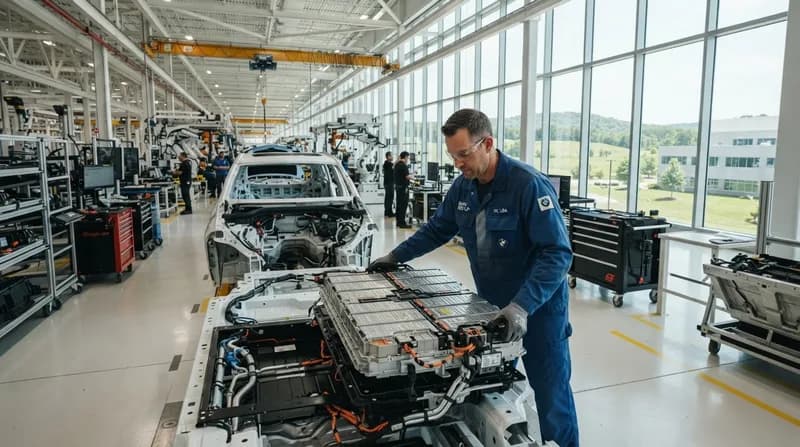
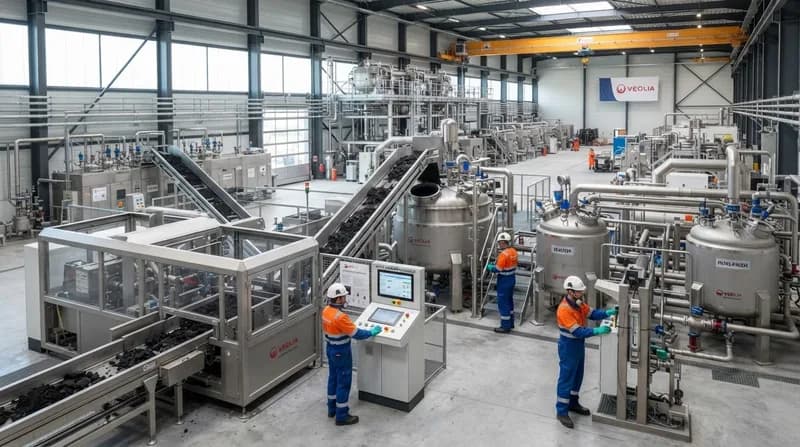
In a significant boost to Europe's domestic supply chain for critical minerals, environmental services leader Veolia has officially commissioned a state-of-the-art facility in France's Grand Est region. This plant is specifically engineered to process 'black mass'—the concentrated, shredded remains of lithium-ion batteries—into high-purity raw materials. By employing a proprietary hydrometallurgical process, the company is tackling the complex challenge of reclaiming essential components for the green energy transition.
The facility is designed to handle an annual throughput of approximately 7,000 tonnes of black mass, which translates to roughly 20,000 tonnes of spent batteries. Currently, the raw material input for this operation is sourced from across a diverse European network, including France, the United Kingdom, and Switzerland. This project marks a pivotal step in Veolia's broader ambition to integrate the various stages of the battery lifecycle—from collection and dismantling to chemical refinement—within the European continent.
Technical Precision and Recovery
The core of this facility's value proposition is its impressive material recovery rate. Using its specialized hydrometallurgical technique, Veolia reports that it can successfully reclaim more than 90 percent of the nickel, cobalt, and copper present in the black mass. These recovered strategic metals are poised to re-enter industrial supply chains, with initial targets identified in sectors such as automotive manufacturing, defense, and heavy construction.
Beyond immediate industrial application, the plant serves as a critical node in a future closed-loop battery ecosystem. While full-scale 'battery-to-battery' recycling remains an evolving goal, the capability to strip these materials back to their metallic form is a necessary precursor. The facility stands as a unique project in Europe, representing the first time this specific, in-house developed hydrometallurgical technology has been deployed at this industrial scale.
Why it Matters: The Economic Outlook
The landscape for battery recycling is shifting rapidly. With an estimated 700,000 tonnes of spent batteries expected to emerge within the European market over the next five years, the economic stakes are immense. These batteries contain billions of euros worth of strategic metals, yet the current logistics of recycling—including the hazardous nature of transport and the complexity of dismantling—present significant fiscal hurdles. A recent industry study indicated that current recycling methods can struggle with profitability, often facing losses per kilogram of material processed.
However, projects like the Grand Est plant are designed to change that narrative. By shortening supply chains and streamlining extraction processes, the industry aims to move toward a more profitable, sustainable model. With support from European Commission leadership and ongoing investments in dismantling infrastructure in Belgium, Slovenia, and the UK, Veolia is positioning itself at the forefront of a necessary industrial pivot toward resource sovereignty and a more circular automotive future.