Challenging a 30-Year-Old Paradigm
For three decades, oncologists have relied on the "rheostat" model to understand how certain cancers manage their growth. This theory suggested that tumor cells functioned like a physical dimmer switch, internally controlling their own fate by balancing levels of sphingosine-1-phosphate (S1P) to fuel growth and ceramide to trigger cell death. The assumption was that the cancer cells themselves were the architects of this chemical manipulation, deciding whether to proliferate or perish based on internal signaling.
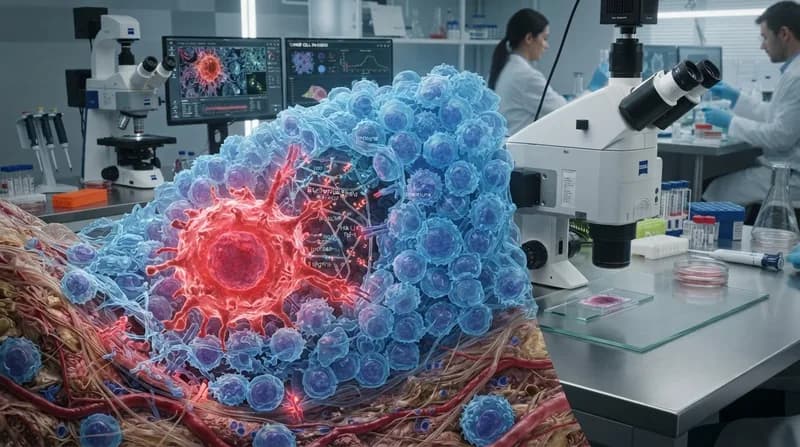
A groundbreaking new study from Hokkaido University, conducted in collaboration with the University of South Florida Health and Tampa General Hospital, has effectively dismantled this long-standing assumption. By utilizing advanced multiomics and spatial mapping technology on over 570 human colon cancer tissue samples, the research team discovered that this chemical imbalance does not primarily occur inside the tumor cells at all. Instead, it is a strategic alteration of the tumor microenvironment—the surrounding healthy-looking support tissue and specialized immune cells—that creates a formidable defense mechanism.
The Biochemical Barrier
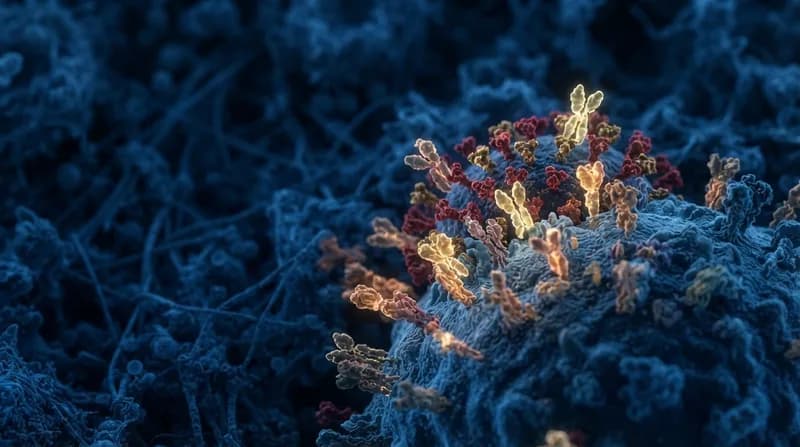
The study reveals that metastatic colorectal cancer (mCRC) is far more cunning than previously realized. Rather than simply manipulating their own internal chemistry, these tumors orchestrate a localized biochemical shield in their immediate environment. By increasing levels of S1P and suppressing long-chain ceramide within this support structure, the cancer generates a state of chronic, unhealthy inflammation. This environment acts as a physical and chemical barricade, effectively preventing the body’s cytotoxic T cells—the immune system’s primary tumor-fighting agents—from infiltrating the mass.
This finding explains why mCRC has historically been so resistant to standard checkpoint inhibitor immunotherapies. The cancer isn't just hiding; it is actively constructing an immunosuppressive fortress that keeps killer T cells at a distance. When these immune cells are kept outside the perimeter, the tumor can grow unchecked, contributing to the poor survival rates associated with advanced colorectal cancer, where five-year survival drops to approximately 14% once metastasis occurs.
Why It Matters
- Redefining Treatment Targets: By identifying the S1P/S1PR3 pathway as the primary culprit for immune exclusion, researchers have uncovered a specific target to dismantle the tumor's defensive barrier.
- Overcoming Drug Resistance: This discovery provides a clear explanation for why existing immunotherapies often fail in colorectal cancer patients, offering a roadmap for combination therapies.
- Predictive Diagnostics: The identification of a specific three-gene signature provides clinicians with a powerful tool to identify aggressive cases earlier, potentially guiding more personalized and effective care plans.
A Path Toward Effective Immunotherapy
The implications for clinical practice are profound. The research team identified a three-gene signature that correlates strongly with late-stage progression, lymph node involvement, and poor patient outcomes. Most importantly, lab experiments demonstrated that when the S1P/S1PR3 pathway is blocked, the biochemical shield dissolves. This allows healthy killer T cells to re-enter the tumor microenvironment and resume their work of identifying and destroying cancer cells.
Moving forward, the medical community sees this as a vital opportunity to pivot from standard immunotherapy to combination approaches. By layering S1P/S1PR3 inhibitors on top of conventional treatments, oncologists hope to finally breach the protective barriers that have shielded colorectal cancer for far too long, turning previously untreatable metastatic cases into manageable conditions.