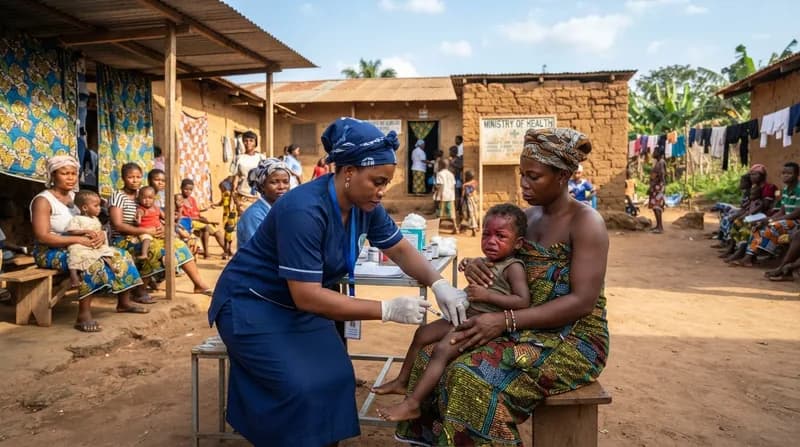
The Persistence of Malaria in Early Childhood
A comprehensive new study published in The Lancet Global Health has shed light on the stark reality facing the youngest residents of Sierra Leone. Conducted by the Barcelona Institute for Global Health (ISGlobal), the research highlights that malaria remains the dominant factor in both hospital admissions and in-hospital deaths for children under the age of two. Despite national efforts to implement free healthcare, malaria chemoprevention, and various vaccination programs, the data suggests that these interventions have yet to overcome the heavy burden of infectious diseases in the region.
For years, tracking specific causes of mortality in Sierra Leone has been challenging because health surveillance systems often aggregate all data for children under five. By isolating the first two years of life, researchers identified a clearer picture of the vulnerabilities facing infants. This project, known as ICARIA, followed 20,560 infants across 14 health centers, using a robust combination of facility surveillance, direct household visits, and telephone check-ins to capture a precise, longitudinal view of childhood health outcomes.
The Weight of the Mortality Burden
The findings are sobering: malaria accounted for over half of all hospital admissions at 54.3%. Lower respiratory infections followed at 16.7%, with diarrhea at 9.6%, undernutrition at 7.4%, and sepsis at 4.8%. The impact on mortality is equally severe, with malaria responsible for roughly one out of every two deaths in hospital settings. Even outside the hospital, where researchers utilized verbal autopsies to reconstruct causes of death, malaria remained the most frequent culprit, suggesting that its actual impact may be even higher than recorded figures imply due to symptomatic overlap with other illnesses.
Why it Matters
- Data Granularity: Moving beyond the 'under-5' category allows for more targeted health interventions during the most critical period of early development.
- Vaccination Efficacy: The study provides empirical proof that adhering to the routine Extended Programme on Immunization (EPI) schedule drastically improves survival outcomes.
- Holistic Care: The data highlights that medical treatment alone is insufficient without addressing comorbidities like undernutrition, which significantly exacerbates mortality risks.
Pathways to Improved Survival
The study does offer a clear path forward, confirming that vaccination is a powerful lever for change. Children who completed all age-appropriate routine vaccinations saw their overall mortality risk drop by 35%. Furthermore, receiving the full scheduled doses of sulfadoxine–pyrimethamine—a key preventive treatment for malaria—was associated with a 40% reduction in death. These statistics underscore the critical importance of ensuring consistent access to immunization programs, even in the most challenging geographical settings.
Looking ahead, the researchers advocate for a multi-faceted approach that goes beyond basic clinical care. Integrating nutritional support into pediatric healthcare, strengthening community-based follow-up, and ensuring that survivors of severe illness receive adequate post-discharge care are essential steps toward achieving global sustainability goals. While the path toward reducing child mortality remains steep, these data-driven insights provide the roadmap necessary for policymakers to better allocate resources where they are needed most.