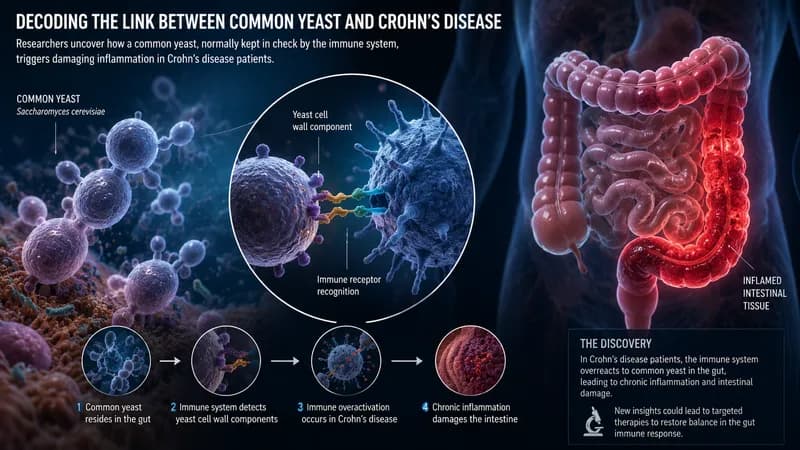
A research team from the Excellence Cluster 'Precision Medicine in Chronic Inflammation' (PMI) at Kiel University has uncovered the mechanisms behind how the immune system interacts with Candida albicans, a common yeast found in most humans. While this fungus typically colonizes mucous membranes without causing harm, the study reveals why it becomes a significant driver of inflammation in Crohn's disease.
The Role of Th17 Cells
In a healthy body, the immune system develops specialized cells known as Th17 cells to keep Candida albicans in check. These cells are essential for maintaining a peaceful coexistence with the fungus. However, the new research, published in the journal Immunity, systematically explains the origins of these cells and how their behavior shifts from protective to pathogenic in the context of chronic inflammatory bowel disease.
From Protection to Inflammation
The findings provide a clearer understanding of how these otherwise beneficial immune responses can malfunction. By identifying the specific triggers that cause Th17 cells to become harmful, the Kiel University team has opened new avenues for precision medicine. This discovery is a critical step toward developing targeted therapies for Crohn's disease that address the underlying immune dysregulation rather than just managing symptoms.