The Discovery of Ancient Magnetoreception
In a groundbreaking study that bridges the gap between deep-time paleontology and modern biophysics, researchers from the University of Cambridge and Helmholtz Zentrum Berlin have identified what appears to be the world's oldest internal GPS. By analyzing 97-million-year-old seafloor sediments, scientists unearthed microscopic structures known as magnetofossils. These tiny, cell-sized artifacts—shaped like needles, bullets, and spindles—had long puzzled paleontologists who were unsure if they were mere debris or the remnants of a biological marvel.
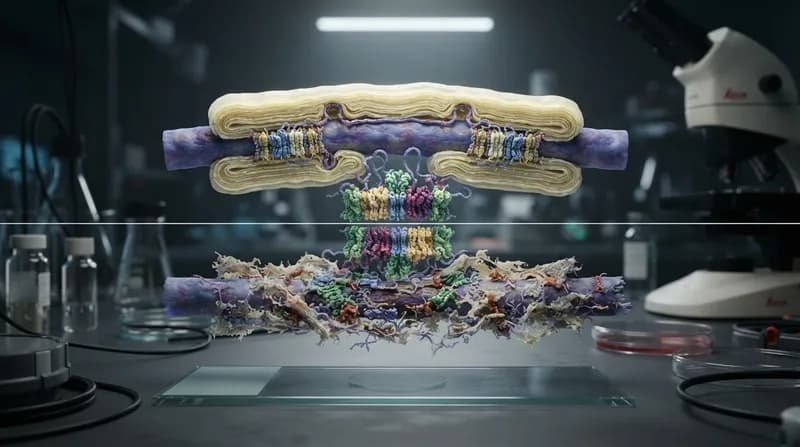
Using advanced magnetic tomography, the team successfully created the first 3D images of these fossils. The internal architecture revealed a complex, tornado-shaped vortex of magnetic moments. This configuration is not random; it is highly optimized for sensing the intensity and direction of the Earth’s magnetic field. This discovery provides the first concrete evidence that marine life in the Cretaceous period possessed a sophisticated, high-precision tool for long-distance migration, mirroring the magnetoreception seen in today’s birds, insects, and fish.
The Anatomy of a Prehistoric Compass
The technical sophistication of these fossils sets them apart from the simpler, chain-like magnetic particles found in magnetotactic bacteria. While bacteria use small magnetic strings to orient themselves in water columns, these ancient fossils are significantly larger and structurally more complex. The research indicates that the vortex geometry within these particles acts as a biological sensor capable of detecting both latitude and longitude-based field variations.
The stability of this vortex structure is key to its functionality. By resisting environmental magnetic noise, these particles would have allowed an ancient creature to maintain a steady course over thousands of kilometers. The "wobble" produced in the magnetic field by these fossils suggests the creature could perceive subtle changes in magnetic intensity, essentially allowing it to read the Earth’s magnetic landscape like a topographic map. This leap in biological engineering likely represents a crucial step in the evolution of animal migration.
Why it Matters
- Evolutionary Timeline: Proves that complex magnetic navigation existed nearly 100 million years ago.
- Technological Insight: Provides a biological blueprint for potential advancements in synthetic navigation systems.
- Interdisciplinary Success: Utilizes cutting-edge X-ray tomography from the Diamond Light Source facility to solve a mystery hidden for nearly a century.
- New Research Directions: Shifts focus toward identifying the migratory species responsible, with candidates like ancient eel ancestors under scrutiny.
The Future of Magnetoreception Research
As scientists look to identify the organism responsible for these fossils, the focus has shifted toward the evolutionary history of migratory species. Eels, which emerged around 100 million years ago and are known for their mysterious, long-distance reproductive journeys, are currently a primary suspect. Because these magnetic particles are exceptionally difficult to locate in soft tissues, the discovery of these preserved fossils provides a rare, objective window into the biological mechanisms that govern one of nature’s most elusive senses.
Moving forward, the research team aims to refine their understanding of how these magnetite particles integrate with biological systems. By bridging the divide between physical geology and evolutionary biology, this study does more than just categorize a fossil; it clarifies the deep history of how life on Earth mastered the art of navigation. As we refine our ability to image these microscopic structures, we may eventually map the complete evolutionary trajectory of the animal kingdom’s most reliable internal compass.