A New Nerve Center for Battery Innovation
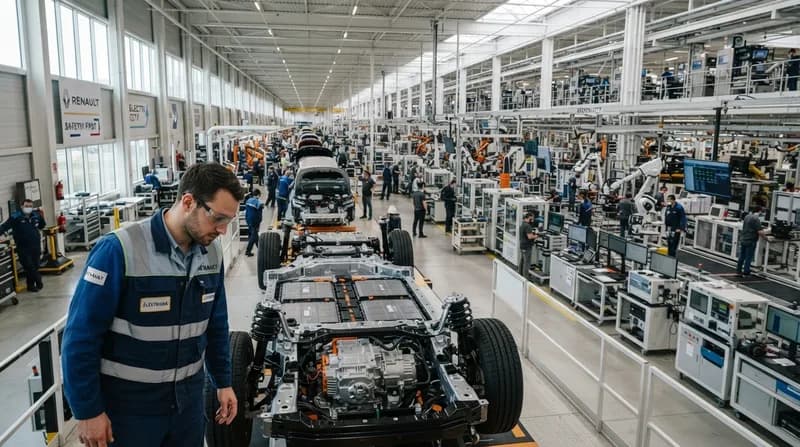
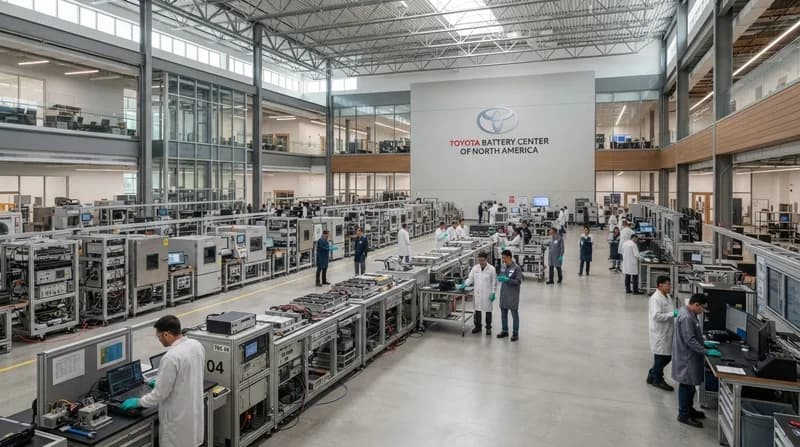
Toyota has taken a significant step in fortifying its North American electrification roadmap with the grand opening of the Toyota Battery Center of North America (TBC) in Saline, Michigan. This expansive 2,800-square-metre facility is designed to serve as the primary hub for battery testing, evaluation, and development, ensuring that Toyota's regional manufacturing network has the necessary R&D support to scale its electric mobility ambitions.
By establishing this center in the heart of Michigan's automotive landscape, Toyota is effectively closing the gap between raw material procurement and final consumer application. The facility is not merely a testing ground; it represents a comprehensive approach to the entire lifecycle of battery technology, including a strong focus on sustainability and end-of-life recycling. This localized effort is expected to accelerate the speed at which engineers can diagnose field concerns and refine battery performance, particularly regarding the harsh operating conditions often encountered by American motorists.
The Multi-Path Strategy in Action
Central to the TBC’s mission is the support of Toyota’s "Multi-Path Strategy." Unlike manufacturers betting exclusively on battery-electric vehicles, Toyota continues to push a diverse portfolio that includes traditional hybrids, plug-in hybrids, and hydrogen fuel cell electric vehicles. Each of these powertrains requires specialized battery solutions, and the Saline facility is equipped to handle the development cycles for this entire spectrum.
The facility will work in close coordination with Toyota’s massive battery production plant in North Carolina. By connecting the R&D capabilities of the Michigan site with the large-scale manufacturing output of the Liberty, North Carolina plant—a project supported by a staggering 14-billion-euro investment—Toyota is creating a closed-loop ecosystem. This ensures that innovations in battery chemistry and longevity are transitioned from the lab to the assembly line with unprecedented efficiency.
Why It Matters
- Localized Expertise: By bringing high-level testing and evaluation to Michigan, Toyota reduces its reliance on Japanese R&D, allowing for faster iteration cycles tailored to the North American market.
- Academic Collaboration: The partnership with the University of Michigan’s Electric Vehicle Center signals a long-term commitment to workforce development, training the next generation of engineers to specialize in battery systems.
- Strategic Versatility: The facility underscores Toyota's belief in a balanced powertrain portfolio, ensuring that batteries for hybrids and fuel cells receive the same rigorous attention as those for pure battery-electric vehicles.
Beyond internal development, the TBC is set to play a pivotal role in the broader ecosystem through its partnership with the University of Michigan. By fostering ties with academic research, Toyota is positioning itself as a central player in the state's transition toward electrification, aiming to standardize performance benchmarks for everything from light-duty hybrids to heavy-duty fuel cell applications.