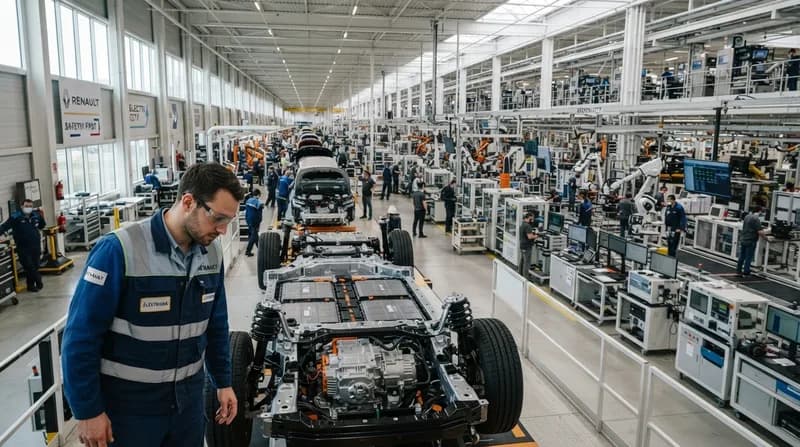
A Major Strategic Shift Toward Electric Mobility
Renault has officially announced a massive commitment to its domestic manufacturing capabilities, pledging over €10 billion in investments in France over the next five years. The move is designed to solidify the company's position as a leader in the transition to electric mobility, with a primary focus on scaling the production of next-generation electric vehicles (EVs) and developing more cost-efficient models for the European market. CEO François Provost confirmed the ambitious plan, signaling that while the company has already invested €13 billion in its French facilities over the past half-decade, this new capital injection represents a critical acceleration of its long-term industrial goals.
The investment is closely tethered to the company's broader futuREady strategic roadmap, which aims to introduce 22 new models by 2030, 16 of which will be fully electric. Central to this strategy is the development of the RGEV Medium 2.0 platform. This sophisticated 800-volt architecture is engineered to deliver superior charging speeds, enhanced range, and improved thermal efficiency, which Renault intends to leverage across a diverse lineup of high-volume passenger cars and commercial vehicles.
The "futuREady" Strategy and Cost Efficiency
As the automotive market evolves, Renault is increasingly prioritizing the democratization of electric vehicles. By integrating manufacturing processes more tightly with battery performance, the company aims to reduce total costs of ownership. This includes the implementation of cost-effective cell chemistries, such as Lithium Iron Phosphate (LFP), specifically targeted at high-volume vehicles where price point is a decisive factor for consumers. By balancing high-end technology with accessible entry-level options, Renault hopes to capture a broader share of the burgeoning European EV segment, which has recently seen a surge in demand.
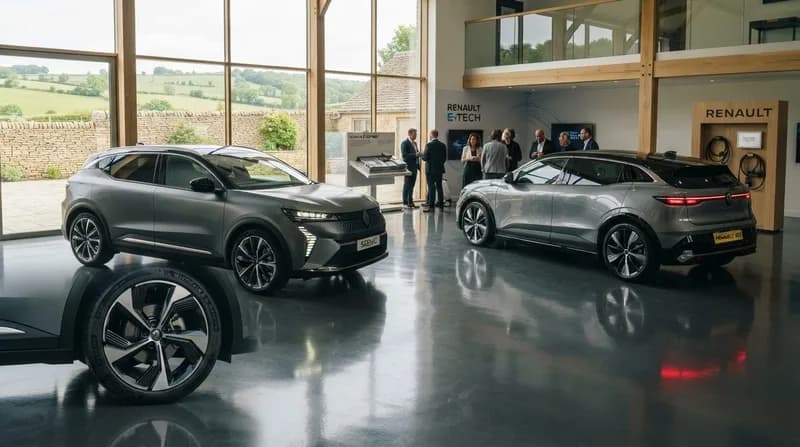
Despite the company's expanding footprint in Spain—where it recently invested €600 million for battery assembly and new model production—France remains the core of Renault's electric ecosystem. The ElectriCity cluster in northern France continues to be the primary engine for the company’s current EV success, churning out key models including the Mégane E-Tech, Scénic E-Tech, and the iconic Renault 5 E-Tech. The company projects that the ongoing ramp-up of these production lines will yield a significant boost in output, aiming for over 625,000 vehicles produced in 2026, a 25% increase over 2025 figures.
Why it Matters: Balancing Innovation and Policy
This massive investment plan is not without its caveats. Renault has explicitly linked the full realization of these goals to favorable political and social framework conditions within France. While the company is pushing forward with technological advancements like the RGEV Medium 2.0 platform, management is clearly signaling that long-term industrial competitiveness in the European market requires a stable and supportive environment. This conditional stance highlights the complex interplay between traditional automotive giants and the rapid, often policy-driven shift toward a decarbonized transport future.
For consumers and industry observers alike, the investment represents a significant validation of European manufacturing. By choosing to anchor its most advanced technological developments within France, Renault is signaling a transition from mere assembly to a high-tech, integrated approach to mobility that addresses both the high-performance segment and the demand for affordable, everyday electric cars.