A New Era of Space Capital
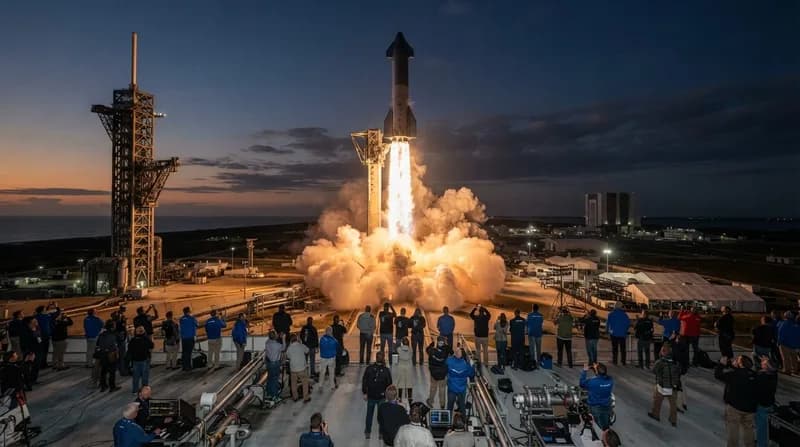
The aerospace and satellite industry is witnessing a historic shift as annual global investment is projected to eclipse the $100 billion mark for the first time. This unprecedented financial surge is being fueled by a combination of high-stakes market activity and a fundamental change in how global powers view orbital infrastructure. Central to this growth is the highly anticipated SpaceX IPO, which has acted as a massive catalyst, drawing institutional attention to the sector that was previously considered too risky for mainstream portfolios.
Why it Matters
- Liquidity Shift: The public offering of space leaders provides a roadmap for other startups to achieve exits and scale operations.
- Defense Integration: Geopolitical tensions have transformed space from an exploratory frontier into a vital theater for national security, driving consistent, long-term government contracts.
- Infrastructure Demand: Beyond launch vehicles, capital is flooding into satellite constellations, in-orbit logistics, and ground-station upgrades needed for global connectivity.
Analysts suggest that the sector has moved past the 'speculative' phase and into a period of industrial maturity. SpaceX’s successful market entry serves as the primary engine for this transformation. By proving that launch costs can be driven down through reusability, the company has effectively lowered the barrier to entry for a wide variety of secondary players. These companies are now focused on leveraging that accessible orbit for everything from climate monitoring to global low-latency internet services.
The Outlook for 2027 and Beyond
The current $100 billion figure is likely just the starting point. As capital flows into the space economy, the focus will increasingly shift toward sustainability and deep-space logistics. With private sector giants operating alongside government entities, the infrastructure built today will dictate the economic landscape of the next decade. Investors are no longer just looking at rocket launches; they are looking at the foundational satellite layers and orbital data networks that will underpin the digital economy of the 2030s. This isn't just a win for aerospace engineering—it is the birth of an entirely new asset class that fuses advanced robotics, global telecommunications, and high-frequency data services into a single, cohesive industrial complex.