A Nation of Skeptics
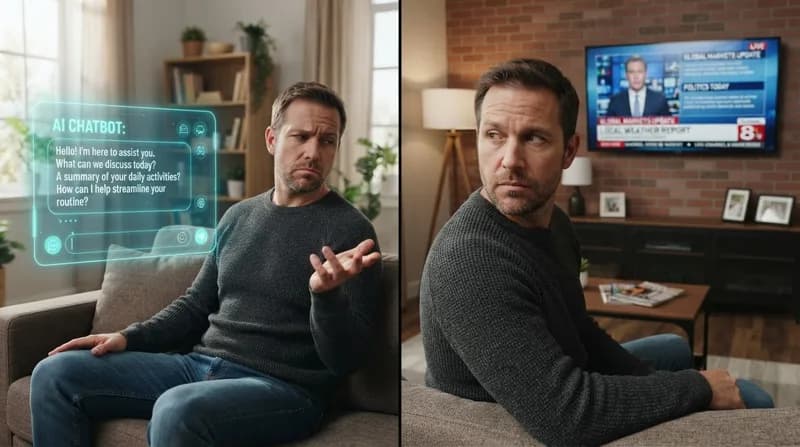
For those living in the heart of Silicon Valley or deep within the tech echo chamber, the rapid proliferation of generative AI might feel like an unstoppable tidal wave. However, a recent report from the Pew Research Center paints a starkly different reality for the average American consumer. According to the study, 51 percent of U.S. adults are officially categorized as 'chatbot refuseniks,' meaning they never interact with AI-driven conversational tools. This demographic isn't just hesitant; they are largely uninterested in changing their habits.
The data highlights a significant generational chasm. While younger adults aged 18 to 29 represent the highest user base at 66 percent, a full third of that same cohort still avoids the technology entirely. The trend accelerates sharply as age increases, with 58 percent of adults aged 50 to 64 avoiding chatbots, and a massive 75 percent of those aged 65 and older reporting that they have never touched an AI assistant. These figures suggest that AI companies have a long, steep climb before these tools reach the status of daily household staples.
The Anatomy of Non-Adoption
Why are so many people opting out? Conventional wisdom often points to a lack of digital literacy or a fear of appearing out of touch. However, the Pew survey dismantles these assumptions. Only a minority of non-users cited a lack of technical knowledge as a primary barrier. Instead, the overwhelming motivation for abstinence is simple, straightforward apathy. Six in ten non-users identified a lack of interest as a major factor in their decision to ignore chatbots.
Beyond general disinterest, the survey sheds light on the specific anxieties that deter potential users. Concerns regarding data privacy and the notorious unreliability of AI responses remain significant hurdles. Interestingly, social stigma plays almost no role in these decisions; fewer than one in five respondents expressed concern about how others might perceive them for utilizing AI tools. The resistance appears to be deeply rooted in the utility—or perceived lack thereof—of the tools currently on the market.
Why It Matters
- Strategic Stagnation: With 67 percent of non-users stating they are unlikely to use AI in the next 12 months, companies are hitting a 'user-adoption wall' that may require more than just iterative feature updates to break.
- Utility Gap: The data suggests that for a large portion of the public, chatbots currently fail to offer a compelling value proposition that outweighs the perceived risk to privacy or the effort of integration.
- The Future Outlook: AI developers cannot rely on organic curiosity to drive growth. To convert the remaining half of the population, industry leaders must shift their focus from 'what AI can do' to 'how AI demonstrably improves a user's life' without adding unnecessary friction.
The sentiment is clear: for the majority of the American public, the chatbot revolution is not a priority. Unless the industry can bridge the gap between abstract capability and genuine everyday utility, a significant segment of the population seems content to remain on the sidelines, waiting for a 'killer app' that offers more than just a novelty experience.