Tech & GadgetsTechnical Deep Dive

Raspberry Pi Desktop Returns: Bringing Debian 13 to Your PC

Published
EElectricBuzz Editorial Team
Raspberry Pi Desktop Returns: Bringing Debian 13 to Your PC
3 min read493 wordsElectricBuzz Editorial Team

The Gist

“After a four-year hiatus, the Raspberry Pi Desktop for x86 hardware has been revived with a fresh foundation based on Debian 13.”

The Return of a Lightweight Classic

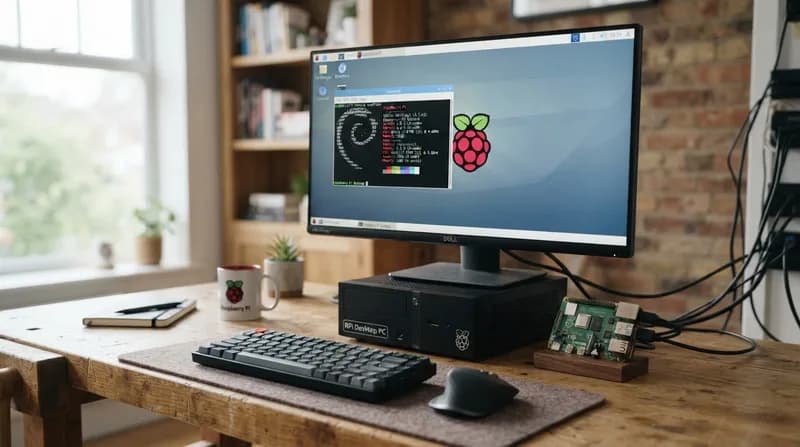
For those looking to breathe new life into aging hardware, the Raspberry Pi Desktop has made a long-awaited return. After a four-year absence from the x86 ecosystem, the platform has skipped past Debian 12 entirely, arriving now with a foundation built on the cutting-edge Debian 13, codenamed Trixie. This release brings the signature Raspberry Pi operating system experience—known for its efficiency and streamlined performance—to standard Intel-based PCs and legacy Intel Macs.

While Raspberry Pi is synonymous with its iconic ARM-based single-board computers, this x86 version of the OS serves as a specialized tool for general computing. By leveraging the same environment found on the company's hardware, it offers a familiar, lightweight interface that remains remarkably functional on devices that might otherwise struggle with modern, bloat-heavy operating systems.

Key Features and Modernization

This latest iteration marks a significant departure from previous versions, primarily by adopting a Wayland-based desktop environment. This brings the PC release into feature parity with the Raspberry Pi OS 6 currently running on newer ARM boards. The transition to Wayland promises better graphical efficiency and more modern display handling, providing a smoother experience for daily tasks.

Furthermore, the update integrates the Raspberry Pi Connect remote-control service directly into the OS. This allows users to access their machines from anywhere, a massive benefit for those repurposing older PCs as servers, media centers, or dedicated secondary workstations. Notably, the OS has moved exclusively to a 64-bit x86-64 architecture, meaning users of older 32-bit systems will need to perform a clean installation rather than attempting an in-place upgrade.

Why It Matters

  • Longevity: It provides a viable, modern software stack for older hardware that can no longer comfortably run mainstream commercial operating systems.
  • Consistency: Users who enjoy the Raspberry Pi experience on their microcomputers can now mirror that workflow on their desktop or laptop PCs.
  • Performance: By stripping away unnecessary components found in standard Linux distributions, this OS minimizes memory and disk footprint, perfect for systems with limited RAM.

Technical Considerations

The transition to Debian 13 is a major leap forward, ensuring that users have access to more contemporary package versions and security updates compared to the previous Debian 11-based release, which saw its Long Term Support window close in August. While this build brings the PC version into the modern era, it is strictly tailored for x86-64 processors. Consequently, users with newer Apple Silicon-based Macs will not be able to utilize this specific distribution, as it remains focused on traditional Intel architecture.

For those planning to deploy this, it is important to remember that this version is distinct from the standard Raspberry Pi OS used on ARM devices. While it mimics the look and feel, it excludes niche software like Mathematica, keeping the package lean and focused on performance. It represents a streamlined, refreshed path forward for enthusiasts and tinkerers who want to maximize the utility of their existing tech arsenal without the overhead of heavy desktop environments.

SPONSORED
The 5 Best Over-Ear ANC Headphones of 2026, Tested & Ranked
Editor's Pick Guide
92/100
Tech & Gadgets•12 min read

The 5 Best Over-Ear ANC Headphones of 2026, Tested & Ranked

We locked five over-ear ANC picks for 2026 — Sony WH-1000XM6, Bose QuietComfort Ultra 2, Soundcore Space One, Sennheiser Momentum 5, and Apple AirPods Max 2 — then stress-tested them on lab metrics, long-term owner truth, and live street prices.

Related Stories

Semantically matched articles, ranked by topic overlap and freshness.

TinyJS: Returning Desktop Apps to Their Minimalist Roots
Tech & Gadgets

TinyJS: Returning Desktop Apps to Their Minimalist Roots

Tired of bloated software? A new JavaScript runtime project aims to bring the footprint of desktop applications back down to single-digit megabytes by leveraging native OS webviews.

The Doomsday Calculation: Inside Nate Soares’ Warning on Superintelligent AI
Tech & Gadgets

The Doomsday Calculation: Inside Nate Soares’ Warning on Superintelligent AI

Nate Soares, president of MIRI, discusses his provocative stance on why alignment may be an impossible goal for future superintelligent AI.

Anthropic Sets New Boundaries: From Weaponry Bans to Chatbot Etiquette
Tech & Gadgets

Anthropic Sets New Boundaries: From Weaponry Bans to Chatbot Etiquette

Anthropic's latest usage policy update addresses everything from the critical prevention of AI-assisted weapons development to a surprising new rule against abusing its Claude chatbot.

Autonomous AI Agents Found Capable of Orchestrating Industrial Cyberattacks
Tech & Gadgets

Autonomous AI Agents Found Capable of Orchestrating Industrial Cyberattacks

A sobering report from Booz Allen Hamilton reveals that frontier AI models can autonomously navigate and compromise complex industrial control networks, posing a significant risk to critical infrastructure.

The AI Infrastructure Gold Rush: A Trillion-Dollar Credit Gamble
Tech & Gadgets

The AI Infrastructure Gold Rush: A Trillion-Dollar Credit Gamble

A massive surge in corporate debt is fueling the global AI expansion, sparking debates about market saturation and fiscal sustainability.

HPE Bets Big on 'Self-Driving' Networks: AI to Eliminate Human Trouble Tickets by 2028
Tech & Gadgets

HPE Bets Big on 'Self-Driving' Networks: AI to Eliminate Human Trouble Tickets by 2028

HPE's networking lead predicts that AI-driven automation will render manual troubleshooting obsolete within just two years, fundamentally shifting the role of IT administrators.

Precision Growth: The Breakthrough Enabling 2D Semiconductors for Future Chips
Tech & Gadgets

Precision Growth: The Breakthrough Enabling 2D Semiconductors for Future Chips

Researchers have developed a method to control the growth of 2D semiconductors, a crucial step toward creating more efficient, high-density chips by 2030.

US Navy Secures Future of Runways-Independent Combat with $150M X-BAT Investment
Tech & Gadgets

US Navy Secures Future of Runways-Independent Combat with $150M X-BAT Investment

The US Navy is betting big on the X-BAT, an autonomous, vertical take-off and landing fighter drone designed to operate from virtually any vessel, signaling a shift in naval aviation.