The Era of the Self-Driving Network
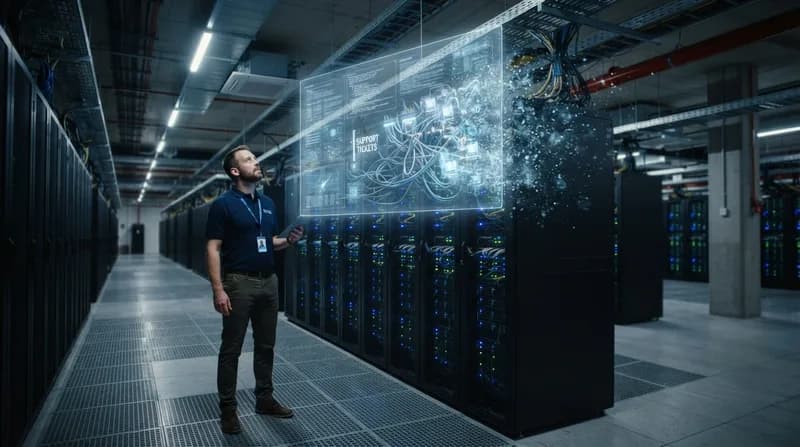
Hewlett Packard Enterprise (HPE) is aggressively pushing its vision for the future of enterprise infrastructure: a world where networks are entirely self-managing. Rami Rahim, the former Juniper Networks CEO who now leads HPE’s networking division, suggests that within the next two to three years, the traditional practice of human IT administrators manually resolving trouble tickets will be a relic of the past. By leveraging advanced AIOps, HPE aims to automate everything from diagnostics to remediation, effectively creating what they term a self-driving network.
Currently, HPE reports that approximately 70 to 80 percent of networking tickets are already resolvable without direct human intervention. Rahim believes the remaining gap will close rapidly as AI agents become more sophisticated at identifying root causes and executing corrective actions. The goal is to offload the repetitive, high-volume tasks that currently overwhelm IT departments, allowing human staff to focus on high-level architecture rather than day-to-day firefighting.
The Logistics of Automated Remediation
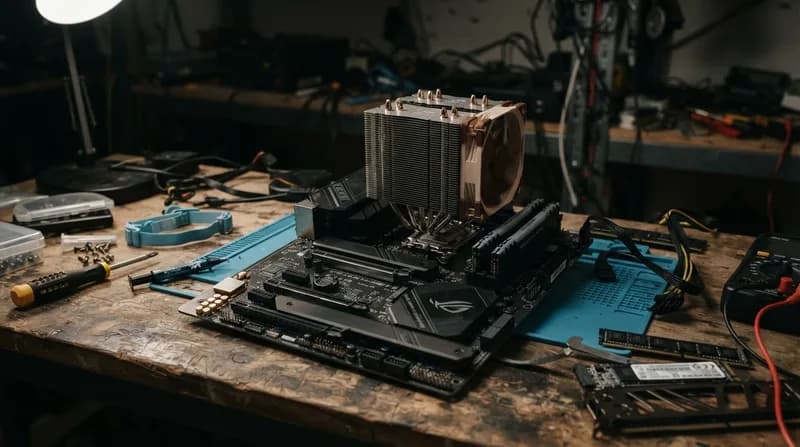
A critical component of this vision is the automation of hardware replacement. Rahim envisions a future where the AI not only detects a failed component but autonomously initiates the procurement process, orders a replacement part, and ensures its arrival. In this scenario, the role of the onsite technician is reduced to a simple physical installation that even an intern could manage, while the software handles the complex configuration and synchronization tasks automatically.
Rahim draws a parallel between this transition and the evolution of the automotive industry. Just as drivers once hesitated to trust automatic transmissions, cruise control, or lane-assist technologies, he argues that enterprise operators will grow to trust networking AI as they witness its reliability. By allowing administrators to enable automated actions on a granular, feature-by-feature basis, HPE aims to build confidence through steady, proven performance gains.
The Necessity of Automation in an Agent-Driven World
The push for total automation is driven by more than just efficiency; it is a response to the shifting digital landscape. With the rapid expansion of AI agents performing work across corporate infrastructures, network demand is set to skyrocket. Rahim notes that as organizations deploy more AI-powered agents, these digital workers will become the primary consumers of network bandwidth, necessitating complex, high-performance environments that are simply too vast for human teams to monitor manually.
Why It Matters
- Scalability: As agent-to-human ratios shift in favor of autonomous workers, manual network management becomes a bottleneck.
- Experience-Centric Metrics: HPE is pivoting its focus to the end-user, prioritizing the reduction of "Wi-Fi sucks" tickets as the primary gauge for successful network health.
- Strategic Integration: Following the acquisition of Juniper, HPE is consolidating its management tools, allowing unified control over diverse legacy hardware, including Aruba and Juniper products.
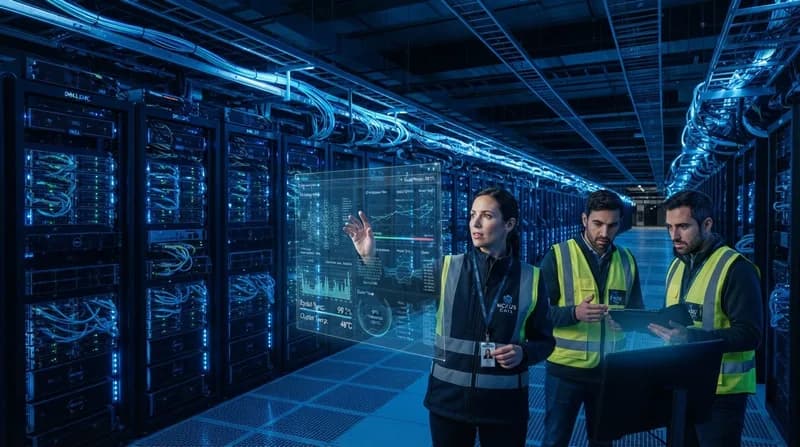
- The Data Center Shift: With networking becoming the backbone of AI compute, HPE is positioning itself as a network-first company to support the massive data throughput requirements of modern AI training and inference.
Ultimately, HPE is betting that networking is the most critical hurdle for the next generation of AI datacenters. By integrating network fabric management with observability platforms like OpsRamp, the company is attempting to weave automation into every layer of the hybrid cloud, ensuring that the infrastructure of tomorrow can keep pace with the exponential growth of artificial intelligence.