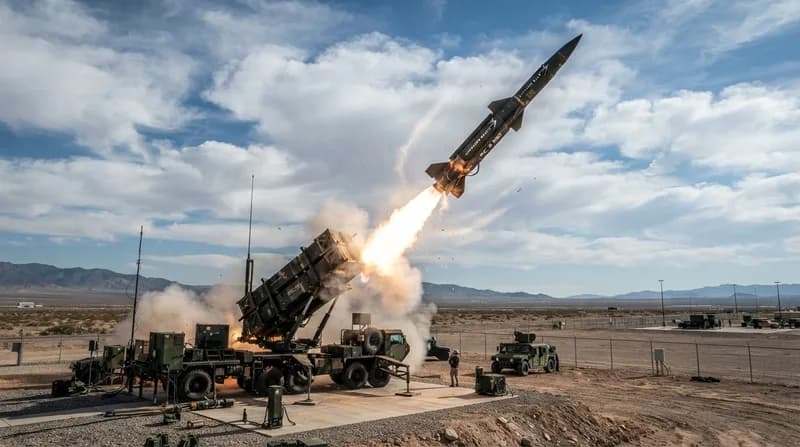
Defending Against Hypersonic Threats
Lockheed Martin has officially pulled back the curtain on its latest missile interceptor, a strategic hardware development tailored for the U.S. Army’s rigorous air defense modernization program. As modern warfare shifts toward high-speed, maneuverable threats, the defense contractor is positioning this new hardware as a substantial evolution over the current gold-standard Patriot Advanced Capability (PAC-3) missile.
The move comes as the Pentagon seeks to bolster its tiered air defense network. The objective is to secure an interceptor that provides superior reach and precision against hypersonic glide vehicles and advanced cruise missiles, targets that have historically proven difficult to track and destroy due to their erratic flight profiles.
Why It Matters
- Enhanced Maneuverability: The new design integrates upgraded flight control systems specifically intended to track targets capable of rapid course corrections.
- Strategic Depth: By developing a more capable interceptor, the Army aims to reduce the number of missiles required to neutralize a single threat, thereby optimizing interceptor inventory.
- Technological Convergence: This project represents a shift in missile defense architecture, moving away from legacy static defenses toward a more dynamic, high-velocity response model.
The development is currently positioned as a direct contender for upcoming Army procurement cycles, signaling a critical pivot in how the United States approaches integrated air and missile defense (IAMD). Lockheed’s hardware focuses on modularity, allowing for integration with existing radar infrastructure while offering improved performance in high-altitude intercepts. By leveraging advanced propulsion and guidance hardware, the company aims to provide a reliable shield against threats that can travel at speeds exceeding Mach 5. As the U.S. Army evaluates its next-generation requirements, this interceptor represents a cornerstone of Lockheed’s strategy to maintain a decisive technological edge in a complex, multi-domain environment where traditional air defense systems are being pushed to their absolute physical limits.