The Unintended Connection
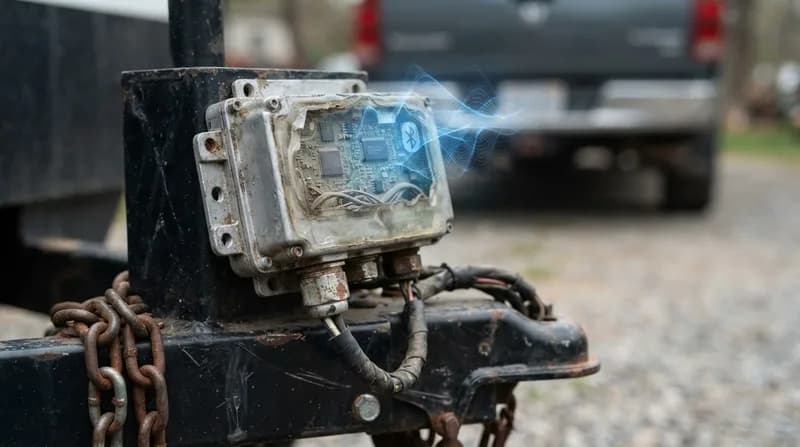
In a chilling discovery that highlights the potential dangers of the 'internet-of-things' (IoT) in the automotive sector, security researchers Patrick Forck and Jeremy McCarthy have exposed a severe security flaw in Elecbrakes trailer brake controllers. The vulnerability allows an unauthorized individual within Bluetooth range to bypass security protocols and exert control over a trailer’s braking system. What began as a routine drive for Forck—who experienced his own remote control accidentally pairing with a complete stranger's trailer—turned into a deep-dive investigation into how poorly secured these mission-critical components truly are.
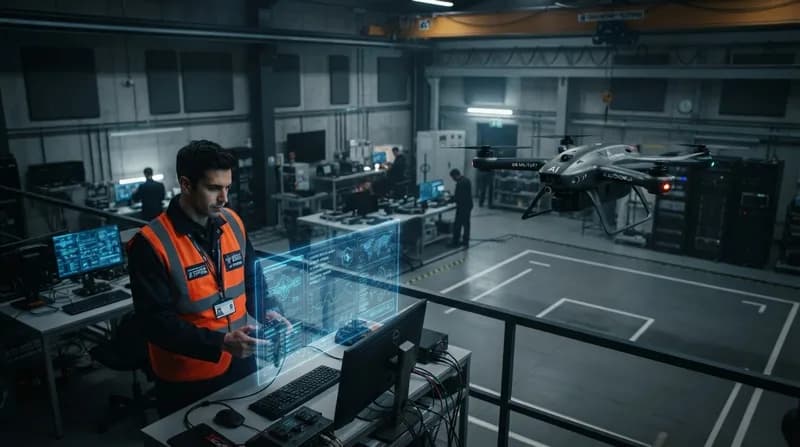
Trailer brake controllers, particularly those manufactured by Australian firm Elecbrakes, are designed to make towing safer and easier by providing electronic control over heavy-duty trailer brakes. However, the researchers discovered that the communication between these controllers and their associated apps or remotes was alarmingly insecure. Using AI-assisted analysis, the team reverse-engineered the controller’s GATT profile and found that critical braking commands were sent as unencrypted, plain-text byte arrays without checksums or authentication.
The Vulnerability Mechanics
The technical investigation revealed a staggering lack of defensive programming. By utilizing AI to parse decompiled bytecode, the researchers identified that the controllers would accept commands from any device within range, regardless of whether that device was authorized or paired. The system essentially acted as a 'yes-man' to any data packets it received, allowing anyone to send a four-byte command that would immediately engage the trailer's electromagnetic brake drums. Even more concerning, the research showed it was possible to manipulate braking force, potentially causing a trailer to behave erratically or brake aggressively without the driver's consent.
Given the nature of the exploit, CISA has issued three CVEs for the vulnerability, with two of them receiving a critical CVSS score of 9.6. The attack is trivial to execute; it requires nothing more than being within Bluetooth proximity and the ability to send a few simple bytes of data. This underscores a growing trend in security research where AI is being used to rapidly identify vulnerabilities in legacy and IoT hardware that would have previously taken weeks of manual reverse engineering to uncover.
Patching and Residual Risks
Elecbrakes has responded to the findings by releasing firmware patches for its current in-car and trailer-mounted controllers. Because these devices do not support over-the-air (OTA) updates, users are required to manually update their units to mitigate the security risks. Owners of the company's hardware are strongly urged to check their device versions and apply the necessary fixes immediately to ensure the safety of their towing operations.
However, the situation remains dire for owners of the legacy ELBC2000 model. This older unit, which is no longer in production, has been confirmed as vulnerable but has not received a patch. The manufacturer reportedly acknowledged the flaw in this legacy hardware only after significant pressure from the researchers. For those still operating trailers equipped with the ELBC2000, there is currently no path to remediation, leaving these drivers at risk until further official guidance or hardware replacement options are provided.
Why It Matters
- Automotive Security: As more mechanical systems digitize, the lack of robust encryption in hardware can turn convenience features into major safety hazards.
- AI as an Auditor: This case demonstrates that AI tools can be used to dramatically lower the barrier to entry for identifying critical vulnerabilities in complex hardware.
- Lifecycle Support: Manufacturers must reckon with the long-term security implications of their hardware, as legacy devices often become 'forgotten' attack surfaces.