The Evolution of AI-Assisted Development
For the past few years, the narrative surrounding AI in software engineering has been focused on generation: getting models to write boilerplate code, debug scripts, or suggest function completions. However, Anthropic has identified that the real bottleneck in modern development isn't the writing—it’s the review and approval process. As developers lean more heavily on AI agents to produce massive volumes of code, human maintainers are increasingly overwhelmed by the need to verify every single pull request (PR). To solve this, Anthropic has launched Claude Ship, a comprehensive suite of AI agents designed to handle the entire lifecycle of a code change, moving from generation to deployment-ready approval.
1. Claude Code Review
The foundation of the suite is Claude Code Review, a tool that is now generally available for developers. This component functions as an intelligent gatekeeper, scanning incoming code changes for syntax errors, logical fallacies, and adherence to established style guides. By automating the preliminary review process, it filters out low-level issues before a human ever needs to open the dashboard.
Because it is deeply integrated into the development workflow, it doesn't just flag errors; it provides contextual feedback on why a specific piece of code might fail or how it could be optimized. This ensures that by the time code reaches the next stage, it is substantially cleaner and more robust than raw, AI-generated output.
2. The PR Steward
Operating in beta, the PR Steward agent acts as the project manager for your repository. It specifically targets the friction points that stall deployments, such as failing continuous integration (CI) checks and complex merge conflicts. When a test fails or a branch conflicts with the main codebase, the PR Steward steps in to troubleshoot the situation automatically.
Perhaps most importantly for developers worried about safety, the PR Steward maintains a transparent audit trail. After every push, it leaves comments explaining exactly what modifications were made and providing the necessary commands or scripts to roll back those changes if a regression occurs. This layer of transparency allows development teams to move faster without sacrificing the safety net of version control.
3. Claude Approvals
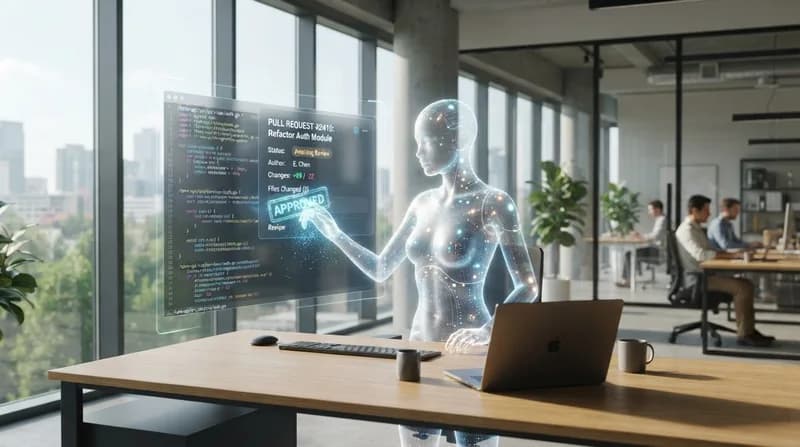
The most ambitious component of the suite is Claude Approvals, an agent that allows organizations to codify their human-reviewed standards into machine-readable policies. Instead of waiting for a senior engineer to manually click 'approve' on every routine task, teams can define policies in natural language stored within their repository files.
By incorporating signals from the Code Review tool and custom organizational classifiers, Claude Approvals can autonomously decide whether a PR meets the criteria for production. Anthropic has wisely included an 'observe-only' mode for the beta, allowing teams to test the agent's logic against their real-world PRs before granting it the final authority to merge changes into the codebase.
Why It Matters
The transition toward agentic workflows marks a shift in how software is maintained at scale. As organizations move toward 'AI-native' development, the human role is evolving from 'coder' to 'policy-maker.' By automating the approval process, companies can significantly reduce the latency between writing code and shipping features, provided they trust the oversight mechanisms. Anthropic's emphasis on customizable policy files and human-in-the-loop escalations suggests a balanced approach to this shift, maintaining safety while aggressively pursuing efficiency.