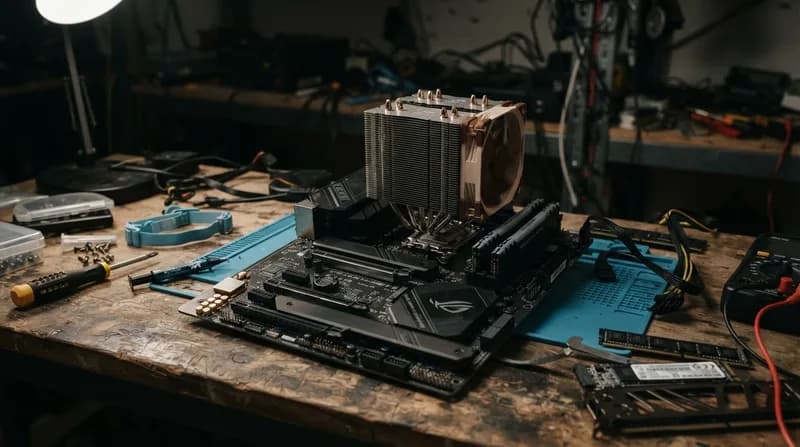
The PC Market Hits a Significant Snag
The global personal computer market is currently navigating a period of intense contraction, with recent industry reports from IDC and Omdia signaling a precipitous decline in shipments during the third quarter of 2026. Data shows that worldwide shipments of desktops, laptops, and workstations fell by over 20 percent year-on-year, a dramatic shift that reflects both market exhaustion and a fundamental shift in the availability of essential hardware components.
This slump follows an unusual period of volatility in the first half of the year. During that window, major vendors and corporate procurement departments aggressively pulled forward their orders to evade forecasted price hikes. While this provided a temporary mask for the market's underlying health, the strategy backfired by the third quarter, leaving the supply chain cluttered with excess inventory while consumer appetite for new machines effectively dried up.
The AI-Component Crunch
The core catalyst for this market instability is the surging demand for AI hardware, which has created a fierce competition for silicon, memory, and storage modules. As AI infrastructure expands, the appetite for high-density DRAM and solid-state drives has outpaced production capacity. Consequently, these components now constitute nearly 40 percent of a total PC’s bill of materials, a staggering increase from the 15 percent historical norm.
Beyond memory, PC manufacturers are grappling with broader logistical and supply-side constraints. Processors and specialized integrated circuits—including high-end graphics cards—remain expensive and difficult to source at scale. For the consumer, this has translated into significantly higher retail prices, discouraging upgrades and extending the replacement cycles for existing machines.
Why it Matters: The Cost of AI Supremacy
- Component Costs: DRAM and SSDs have seen a fourfold price increase, significantly raising the entry price for mid-range and high-end computers.
- Inventory Imbalance: A lopsided inventory pipeline from earlier in 2026 has resulted in a glut that manufacturers are struggling to move.
- Stagnant Upgrades: As prices stay high, consumers are increasingly choosing to sweat their existing assets, pushing off new purchases indefinitely.
- Market Outlook: Analysts predict that the fourth quarter could see a further 24 percent decline in shipments, with contraction expected to persist well into 2027.
Vendor Performance Amidst the Downturn
Major manufacturers have not been spared by these market headwinds. Lenovo continues to hold its ground as the global market leader, though it reported a significant 22.6 percent decline in shipment volume. HP and Dell have faced even steeper challenges, recording shipment drops of 31 percent and 25 percent, respectively. Interestingly, Apple has proven more resilient, suffering a comparatively modest 11 percent decline and actually managing to bolster its overall market share despite the industry-wide retreat.
While retailers may launch aggressive promotions to clear out the current backlog of aging stock, industry experts caution against expecting a return to the price tiers seen in 2025. The structural cost of hardware has fundamentally shifted, leaving both the industry and the consumer in a state of adjustment as the PC landscape continues to evolve under the shadow of the AI gold rush.