Revolutionizing Downforce Through Airflow
As anticipation builds for the highly anticipated reveal of the new Tesla Roadster, a freshly published patent from the automaker has sent the automotive world into a frenzy. The document details an electric fan system designed specifically to manipulate airflow, increase downforce, and minimize aerodynamic drag. While patents are common in the industry and do not guarantee immediate production implementation, the timing of this filing—just weeks before the official Roadster unveiling—suggests that this technology could be the secret ingredient behind the bold performance promises made by Elon Musk.
The concept of a 'fan car' is not entirely new, with legendary designs like Gordon Murray’s GMA T.50 and the track-dominating McMurtry Spéirling utilizing similar principles. Unlike traditional spoilers or wings that create drag, these systems use active ventilation to evacuate turbulent air from beneath the vehicle. By creating a controlled vacuum effect, the car is effectively 'sucked' toward the pavement, allowing for unprecedented levels of grip during high-speed cornering without the aerodynamic penalty of large, fixed appendages.
Technical Specifications and Integration
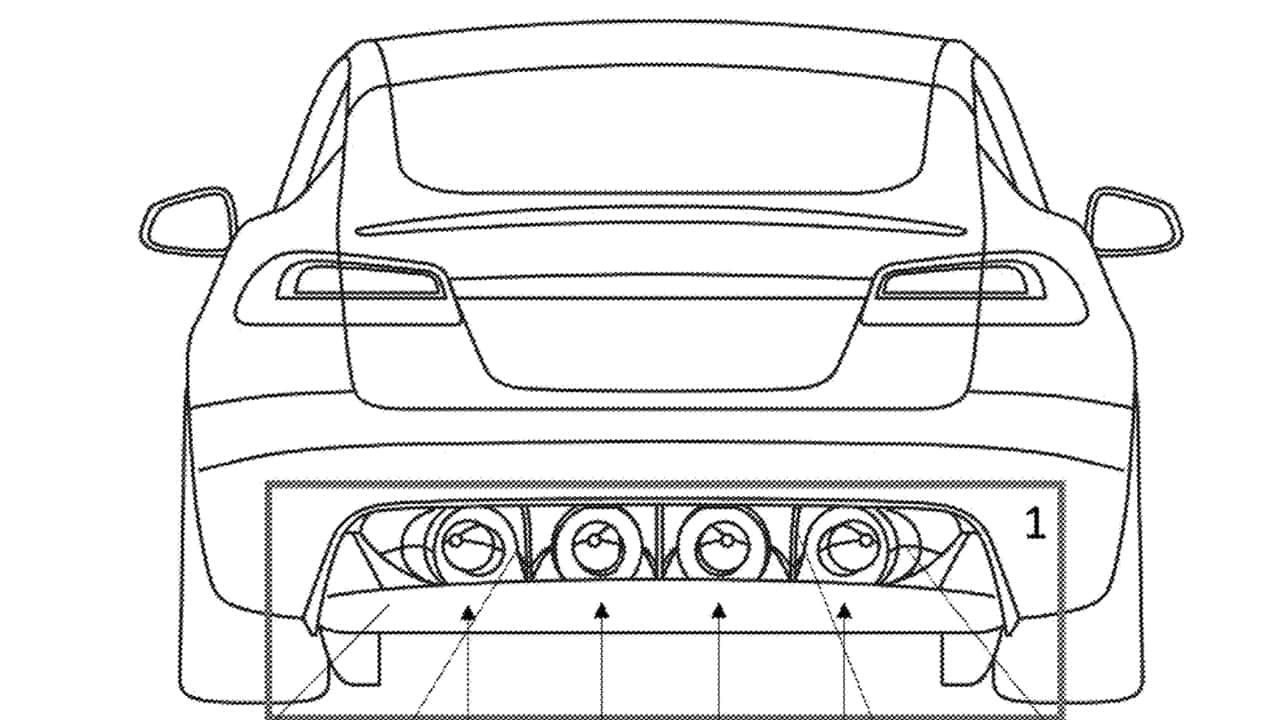
According to the patent documentation, the system is remarkably sophisticated, integrating directly with the vehicle’s high-voltage battery architecture and central control unit. The design features a series of electric fans mounted to the rear diffuser, which pull air through a dedicated inlet on the vehicle's underbody. This process cleans up the airflow trajectory as it exits the rear, maintaining a consistent pressure differential that keeps the vehicle pinned to the road surface.
- Architecture: High-voltage fan integration connected directly to the primary EV powertrain.
- Functionality: Active vacuum generation for increased mechanical downforce.
- Componentry: Multi-fan array situated within the rear diffuser assembly to minimize drag and turbulence.
- Control System: Automated adjustments managed by the vehicle’s onboard computer to optimize traction in real-time.
The patent diagrams appear to show the fans located behind the rear wheels, specifically engineered to stabilize the vehicle's rear end. By managing the airflow in this localized zone, Tesla aims to solve the challenge of drag accumulation. As the air naturally tries to rise into the diffuser, the mechanical assistance of the fans ensures that the pressure gradient remains favorable, potentially allowing the Roadster to achieve the sub-one-second zero-to-60 mph acceleration target that has been previously teased by the company.
Strategic Implications
This is not the first time Tesla has explored the intersection of fan technology and vehicle stability. Previous filings have hinted at skirts and fan systems designed to glue the car to the road, suggesting a long-term commitment to active aerodynamics. If implemented, this technology would align with the company's vision of the Roadster as the ultimate 'driver’s car' and the pinnacle of human-piloted performance vehicles in the Tesla lineup.
As we approach the October 15 reveal date, the industry is left to wonder if these fans are the key to the Roadster’s 'moonshot' specifications. With top engineers describing the car as the final evolution of Tesla's performance engineering, the addition of active fan-assisted downforce would represent a significant technological leap, placing the Roadster in a league of its own against hypercar competitors that rely on conventional, static aerodynamic aids.