Tesla Reality View: A Cinematic Shift in Navigation
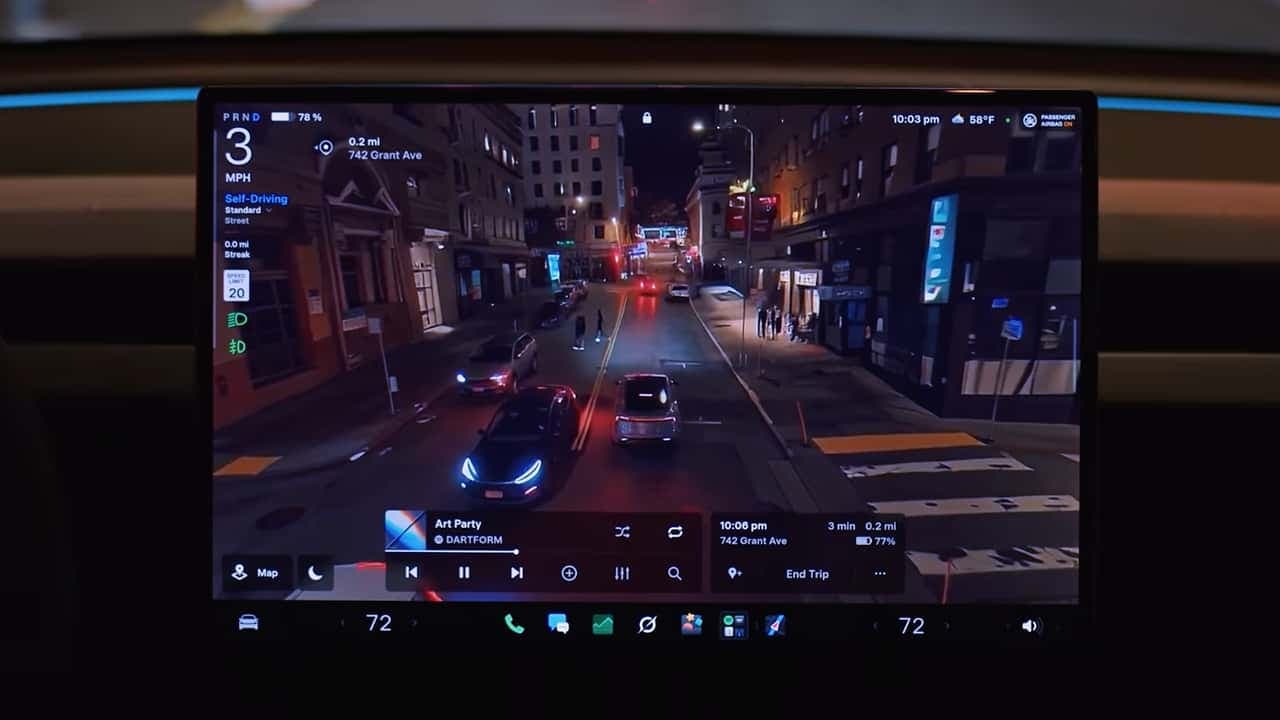
Tesla has officially begun rolling out Full Self-Driving (FSD) version 15 to early-access users, featuring a headline-grabbing visual overhaul dubbed 'Tesla Reality View.' Much like the third-person camera angles found in open-world games such as Grand Theft Auto, this new interface allows drivers to manipulate a virtual camera around their vehicle. The system reconstructs the surrounding environment in real-time, providing a high-fidelity visual representation of the path ahead, intended turns, and potential parking spots. This dynamic view, paired with a new floating arrow indicator that clearly displays which roundabout exit the vehicle intends to take, aims to bridge the gap between abstract computer vision and driver intuition.
Beyond the aesthetic appeal, this visualization tool serves a functional purpose by demystifying the vehicle's decision-making process. Drivers can choose to display this view across the full dashboard screen, split it with the navigation map, or prioritize the map entirely. The system also introduces thoughtful cabin experience enhancements, such as quieter interior modes and nuanced turn signal audio that fades after several clicks, reflecting a focus on refinement alongside technical capability.
Quantifiable Safety Gains and Improved Object Detection
The core of the FSD V15 update centers on a significant claim: Tesla asserts that the software is now 25 times more effective at managing critical safety interventions compared to its predecessor. This performance jump is attributed to an enhanced image interpretation engine that has been trained on a massive repository of video data, drawing from Tesla's broader ecosystem, including its Robotaxi and Optimus humanoid robotics programs. By leveraging this shared intelligence, the software has become significantly more adept at identifying and reacting to road hazards, including potholes, small animals, traffic signs, and potentially dangerous debris like tire chains.
Contextual awareness has also been expanded to improve efficiency and passenger comfort. The vehicle is now better equipped to handle adverse weather conditions and navigate school zones at appropriate, adaptive speeds. Furthermore, the system includes an intelligent 'learning' feature that observes real-world navigation patterns from the broader Tesla fleet. By analyzing the start and end points of trips frequently taken by other Tesla drivers, the car can make more informed decisions about arrival and parking, even suggesting multiple parking options based on the vehicle’s historical data and user preferences.
Why It Matters: The Future of Assisted Driving
- Enhanced Fleet Learning: By incorporating routing data from other Tesla drivers, the system moves closer to a truly collective intelligence model.
- Safety Transparency: The 25-fold improvement in critical intervention logic underscores a push toward greater autonomy reliability, though independent verification remains pending.
- User-Centric Refinements: Features like 'Bike Rack Mode' and speed-camera memory—where the car remembers if a driver repeatedly overrides a speed limit suggestion—demonstrate a shift toward personalizing the autonomous experience.
- Visual Feedback: Shifting to 3D, real-time world recreation helps human drivers better trust the vehicle's pathing, which is a vital hurdle for widespread trust in high-level driver-assistance systems.
While early field tests indicate that the system is becoming increasingly cautious around pedestrians—often braking for human movement before a human driver might register the threat—it remains an assistant, not a fully autonomous pilot. As Tesla continues to iterate, the combination of sophisticated 'Grand Theft Auto' style visualization and improved real-world data training suggests that the next phase of EV autonomy will be as much about driver confidence as it is about raw computational power.