The Hidden Role of Fructose in Metastasis
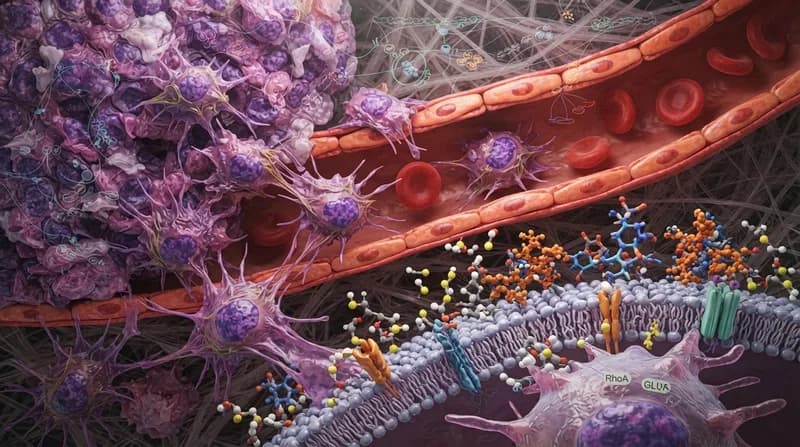
In a significant discovery published in the journal Nature Aging, researchers at The Wistar Institute have identified a surprising mechanism that allows aggressive ovarian cancer to evade chemotherapy and spread throughout the body. While it is well-established that chemotherapy aims to destroy cancer cells, this study highlights that surviving cells—even when they stop dividing—remain biologically active. These dormant survivors act as a source of chemical signaling, releasing fructose that serves as a catalyst for metastasis.
Metastasis, the process by which cancer cells detach from an original tumor to colonize other areas, is the primary driver of mortality in ovarian cancer patients. The research team discovered that the fructose released by these chemo-resistant cells acts as a messenger, instructing neighboring tumor cells to weaken the biological 'glue' that binds them together. This reduction in cell-to-cell adhesion allows malignant cells to detach more easily, facilitating their spread through the abdominal cavity.
The Cholesterol Connection and Statin Risks
The study also sheds light on a secondary, perhaps more controversial, factor: the role of cholesterol. Using CRISPR-based genetic screening, the researchers determined that fructose influences cancer progression by suppressing cholesterol production within neighboring cells. Since cholesterol is a vital component of cell membranes, its depletion compromises the structural integrity of the cell-to-cell connections, essentially making the tissue more prone to disintegration.
Because cholesterol is crucial for healthy cell function, this finding prompted the team to investigate the impact of statins—medications commonly prescribed to manage cholesterol levels. In preclinical experiments, the team observed that statins could replicate the effect of fructose by further suppressing cholesterol, potentially making it easier for cancer cells to escape. While this presents a complex challenge for patients—many of whom are postmenopausal and potentially on statins—the researchers emphasize that these findings are currently limited to preclinical models. Patients are strongly advised not to alter or discontinue their prescribed medications without consulting their medical professionals.
Why It Matters
- Chemo-Resistance Signaling: This research challenges the assumption that non-dividing, chemotherapy-surviving cells are benign, showing instead that they remain active, dangerous contributors to disease progression.
- Dietary Implications: It identifies fructose as a specific metabolic signal for cancer spread, suggesting that future nutritional interventions could potentially be used as an adjunct to standard cancer therapies.
- Medication Synergy: The connection between statins and cell detachment opens a critical new area of investigation regarding how routine heart health medications may inadvertently interact with cancer treatment protocols.
- Broad Potential: While the primary study focused on ovarian cancer, the researchers suggest the mechanism may be universal for other cancers originating in the torso, including colon, pancreatic, and liver cancers.
Future Outlook and Therapeutic Potential
The implications of this discovery are expansive. By identifying the chemical pathways that enable cancer cells to break free, scientists are opening the door to a new class of treatments aimed at preventing metastasis rather than just killing active tumors. The research team, led by Dr. Katherine Aird, is already moving forward with additional studies to see if these findings hold true for other cancer types, which could redefine how clinicians approach the management of aggressive abdominal cancers in the future.
While the study stops short of proving that dietary sugar intake directly causes cancer spread in human populations, it highlights the importance of metabolic monitoring during treatment. As the scientific community continues to explore the interplay between nutrition, metabolism, and oncology, these insights could eventually transform nutritional guidance and medication selection for cancer patients into more personalized, precision-based strategies.