The Frontline Against a Silent Killer
For decades, malaria has remained an unrelenting adversary in Nigeria, claiming hundreds of thousands of lives and disproportionately targeting children under the age of five. With the introduction of the world’s first malaria vaccines in late 2024, the nation has embarked on a monumental public health mission. While the journey is defined by the daunting scale of Africa’s most populous country, the localized impact is already becoming a beacon of hope for parents and medical practitioners alike.
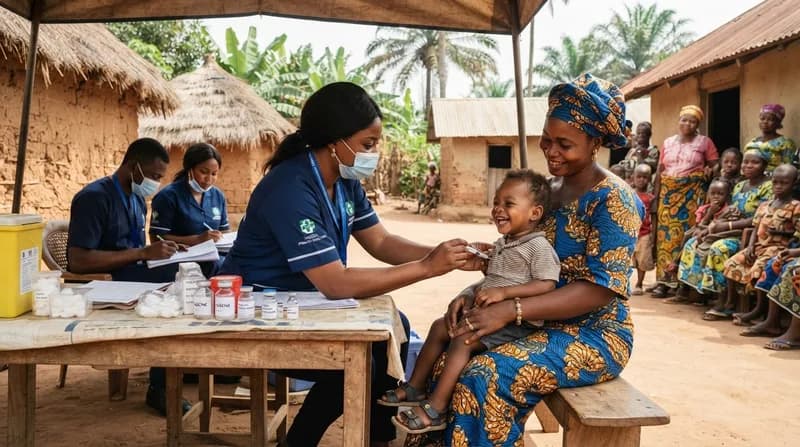
The immunization program follows a meticulous four-part regimen delivered during the first 15 months of an infant's life. This window is critical, as medical experts emphasize that while the vaccine does not offer total immunity, it provides a crucial shield during the years when children are biologically at their most vulnerable. In regions where the vaccine has been successfully deployed, the change is palpable; clinics that once dealt with a constant stream of malaria-induced seizures and fatalities are reporting a significant decline in severe cases, and in some specific villages, child deaths attributed to the disease have reportedly dropped to zero.
Navigating the Logistics of Healthcare
The rollout is currently operating in four of Nigeria’s 36 states, a strategic choice that allows health officials to refine distribution methods before scaling up to reach the nation’s 240 million citizens. The logistical hurdles are immense. In areas like the Niger Delta, health workers often must trade cars for boats, navigating winding rivers and dense mangroves to reach remote communities where road infrastructure is non-existent. These efforts are frequently complicated by local economic instability and, in some regions, the presence of armed security details guarding oil infrastructure, highlighting the disconnect between the region's wealth and its primary health services.
Despite these challenges, the results are statistically encouraging. In Bayelsa state, for example, there has been an 18% reduction in the malaria prevalence rate among children under five. This achievement is particularly noteworthy given that it has occurred even as supplemental interventions, such as the distribution of bed nets and preventative drug therapy, have faced persistent delays. By prioritizing home visits for parents who cannot reach clinics, healthcare providers are effectively bridging the gap between the medical system and the most isolated households.
Why It Matters
- Pediatric Impact: Children under five account for over 75% of malaria deaths in Africa; protecting this demographic is the primary objective of current immunization policy.
- Economic Relief: For many families, the cost of malaria treatment—approximately 5,000 naira ($3.75)—is a significant financial burden. The vaccine acts as both a health intervention and an economic stabilizer for low-income households.
- Infrastructure Resilience: The rollout highlights the necessity of robust public health infrastructure, emphasizing that medicine is only as effective as the distribution network that delivers it.
Looking Toward the Future
While the initial results are promising, public health experts and NGOs like PATH remain clear-eyed about the road ahead. The vaccine is not a "silver bullet," and sustained investment in secondary preventative measures—such as sanitation, vector control, and sewage infrastructure—remains non-negotiable. The celebrations held in local capitals, where health workers are honored with gear suited for the tropical elements, serve as a reminder that the real work is happening in the field, one house at a time.
As the government and its partners look to expand the program, the focus will likely shift to improving supply chain consistency and overcoming the legacy of underinvestment in rural primary care. For now, the story of Nigeria's malaria vaccine rollout is one of incremental, hard-won victories. It is a testament to the dedication of local health workers who are effectively changing the trajectory of pediatric health in one of the world's most challenging environments.