A Cosmic Delivery From the Kuiper Belt
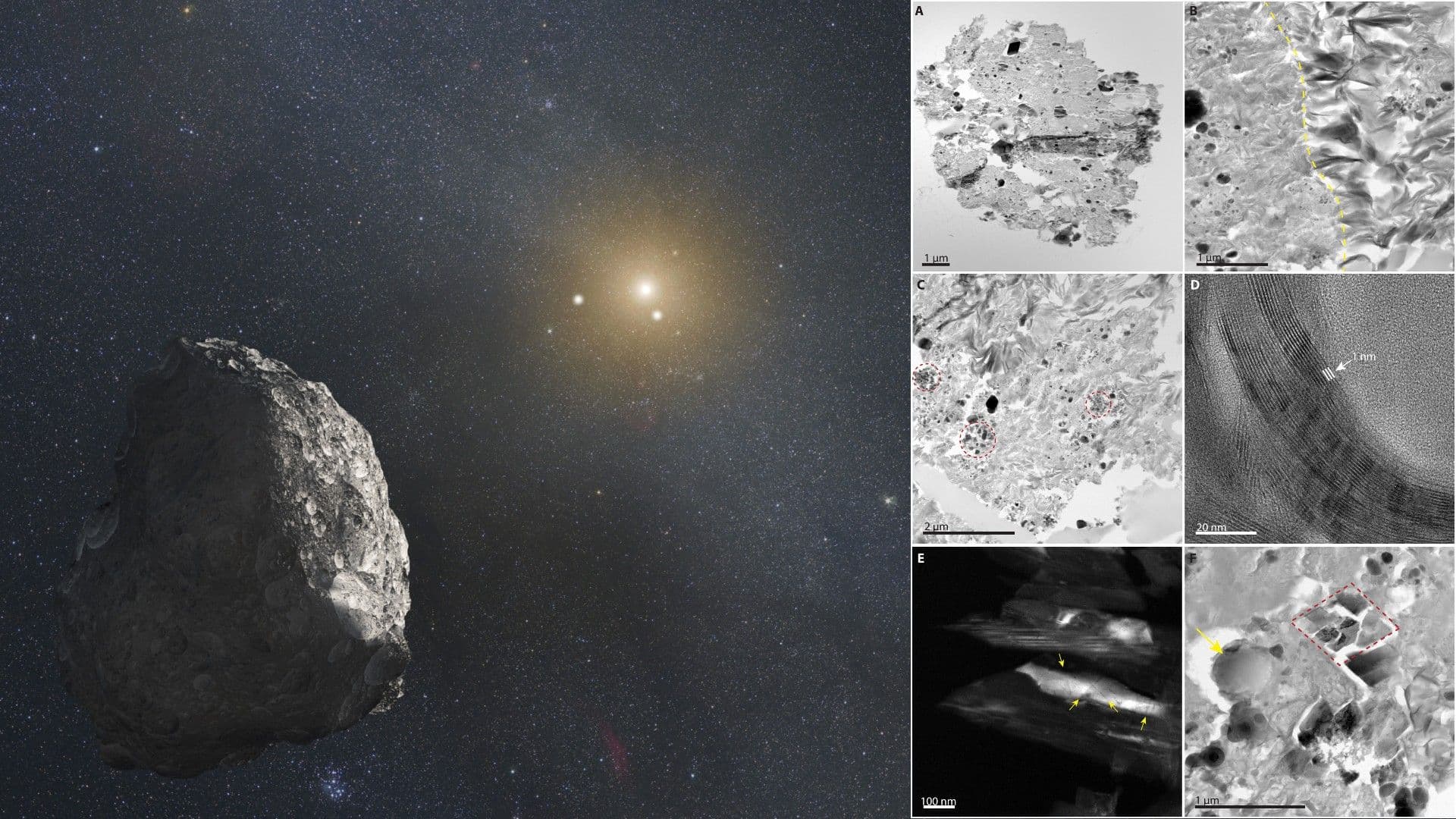
In a remarkable feat of atmospheric science, researchers have retrieved twelve microscopic grains of dust that have traveled millions of miles from the frozen fringes of the Kuiper Belt. These tiny particles, smaller than a millimeter across, were captured by NASA’s ER-2 high-altitude research aircraft as they drifted through Earth’s stratosphere. While they might appear to be mere specks of dirt, these grains serve as pristine time capsules, offering an unprecedented look at the chemical composition of the outer solar system as it existed 4.5 billion years ago.
The journey these grains took to reach our planet is a testament to the persistent forces of space. Over eons, the particles were subjected to 'Poynting-Robertson drag.' By absorbing solar radiation and re-emitting it as thermal energy, the dust grains lost orbital velocity, slowly spiraling inward toward the sun until they were intercepted by Earth’s atmosphere. Their survival during high-speed atmospheric entry provided scientists with a rare, direct look at raw material from the solar system's outer rim without the need for expensive, multi-year probe missions.
Decoding the 'Heavy' Signature
Using state-of-the-art scanning transmission electron microscopy at NASA’s Johnson Space Center and ion microprobe analysis at UCLA, researchers identified clear evidence of hydrated minerals. These minerals were formed in the cold, dark reaches of the early planet-forming disk through interactions between silicate rock and water enriched with 'heavy' oxygen isotopes. Unlike ordinary oxygen-16, which contains eight protons and eight neutrons, the oxygen found in these samples included higher ratios of oxygen-17 and oxygen-18.
The study found that the Kuiper Belt possesses a 15% greater ratio of oxygen-18 to oxygen-16 than what is typically observed in Earth’s oceans. This isotopic signature acts as a chemical fingerprint, confirming that a distinct, heavy-water reservoir existed in the outer reaches of the system during the era of planetary assembly. This discovery is pivotal for scientists who have long struggled to piece together how water and various materials were distributed across the primitive solar system.
Why it Matters: The Saturn Barrier
The discovery of this heavy oxygen reservoir has led to a fascinating new hypothesis regarding the formation of our planetary neighborhood. The research suggests a distinct 'cut-off' point where mixing between the inner and outer solar system was effectively blocked. The study posits that giant planets like Saturn—or a combination of the ice giants—likely acted as a gravitational and physical barrier, preventing this heavy-oxygen-rich material from migrating inward.
- Source Material: The dust grains originate from the Kuiper Belt, identified by specific solar-particle scars.
- Analytical Precision: Researchers used advanced ion microprobes to measure subtle isotopic variations.
- Planetary Dynamics: The findings imply that massive gas giants fundamentally shaped the chemical geography of the early solar system.
- Historical Context: This data allows for more accurate modeling of the planet-forming disk 4.5 billion years ago.
Implications for Future Planetary Models
This research fundamentally challenges previous assumptions about how uniformly material was mixed during the solar system's infancy. By confirming the isolation of the outer solar system's water reservoir, the findings provide a new framework for understanding the chemical evolution of Earth and its neighbors. As scientists continue to analyze these grains, the results will undoubtedly force a revision of current models that explain how our solar system transitioned from a chaotic disk of gas and dust into the structured arrangement of planets we observe today.