Revolutionizing Cancer Care with Speed and Precision
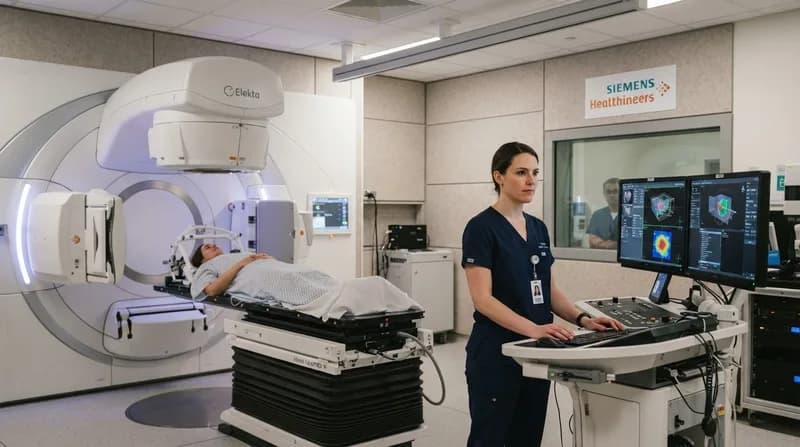
At the 2026 American Society for Radiation Oncology (ASTRO) meeting in Boston, Siemens Healthineers introduced its latest breakthrough in oncology technology: the Accela radiotherapy system. By integrating advanced mechanics with a novel treatment planning approach, Accela promises to redefine the clinical workflow for patients requiring precision radiation therapy, offering speeds that significantly outperform existing standards.
The core of Accela’s innovation is the introduction of NeoArc dynamic modulated arc therapy (DMAT). Unlike traditional volumetric-modulated arc therapy (VMAT), which prioritizes dose distribution, DMAT simultaneously optimizes both the radiation plan and the efficiency of the delivery process. This dual-optimization strategy allows clinicians to find the perfect equilibrium between precision and speed, effectively reducing the amount of time a patient must remain on the treatment table during a session.
Technical Specifications and Performance
The speed of Accela is driven by a sophisticated suite of hardware improvements designed for high-throughput environments. The system features a gantry capable of rotating at speeds up to 2.5 rpm. This mechanical agility is paired with high-dose rates reaching up to 40 Gy/min, ensuring that the target tissue receives the necessary radiation within a condensed timeframe. To further enhance the system's precision, Siemens has equipped Accela with a dual-layer multileaf collimator (MLC) that achieves leaf speeds of up to 6.25 cm/s.
These specifications enable clinical capabilities that were previously difficult to achieve in routine practice. For instance, the system can perform multi-site stereotactic body radiotherapy (SBRT) in under 60 seconds. This time window is inclusive of critical pre-treatment steps, such as on-couch imaging using the integrated HyperSight cone-beam CT panel and necessary couch adjustments. The ability to complete these complex procedures within a single breath-hold not only increases patient comfort but also improves accuracy by minimizing motion-related errors during the radiation delivery.
Why it Matters
- Patient Throughput: The sub-60-second delivery times allow clinics to handle a higher volume of patients without sacrificing safety or accuracy.
- Clinical Workflow: By automating the balancing act between dosimetric goals and delivery speed, staff can focus more on patient outcomes rather than machine logistics.
- Biological Impact: The potential for ultrafast delivery may influence the body’s biological response to radiation, an area of ongoing study that could lead to new therapeutic strategies.
- Enhanced Accuracy: Faster delivery minimizes the window for patient movement, allowing for tighter margins and less exposure for healthy tissue surrounding the tumor.
The reception at ASTRO 2026 suggests that the medical community is eager to adopt this new level of efficiency. As Siemens Healthineers looks to the future, the Accela platform stands as a clear example of how hardware innovation—specifically through high-speed gantry rotation and adaptive beam control—can significantly improve the experience and effectiveness of cancer treatment.