Revolutionizing Battery Architecture
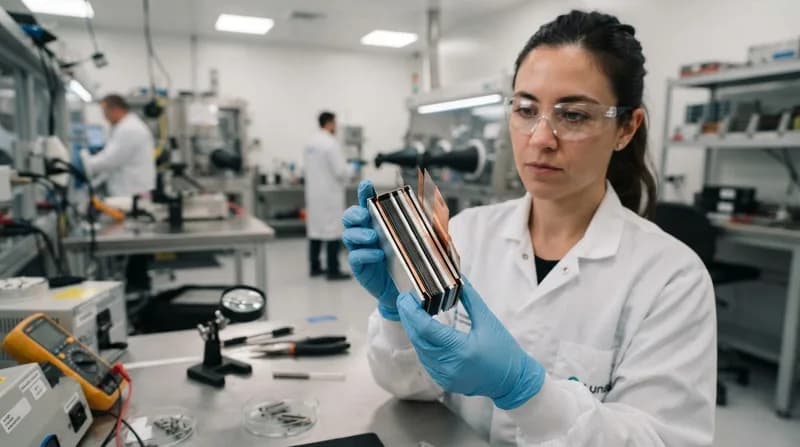
The quest for higher-performance electric vehicle batteries has hit a new milestone as researchers at RWTH Aachen University embark on the ambitious ProMeBa project. By focusing on the production of multi-layer electrodes, the team aims to overcome the significant hurdles that have previously kept this promising technology confined to the laboratory. Multi-layer electrodes are engineered with distinct structural layers, a design that optimizes ion transport and improves both mechanical stability and overall battery longevity.
However, the complexity of these structures—which involve varying compositions and thicknesses—has traditionally made large-scale manufacturing difficult. Through ProMeBa, which is funded by the German Federal Ministry for Economic Affairs and Climate Action, the research consortium is developing standardized industrial processes to ensure that these advanced batteries can be produced with high reproducibility and stability.
The Path to Industrial Scalability
The core of the project involves a shift from small-scale testing to pilot-level production. The researchers are specifically developing a modular coating unit designed to be retrofitted into existing production facilities. This approach is highly strategic; rather than mandating entirely new factory lines, the team is working toward a "drop-in" capability that allows manufacturers to augment their current infrastructure. This focus on compatibility is vital for lowering the barrier to entry for battery makers looking to incorporate advanced multi-layer designs.
Two primary manufacturing methods are under investigation: multi-layer slot die coating and multi-layer curtain coating. By testing these under industrially relevant roll-to-roll conditions, the team aims to identify which method provides the optimal balance of coating precision and production throughput. Furthermore, the inclusion of an inline viscosity monitoring system will allow manufacturers to detect material inconsistencies in real-time, drastically reducing scrap rates and ensuring a consistent, high-quality final product.
Why it Matters
- Performance Gains: Multi-layer architectures enhance ion conductivity and structural integrity, directly translating to better energy density and longer cycle life.
- Manufacturing Pragmatism: The focus on "drop-in" technology ensures that this breakthrough doesn't require a total overhaul of expensive battery assembly lines.
- Quality Control: Advanced inline measurement tools ensure that laboratory-grade precision can be maintained as production scales into the millions of units.
Collaborative Innovation
The ProMeBa project brings together a prestigious group of academic and industrial partners, including Netzsch-Gerätebau GmbH, the Fraunhofer IKTS, and the ISEA Chair at RWTH Aachen. By linking material science research directly with production engineering from the outset, the project ensures that the resulting innovations are not only scientifically sound but also commercially viable. As the team moves through the project timeline toward its 2029 completion, the industry watches closely, anticipating a new standard for high-performance, durable, and scalable electric vehicle energy storage.