The Evolution of Solid-State Energy
The quest for the next generation of electric vehicle power has long centered on solid-state battery technology. While the industry has identified sulfide-based electrolytes as a promising pathway due to their impressive ionic conductivity, mass adoption has been stalled by a recurring set of technical barriers. These include the requirement for high-pressure operation, limited cycle life, and inherent incompatibility with lithium metal. QuantumScape, a frontrunner in battery innovation, is now looking to change the narrative with the launch of its new open platform, dubbed ‘Osprey’.
Unlike the company's existing QSE full-stack solution—which is currently scaling toward mass production—Osprey functions as a collaborative architectural model. By creating an open ecosystem, QuantumScape aims to allow automotive partners and material developers to integrate their own proprietary cathode technologies and supply chain components while benefiting from the core of QuantumScape’s IP: its high-performance ceramic separator.
Understanding the Osprey Advantage
The Osprey platform is specifically engineered to address the fundamental limitations of sulfide electrolytes. During initial lab testing, cells built on the Osprey architecture have demonstrated significant performance milestones, including reaching 1,000 full charge cycles with approximately 80% capacity retention. Perhaps most striking is the platform's ability to facilitate ultra-fast charging, moving from 10% to 80% state-of-charge in just five minutes under standard conditions.
Technical specifications for the Osprey platform are equally compelling. The system supports high-cathode loading, which enables energy densities at the cell level reaching roughly 1,100 Wh/L. These results were achieved at room temperature and, crucially, under 1 atmosphere of pressure—a significant improvement over conventional sulfide-based systems that often require specialized, high-pressure environments to function effectively. This suggests a potential path toward more practical, vehicle-integrated designs.
Why It Matters
- Collaboration over Silos: By moving to an open platform, QuantumScape allows automakers to tailor battery performance to their specific vehicle requirements while maintaining ownership of their cathode technology.
- Pressure and Performance: The ability to operate at 1 atmosphere drastically simplifies battery pack engineering, making solid-state technology more compatible with current vehicle architectures.
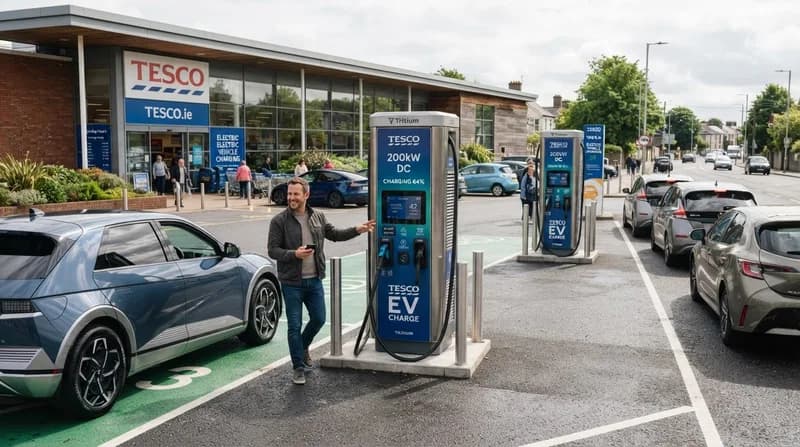
- Rapid Charging: The five-minute 10-80% charge time potentially matches or exceeds the convenience of refueling a traditional internal combustion engine, a key milestone for widespread consumer acceptance.
The Path Toward Commercialization
While the initial data for Osprey is promising, QuantumScape maintains a clear-eyed view of the development journey ahead. Current findings are largely based on two-layer test cells. To move toward commercialization, the company acknowledges that larger prismatic cells—which the automotive market prefers for their capacity and density—will require further scaling in terms of layer count and surface area. Furthermore, the transition from a successful laboratory environment to high-volume manufacturing remains the primary hurdle.
This launch complements QuantumScape’s broader roadmap, which includes the upcoming QSE-5 cell. With strong backing from industry giants like Volkswagen and partnerships with firms like Honda, QuantumScape is positioning itself not just as a cell manufacturer, but as a core technology provider. Whether through licensing its QSE stack or co-developing via the new Osprey platform, the company is attempting to establish the fundamental hardware standards that will define the next decade of electric mobility.