Artificial IntelligenceTechnical Deep Dive

Project Numina Unveils Kimina-Prover-RL: Advancing Mathematical Reasoning

Published
EElectricBuzz Editorial Team
Project Numina Unveils Kimina-Prover-RL: Advancing Mathematical Reasoning
2 min read293 wordsElectricBuzz Editorial Team

The Gist

“Project Numina introduces Kimina-Prover-RL, a specialized model designed to push the boundaries of automated mathematical theorem proving.”

The Evolution of Formal Reasoning

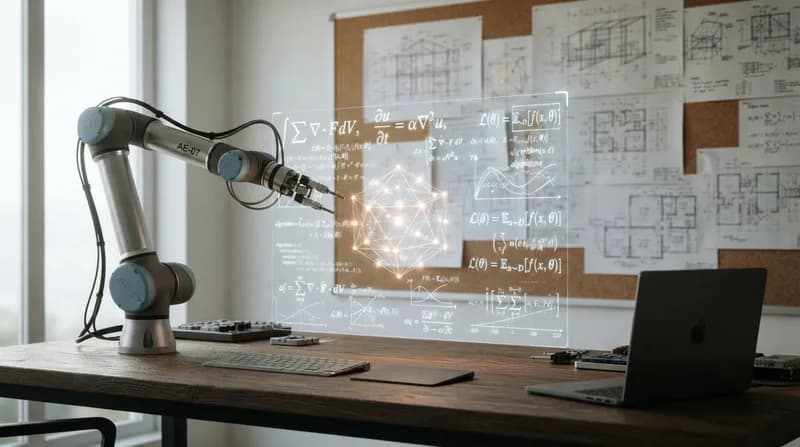
Project Numina has officially introduced Kimina-Prover-RL, a sophisticated new model engineered to tackle the complexities of formal mathematical reasoning. By leveraging reinforcement learning, this model addresses a critical bottleneck in artificial intelligence: the ability to generate rigorous, verifiable proofs. While many language models struggle with hallucinations in logic, Kimina-Prover-RL is built specifically to navigate the rigid structures of formal proof languages, ensuring that every step of a calculation is sound and verifiable.

Technical Foundations and Methodology

At its core, Kimina-Prover-RL integrates advanced reinforcement learning techniques to iteratively improve its problem-solving accuracy. By training on diverse datasets that emphasize mathematical correctness, the model learns to prioritize logic over pattern matching. This approach significantly reduces errors during long-chain reasoning tasks, a common pitfall for traditional large language models. The integration with current research frameworks signals a shift toward more reliable, specialized AI tools that function as partners for researchers rather than mere chatbots.

Why It Matters

  • Verification-First Approach: Unlike generalist models, this architecture is optimized for environments where correctness is absolute, such as formal mathematics.
  • Reinforcement Learning Efficacy: By using RL, the model continuously optimizes its proof-search strategy, making it more efficient than static, pre-trained counterparts.
  • Accessibility for Researchers: As an open-resource initiative, this release provides the broader community with high-performance tools to explore complex theorems without needing massive computational overhead.

The implications of this launch reach far beyond simple theorem solving. As mathematical reasoning becomes more robust, the transition into automated software verification and algorithmic discovery becomes increasingly viable. Project Numina’s focus on the intersection of RL and formal systems suggests that the next generation of AI will be defined by its ability to reliably verify its own output, a necessary step toward achieving true autonomous scientific research capability.

SPONSORED
The 5 Best Over-Ear ANC Headphones of 2026, Tested & Ranked
Editor's Pick Guide
92/100
Tech & Gadgets•12 min read

The 5 Best Over-Ear ANC Headphones of 2026, Tested & Ranked

We locked five over-ear ANC picks for 2026 — Sony WH-1000XM6, Bose QuietComfort Ultra 2, Soundcore Space One, Sennheiser Momentum 5, and Apple AirPods Max 2 — then stress-tested them on lab metrics, long-term owner truth, and live street prices.

Related Stories

Semantically matched articles, ranked by topic overlap and freshness.

Thinking Machines Unveils Inkling 2 Mini: A New Standard for Edge AI
Artificial Intelligence

Thinking Machines Unveils Inkling 2 Mini: A New Standard for Edge AI

The arrival of Inkling 2 Mini marks a significant milestone in localized multimodal AI, offering a high-performance 26B parameter model designed for specialized setups.

Anthropic’s Massive IPO Signals a Shift in the AI Financial Ecosystem
Artificial Intelligence

Anthropic’s Massive IPO Signals a Shift in the AI Financial Ecosystem

As Anthropic enters the public markets, its IPO marks a pivotal transition from circular venture funding to a self-sustaining model backed by public capital.

Europa Fusion: The AI-Driven Approach to Solving the Energy Crisis
Artificial Intelligence

Europa Fusion: The AI-Driven Approach to Solving the Energy Crisis

Spotify founder Daniel Ek is betting on a new fusion startup, Europa Fusion, which aims to crack the fusion code through data-heavy simulation rather than traditional hardware-first methods.

A Mathematical Revolution: The Duel to Solve the Riemann Hypothesis
Artificial Intelligence

A Mathematical Revolution: The Duel to Solve the Riemann Hypothesis

In an unprecedented week for mathematics, two competing proofs for the 167-year-old Riemann hypothesis have emerged—one assisted by AI and one crafted entirely by hand.

Optimizing AI Workflows with New Harness Adapters
Artificial Intelligence

Optimizing AI Workflows with New Harness Adapters

Hugging Face is revolutionizing model performance with new harness adapters designed to bridge compatibility gaps and slash operational costs.

Anthropic’s Massive IPO Could Unlock $156 Billion for Global Philanthropy
Artificial Intelligence

Anthropic’s Massive IPO Could Unlock $156 Billion for Global Philanthropy

Following a historic IPO, Anthropic’s unique corporate structure and employee pledge programs are set to trigger one of the largest philanthropic windfalls in modern history.

The High-Stakes Financial Hurdle Facing Space-Based Data Centers
Artificial Intelligence

The High-Stakes Financial Hurdle Facing Space-Based Data Centers

While space-hardened hardware is becoming a reality, the traditional debt-financing models used for terrestrial data centers are hitting a major wall in orbit.

Nvidia’s Post-Huang Era: Earnings Growth Amid Leadership Turmoil
Artificial Intelligence

Nvidia’s Post-Huang Era: Earnings Growth Amid Leadership Turmoil

As Nvidia stabilizes its financial trajectory following the ouster of Jensen Huang, the semiconductor giant faces significant geopolitical headwinds and mounting pressure to reconsider its executive leadership.