The Riemann Breakthrough
The mathematical world is currently reeling from a singular, epochal event: the apparent resolution of the Riemann hypothesis, a legendary 167-year-old problem that stands as one of the most significant challenges in modern number theory. Often cited as one of the fundamental mysteries of the universe, the hypothesis suggests a hidden architecture governing the distribution of prime numbers. This week, the field witnessed a dramatic convergence of human intellect and artificial intelligence, as two distinct claims to the solution were unveiled almost simultaneously.
Levent Alpöge, a mathematician currently affiliated with Anthropic, announced his finding via a Lean-compilable proof. This approach utilizes Lean, an open-source programming language that allows mathematicians to codify complex logical arguments into a format that computers can rigorously verify. The reaction from the global mathematics community was swift and intense. Experts gathered on collaborative forums like Zulip to dissect the technical nuances, which involve advanced concepts including Galois representations and automorphy-lifting arguments. While the full implications of the proof are still being deciphered by the academic elite, independent sources have already confirmed that Alpöge’s proof compiles successfully in the Lean environment, suggesting its internal logic is robust.
The Role of AI Collaboration
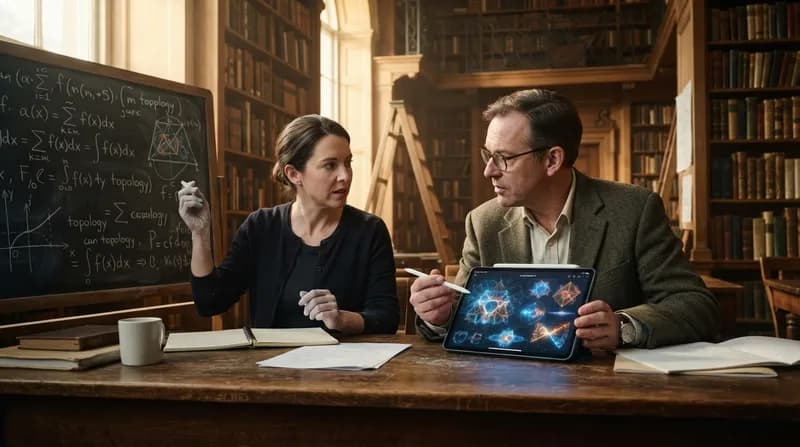
Alpöge’s journey to this solution was uniquely entwined with AI. He described the process as a high-stakes, stream-of-consciousness collaboration with Claude, an AI model that he credits with helping him navigate the intense complexity of the problem. Alpöge spoke of the model’s ability to dance and sparkle near the finish line of the proof, effectively acting as an intellectual accelerator that helped him synthesize disparate pieces of the argument. This revelation has sparked a broader conversation about the future of scientific discovery, raising questions about whether the next generation of mathematical breakthroughs will inevitably be co-authored by frontier models.
Despite the success of the Lean-verified proof, Alpöge noted the difficulty of translating such advanced logic into human-intelligible prose. He remains committed to explaining the result to the wider community, acknowledging that while the machine can verify the logic, the human mind must ultimately bridge the gap of understanding to ensure the discovery is fully integrated into the scientific canon. Alongside this massive achievement, Alpöge and collaborator Tristan Buckmaster also released a proof related to the Navier-Stokes equations, further cementing the influence of AI-augmented research in solving intractable, long-standing problems.
The Human-Only Stand
In a fascinating counterpoint, a second proof of the General Riemann hypothesis was released by Stanford postdoctoral fellow Alessandro Masullo. With the backing of Stanford professor and American Mathematics Association president Ravi Vakil, this version represents a purely human effort—a direct assertion that the creative, decade-long struggle of a lone researcher remains a vital component of mathematical progress. Developed over twelve years, the work is being presented as a testament to the endurance and relevance of human mathematicians in an era increasingly defined by rapid, machine-led output.
While this manual proof has not yet been submitted to the same rigors of Lean verification as Alpöge’s, it serves as a powerful symbol. Masullo’s work is intended to reassure researchers who feel unsettled by the shifting climate of their field, emphasizing that deep, individual cognitive work remains an essential part of the pursuit of truth. Whether or not it stands up to the intense scrutiny of the global peer-review process, the existence of this manual effort highlights a profound divide in methodology—a dual future where silicon and spirit compete and cooperate to unveil the secrets of the number system.