A New Strategy for Fusion Power
In a landscape dominated by massive, hardware-intensive experimental reactors, a new player has entered the fusion race with a philosophy rooted firmly in software. Europa Fusion, a U.K.-based startup, has secured backing from Spotify founder Daniel Ek, signaling a potential shift in how the industry approaches the notoriously difficult goal of commercializing fusion energy. The company is led by Nantas Nardelli, a veteran of Google DeepMind, Facebook AI Research, and Microsoft Research Cambridge.
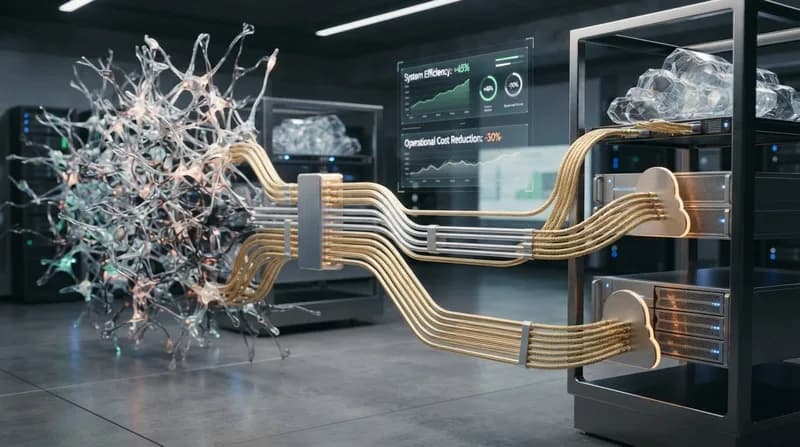
While most competitors in the fusion space focus heavily on building physical demonstration facilities—relying on iterative hardware testing to prove their designs—Nardelli is taking a markedly different path. Drawing on his deep expertise in machine learning and computational modeling, he is steering Europa Fusion toward a data-centric strategy. The core thesis is that fusion power can be accelerated by prioritizing high-fidelity simulations to refine physics theories before investing in heavy infrastructure.
The Pulsed-Power Advantage
Europa Fusion is leaning into the pulsed-power approach to generate energy. This technique involves delivering massive, precisely timed surges of electrical current to compress fuel targets. The resulting pressure forces atoms to fuse, releasing a significant amount of energy. While the physics of pulsed power are well-understood in laboratory settings, scaling the technology to supply a stable, consistent output to the national grid remains a daunting engineering challenge.
Nardelli, who previously served as the head of machine learning at Pacific Fusion, believes that the path to a viable power plant lies in bridging the gap between electronic control engineering and advanced AI simulation. By refining the timing and precision of these electrical pulses through software, the company aims to optimize energy yields far more efficiently than traditional trial-and-error hardware development cycles.
Why It Matters
- AI Energy Demand: As the massive compute requirements for large language models and AI infrastructure continue to strain global energy grids, the industry is increasingly looking for carbon-free, high-density power sources. Fusion represents the 'holy grail' of climate-neutral energy.
- Shift in Methodology: The transition from hardware-first to simulation-first development could dramatically reduce the 'time to market' for clean energy startups, allowing them to fail fast in the digital realm rather than on the test floor.
- Industry Legitimacy: The involvement of high-profile tech investors like Daniel Ek provides both the capital and the mandate necessary for deep-tech ventures to pursue high-risk, high-reward solutions to global climate change.
Ultimately, Nardelli’s pivot from the AI sector to energy reflects a growing trend among elite researchers who view the climate crisis as the most critical 'system engineering' problem of our time. Whether Europa Fusion can turn this data-heavy approach into a functioning power plant remains to be seen, but it is clear that the future of energy production may be written in lines of code as much as it is forged in magnetic fields.