E-BUZZ ME Logo
ScienceTechnical Deep Dive

Primal Attraction: Why Humans and Chimpanzees Share a Fascination for Crystals

Published
Primal Attraction: Why Humans and Chimpanzees Share a Fascination for Crystals
1 min read195 words

The Gist

New observations of chimpanzees suggest that our ancient ancestors' obsession with crystals may be rooted in deep-seated biological curiosity rather than practical utility.

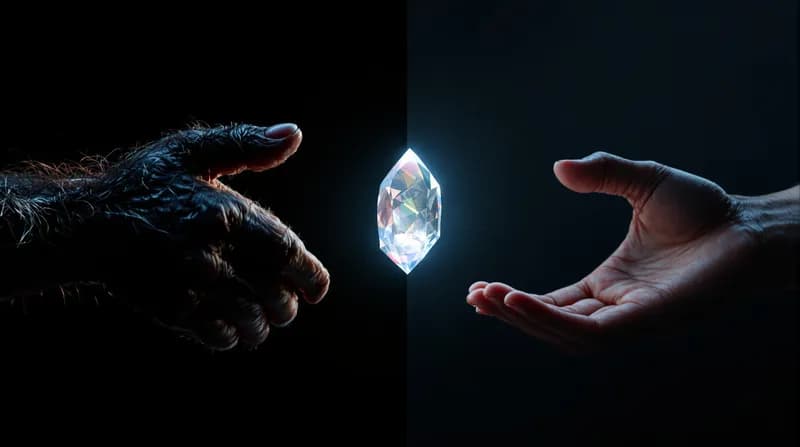
For nearly 780,000 years, humans have been collecting crystals, a behavior that predates many of our most basic technological advancements. Recent studies involving chimpanzees may finally offer an explanation for this long-standing archaeological mystery, suggesting that the attraction to these minerals is an evolutionary trait shared with our closest living relatives.

A Preference for the Extraordinary

Researchers observed that when presented with a variety of geological materials, chimpanzees consistently showed a remarkable attraction to crystals. The primates frequently chose crystalline structures over ordinary stones, often spending significant periods of time studying them with intense curiosity. This behavior indicates that the physical properties of crystals—such as their transparency, symmetry, and light-reflecting qualities—trigger a specific cognitive response.

Beyond Practical Utility

The findings suggest that early humans likely began collecting crystals long before they found any practical or symbolic use for them. While crystals were eventually used for tools or ritualistic purposes, their initial appeal appears to have been purely aesthetic or curiosity-driven. By observing similar patterns in chimpanzees, scientists believe that the human drive to seek out unusual or 'beautiful' objects in nature is a primal instinct that has shaped our cognitive development for hundreds of millennia.


Related Stories

Semantically matched articles, ranked by topic overlap and freshness.

Ancient 500,000-Year-Old Elephant Bone Hammer Rewrites Early Human Toolmaking History
Science73%

Ancient 500,000-Year-Old Elephant Bone Hammer Rewrites Early Human Toolmaking History

A rare discovery in England reveals that ancient humans crafted reusable hammers from elephant bone to sharpen stone tools nearly half a million years ago.

Mapping the Mind: Two Neural Pathways Explain Habit Formation
Science66%

Mapping the Mind: Two Neural Pathways Explain Habit Formation

New research identifies the specific brain mechanisms that transition deliberate actions into automatic routines, explaining why some habits feel harder to break than others.

Working Memory Rapidly Re-Prioritizes After Distractions, New Study Reveals
Science64%

Working Memory Rapidly Re-Prioritizes After Distractions, New Study Reveals

A new study highlights the brain's remarkable ability to swiftly update working memory priorities to maintain focus on immediate tasks despite frequent interruptions.

Innovative Treadmill Therapy Shows Promise for PTSD Recovery
Science60%

Innovative Treadmill Therapy Shows Promise for PTSD Recovery

Researchers at the University of Alberta have found that combining physical motion with memory confrontation significantly improves PTSD treatment outcomes.

Astronomers Detect Massive Wandering Black Hole via Stellar Destruction
Science60%

Astronomers Detect Massive Wandering Black Hole via Stellar Destruction

A supermassive black hole has been identified straying far from its galactic center after it was caught consuming a nearby star.

Sparkling Water vs. Soda: New Study Evaluates Impact on Dental Health
Science60%

Sparkling Water vs. Soda: New Study Evaluates Impact on Dental Health

A recent study suggests that unsweetened sparkling water is a significantly safer choice for dental health compared to sugar-sweetened carbonated beverages.

A $9 Physical Key Designed to Lock Your Most Addictive Apps
Artificial Intelligence59%

A $9 Physical Key Designed to Lock Your Most Addictive Apps

A new NFC-based physical key aims to curb smartphone addiction by requiring a manual scan to unlock distracting applications.

The Impact of Ultra-Processed Foods on Long-Term Brain Health
Science59%

The Impact of Ultra-Processed Foods on Long-Term Brain Health

New research highlights a concerning link between ultra-processed diets and increased risks of depression, anxiety, and dementia.