The Hidden Impact of Arm Position
In the world of preventative medicine, few diagnostics are as ubiquitous as the blood pressure check. It is a standard procedure in almost every clinic visit, yet a groundbreaking study from Johns Hopkins Medicine suggests that we may be getting the data wrong for millions of patients. Research published in JAMA Internal Medicine has identified that the simple act of leaving an arm unsupported during an automated screening can cause systolic blood pressure readings to spike by as much as 6.5 mmHg.
For many patients, this margin of error is not merely a technicality—it is the difference between a healthy reading and a clinical diagnosis of stage 2 hypertension. With the American Heart Association estimating that nearly half of all U.S. adults suffer from elevated blood pressure, the stakes for accuracy are incredibly high. If a patient is consistently diagnosed based on flawed positioning, they may be subjected to unnecessary medication, increased healthcare costs, and the psychological burden of a chronic disease label.
The Anatomy of an Error
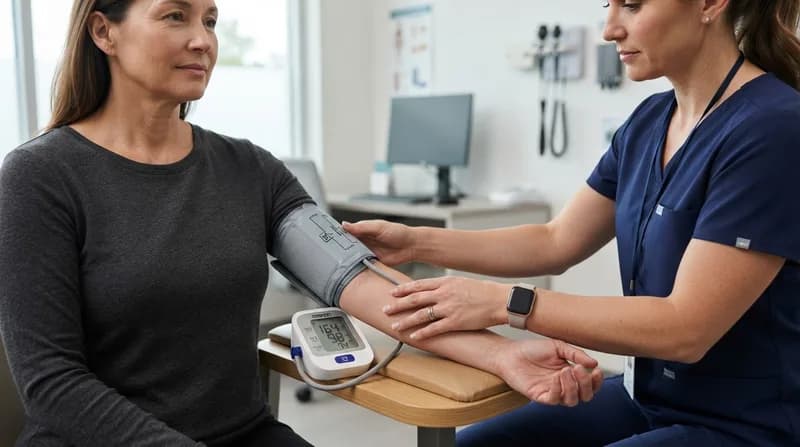
The research team at Johns Hopkins compared three distinct arm positions: the gold-standard approach where the arm is supported on a desk, an arm resting in the lap, and an arm hanging unsupported by the patient’s side. The results were startling. Resting the arm in the lap inflated systolic readings by nearly 4 mmHg. When the arm was left hanging unsupported at the side, the systolic pressure was overinflated by approximately 6.5 mmHg.
The study highlights a recurring issue in modern clinical environments. Despite formal guidelines stating that a patient’s arm should be supported at mid-heart level on a desk or table, the reality of time-pressed medical offices often leads to shortcuts. Whether a patient sits on an exam table with their arm dangling or a clinician holds the limb, the lack of a stable, consistent surface compromises the reliability of the electronic cuff. Researchers emphasize that these findings specifically relate to automated devices, which are currently the industry standard for both home monitoring and professional diagnostics.
Why it Matters
- Diagnostic Accuracy: An artificial jump of 6.5 mmHg can push a patient from a borderline 123 systolic reading into the 130 range, or worse, elevate a 133 reading into the territory of stage 2 hypertension (140+).
- Patient Advocacy: The study urges patients to be proactive. If you are in a clinic, ensure your back is supported, your feet are flat on the floor, and your arm is resting firmly on a surface at heart level.
- Systemic Risks: Because hypertension is often a 'silent killer' with few symptoms, relying on inaccurate screenings could result in missed opportunities for early intervention or, conversely, overtreatment of patients who are actually within a healthy range.
Refining Clinical Protocols
The research findings serve as a stark reminder that clinical precision depends on the adherence to established guidelines. The American Heart Association has long recommended that the middle of the blood pressure cuff should be aligned with the mid-heart level, supported by a flat, stationary surface. However, the Johns Hopkins study suggests that bridging the gap between guideline and practice is essential to reducing diagnostic errors.
For those managing their health at home, the implications are just as critical. Many home users purchase automated monitors but lack the dedicated furniture or knowledge to ensure proper arm positioning. Ensuring that the device is at the correct height and that the arm is fully supported is not just a 'nice-to-have'—it is a fundamental requirement for obtaining valid, actionable data that doctors can trust when making long-term treatment decisions.