The Evolution of a Sports Car Icon
The transition to electrification is rarely easy for a brand defined by the mechanical symphony of flat-six engines, but Porsche is charting a bold path forward with the all-electric 718 Boxster. While the automaker has successfully integrated electric power into its SUVs and the Taycan sedan, the Boxster represents a different challenge: proving that a dedicated, open-top sports car can retain its visceral character without the combustion engine. By shifting from a traditional mid-engine petrol layout to a battery-electric architecture, Porsche is not just updating a model; it is rewriting the rules for what constitutes a driver-focused roadster.
Performance That Defies Expectations
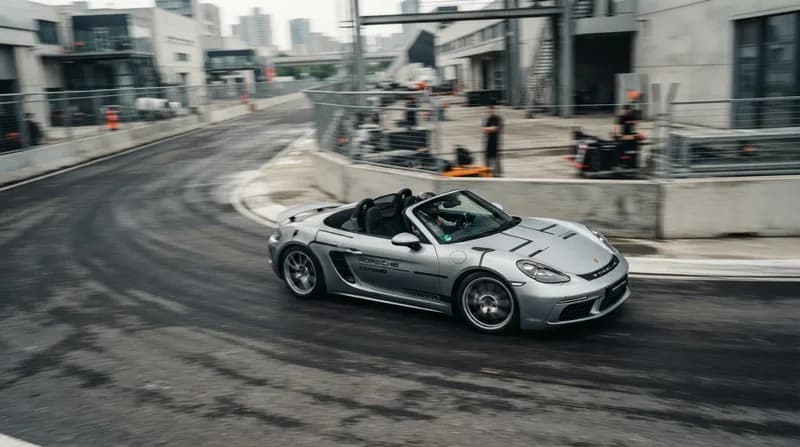
Engineering prototypes are currently undergoing rigorous testing on demanding mountain passes, proving that the electric Boxster is more than just a city cruiser. With a powertrain delivering over 500 horsepower, this iteration stands as the most powerful Boxster in the three-decade history of the nameplate. Performance metrics are staggering, with a sub-three-second sprint time that leaves even many variants of the legendary 911 in its wake. With a top speed exceeding 250 km/h, the vehicle positions itself as a dominant force in the electric performance segment.
Immersive Tech and Mechanical Soul
To bridge the gap between electric efficiency and sports car passion, Porsche has introduced several innovative features designed to engage the driver. Central to this is the 'E-Shift' transmission, which mimics the behavior of a traditional dual-clutch PDK system. Through steering-wheel-mounted paddles, drivers can navigate virtual gear changes complete with momentary power interruptions and a simulated redline near 8,000 rpm. This is paired with an artificial, yet deeply resonant, engine sound system that recreates the iconic howl of a flat-six, echoing through tunnels and downshifts with convincing authority.
Perhaps most importantly for handling dynamics, Porsche has bucked the trend of placing batteries entirely in the floor. By positioning the battery pack in a large block behind the seats—mimicking the classic mid-engine layout—the engineers have preserved the low seating position and ideal weight distribution that enthusiasts crave. The chassis, featuring components derived from the 911 and newly implemented rear-wheel steering, ensures that the vehicle maintains the agility expected of a Porsche roadster.
Technical Outlook and Market Strategy
- Architecture: An advanced 800-volt system designed for rapid charging capabilities.
- Performance: Over 500 PS output with acceleration under 3 seconds.
- Range: Estimated WLTP range between 400 and 500 kilometres, supported by a battery capacity projected between 70 and 80 kWh.
- Dynamics: Rear-wheel steering and a mid-mounted battery configuration for optimal balance.
From an economic perspective, the electric Boxster arrives with a competitive edge. By targeting a starting price point below €100,000, Porsche is positioning the vehicle as a more accessible entry point to the brand's high-performance lineup, effectively costing at least a third less than comparable combustion-powered sports cars. With the world premiere scheduled for mid-2026 and customer deliveries following shortly thereafter, the electric Boxster is poised to define a new era for Stuttgart’s sports car division, while the 911 remains the company’s dedicated stronghold for internal combustion purity.