The Future of Hands-Free Energy
The transition to electric mobility is often hampered by the mundane reality of plugging in cables. Addressing this friction, automotive supplier Mahle has introduced the Park & Charge Pilot, a transformative system that merges autonomous vehicle navigation with inductive charging. By allowing a vehicle to autonomously locate and park over a charging pad, Mahle is shifting the paradigm from manual refueling to a completely automated energy management process.
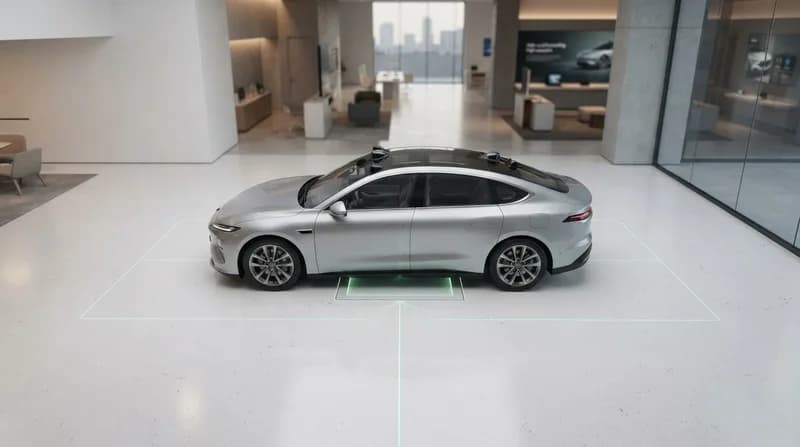
The system utilizes advanced AI-based algorithms that process visual data from existing vehicle cameras to identify charging-enabled parking bays. By eliminating the need for additional, costly sensors, Mahle’s solution is positioned to be more accessible for integration into mass-market vehicles. Once the vehicle identifies the spot, the proprietary Differential Inductive Positioning System (DIPS)—a technology already recognized as a global standard by SAE International—ensures millimeter-perfect alignment over the floor-mounted transmitter.
Efficiency and Technical Specifications
While wireless charging has historically struggled with energy loss, Mahle claims its latest iteration achieves an efficiency rating of over 92 percent in real-world scenarios. This puts the technology on par with traditional plug-in charging stations. The system currently supports charging outputs of up to 11 kW, offering a viable solution for overnight home charging or efficient top-ups in commercial parking facilities. Furthermore, the hardware is built with future-proofing in mind, as it supports bidirectional charging, enabling the vehicle to act as a mobile power bank for home energy management systems.
Testing for the platform is currently underway in collaboration with the BMW Group using a modified BMW iX3. To accelerate development, Mahle has repurposed a former internal combustion engine test facility in Stuttgart. This high-tech lab allows engineers to simulate various vehicle architectures, test foreign object detection safety protocols, and measure electromagnetic stray fields under strictly controlled conditions. The testing infrastructure is already configured to accommodate future iterations of the technology, which are being designed to handle up to 30 kW of power delivery.
Why It Matters
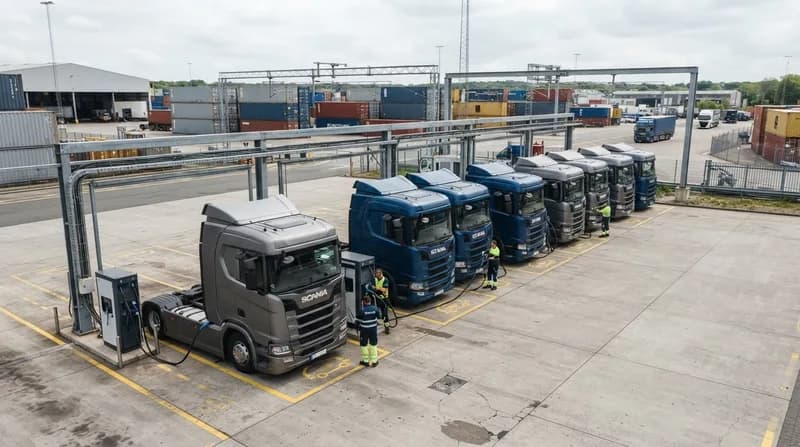
For private owners, the convenience of walking away from a car while it begins to charge itself is a significant quality-of-life upgrade. However, the true potential of the Park & Charge Pilot lies in the commercial sector. Fleet operators, such as car rental agencies, logistics companies, and last-mile delivery services, stand to gain massive operational efficiencies. By automating the charging of a fleet, companies can ensure that vehicles are consistently topped up without requiring manual intervention, thereby reducing downtime and labor costs associated with vehicle maintenance and refueling.
As Mahle continues to refine the system, the focus remains on high-density deployment. By standardizing the positioning process and maintaining high power efficiency, the company is laying the groundwork for a future where 'refueling' an electric vehicle becomes a background task rather than a deliberate chore.