Revolutionizing Robot Simulation
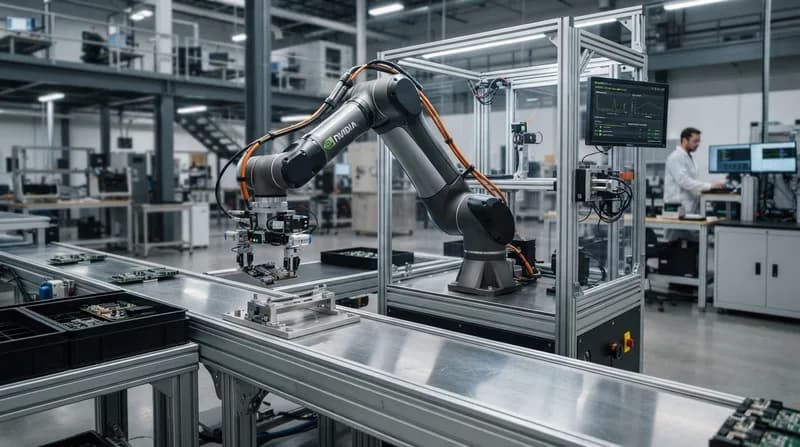
Training autonomous robots for real-world industrial tasks has historically been hampered by the 'reality gap'—the difficulty of translating virtual training into physical success. NVIDIA is bridging this divide by introducing its new library of SimReady assets, specifically curated for complex pick-and-place applications. Hosted on Hugging Face, these assets provide developers with the high-fidelity geometry and physics properties necessary to train sophisticated AI agents in a virtual environment before they ever touch a physical assembly line.
By utilizing these standardized, simulation-ready objects, developers can significantly reduce the engineering hours required to build robust training simulations. The library includes detailed models of industrial components and grippers, all pre-configured to interact correctly with physics engines. This level of preparation ensures that the AI models learn object manipulation, collision avoidance, and force application in scenarios that mirror the nuances of actual factory floors.
Why It Matters
- Reduced Development Time: Eliminates the need for manual asset creation and tedious physical property tuning.
- Bridge the Reality Gap: Enhances the transferability of learned behaviors from simulation to hardware.
- Standardization: Provides a universal baseline for researchers and developers to compare robotic performance metrics.
- Scalability: Enables massive parallel training sessions within NVIDIA Omniverse, accelerating the maturation of robotic vision and control systems.
The move to host these assets on Hugging Face reflects a broader industry shift toward open collaboration in AI-driven robotics. By democratizing access to these specialized simulation tools, NVIDIA is lowering the barrier for entry for teams looking to implement high-precision automation. As AI models for robotics evolve, having a reliable, physics-accurate dataset to train against is no longer just a luxury—it is a foundational requirement for the next generation of smart manufacturing systems. This initiative signals that the future of robotics will be built in the cloud, refined by simulation, and deployed with unprecedented speed into physical spaces.