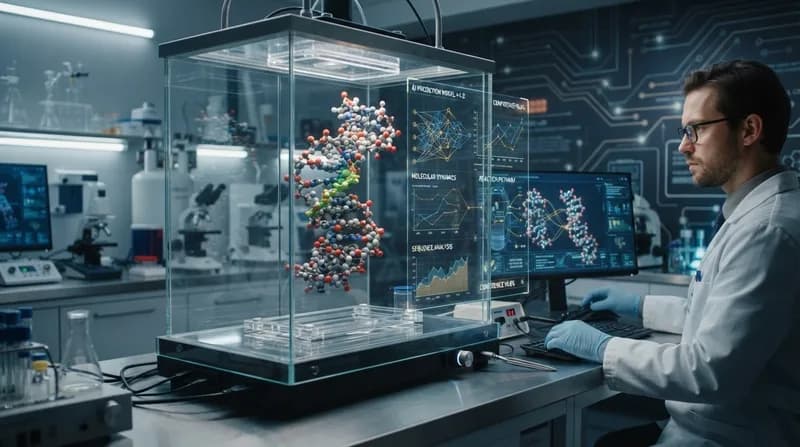
Bridging the Gap Between AI and Drug Discovery
The quest to develop life-saving medication is often a game of trade-offs. Medicinal chemists spend years balancing efficacy against metabolic stability—often finding that a compound that binds perfectly to a disease-related protein is simultaneously poor at crossing cellular barriers or prone to rapid breakdown in the liver. To help accelerate this labor-intensive process, OpenAI has introduced MedChemBench, a specialized benchmark designed to measure an AI model's ability to reason through the complex nuances of drug design.
By drawing from a dataset of 117 patents and research papers, MedChemBench presents models with 99 distinct problems that mirror the hurdles faced in modern pharmacology. Rather than simply memorizing chemical formulas, the benchmark tests a model's capacity to interpret experimental evidence, reconstruct molecular structures from chemical drawings, and predict how structural modifications will influence a compound's behavior in biological systems.
Evaluating Core Competencies
MedChemBench provides a rigorous assessment framework by focusing on four primary pillars of chemical research. First, it examines molecular structure reconstruction, requiring the model to correctly interpret and assemble atom connections, ring structures, and stereochemistry. Second, it tests scientific reasoning, where the model must justify why a specific compound might be superior to another based on provided data. Third, it assesses ranking and selection, asking the AI to choose the most viable candidates for further testing. Finally, it measures numerical prediction, evaluating the model's ability to estimate physical properties that match actual experimental values.
The benchmark highlights the significant performance gap between model generations. In recent tests at the highest reasoning settings, the GPT-6 Astra model achieved an 83.3% success rate, showcasing a strong grasp of structural reconstruction—where it scored an impressive 95.4%—and scientific explanation. Conversely, earlier iterations like the GPT-5.6 series struggled significantly, often failing to maintain the integrity of complex ring structures or incorrectly fragmenting molecules.
Why It Matters
The complexity of drug discovery lies in the fact that chemical changes are rarely unidirectional; enhancing one property often compromises another. For instance, in studies regarding PRMT5 inhibitors—a focus of cancer research—the benchmark requires models to account for the simultaneous behavior of compounds across multiple metrics: target inhibition, cell permeability, and metabolic resistance. If an AI cannot accurately reconstruct the molecule, its subsequent predictions regarding these trade-offs are effectively useless. MedChemBench serves as a crucial "reality check," ensuring that as foundation models advance, they aren't just hallucinating chemistry but are instead building a robust internal representation of molecular physics and logic.
Outlook and Future Implications
While the initial results are promising, OpenAI acknowledges that this benchmark is merely a starting point. The current testing parameters require models to operate without the benefit of external tools, live feedback loops, or real-time lab experiments. Furthermore, the risk of data contamination—where a model might have encountered the published source material during its initial training—remains a factor that developers must continue to mitigate.
Ultimately, MedChemBench is not intended to replace the medicinal chemist or to guarantee the discovery of new drugs overnight. Instead, it acts as a diagnostic tool for researchers to identify where AI reasoning falters and where it excels. By pinpointing these limitations, developers can better steer the evolution of future AI architectures, moving closer to a future where high-speed computational modeling can reliably assist in the design of superior pharmaceutical therapies.