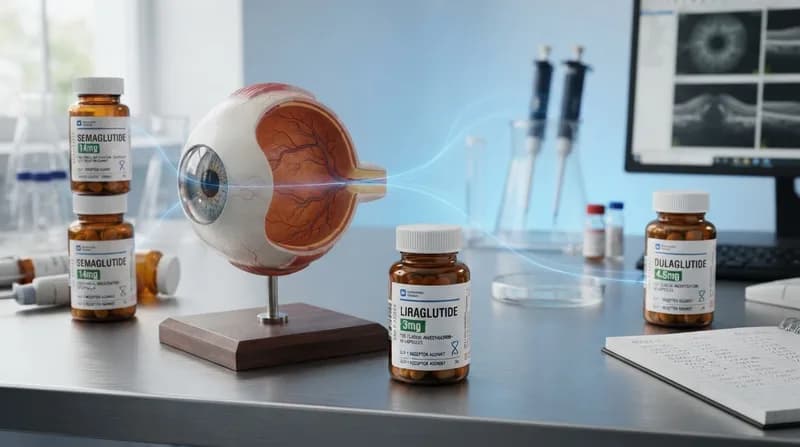
Emerging Health Concerns for GLP-1 Users
As the global adoption of glucagon-like peptide-1 (GLP-1) receptor agonists continues to surge, a significant new study has surfaced concerning their potential side effects. A team of researchers from Rutgers University has linked popular medications, including semaglutide (marketed as Ozempic and Wegovy) and tirzepatide (marketed as Mounjaro and Zepbound), to an increased risk of a rare, often permanent form of vision loss known as ischemic optic neuropathy.
Ischemic optic neuropathy occurs when the flow of blood to the optic nerve is restricted. Because the optic nerve serves as the essential conduit for visual data traveling from the eye to the brain, any compromise to its blood supply can lead to significant and sudden impairment. The study, published in the Annals of Internal Medicine, analyzed health data from a broad demographic of U.S. adults between the ages of 18 and 65 who were managing Type 2 diabetes.
Understanding the Risk Profile
While the findings have garnered attention, researchers are quick to emphasize that the absolute risk remains quite low. The data indicates an increase of approximately three to four additional cases per 10,000 patients treated with GLP-1 agonists over an 18-month duration. Despite these small numbers, the clinical significance of the condition—which can result in sudden vision loss—makes it a critical consideration for both medical practitioners and patients.
The research highlighted that the risk was not uniform across all users. Cases were notably more frequent among men and individuals within the 50 to 65 age bracket. The condition, specifically non-arteritic anterior ischemic optic neuropathy, typically manifests as sudden blurriness, dimming, or the loss of specific segments of an individual's visual field. While some patients see partial recovery within the first six months, the damage is frequently permanent, underscoring the need for immediate ophthalmological evaluation if sudden changes in vision occur.
Context and Future Research
It is important to note that this study identifies an association rather than proving a definitive causal link. The researchers acknowledge that other underlying health factors inherent to patients managing diabetes or obesity could play a role in these outcomes. As such, the study serves primarily as a call for heightened vigilance and continued safety monitoring.
- Focus Area: Ischemic optic neuropathy, a condition involving reduced blood flow to the optic nerve.
- Medications Included: Semaglutide (Ozempic, Wegovy) and tirzepatide (Mounjaro, Zepbound).
- Key Demographic at Risk: Primarily men and adults aged 50-65.
- Clinical Recommendation: Patients should monitor for sudden visual changes and seek prompt medical attention.
The medical community continues to explore the full spectrum of effects associated with these powerful medications. While GLP-1 drugs remain highly effective for managing diabetes and obesity, as well as reducing the risk of associated cardiovascular issues, this research emphasizes that patient safety monitoring must evolve in tandem with the widespread global prescription of these treatments.