The Humidity Hurdle
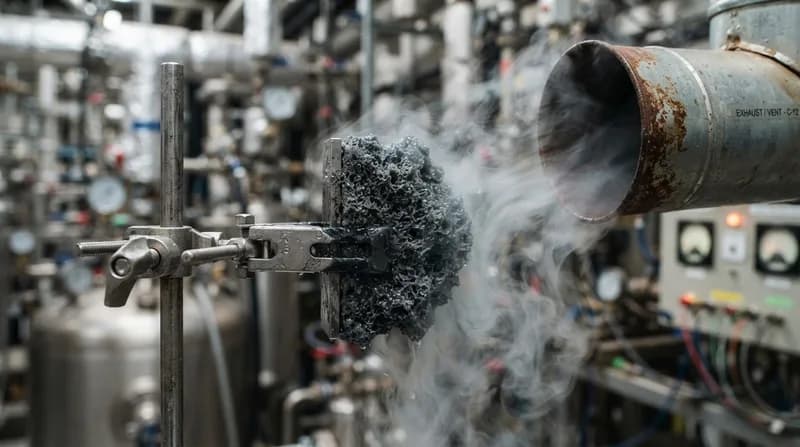
For years, the goal of industrial carbon capture has been stifled by a persistent chemical rivalry: water vapor. While technologies like metal-organic frameworks (MOFs) have shown immense promise as molecular sponges for trapping carbon dioxide, they have historically struggled in real-world industrial settings. In many factory exhaust systems, high humidity levels cause water molecules to crowd out carbon dioxide, effectively neutralizing the capture material's efficiency. Historically, the solution has been to pre-dry industrial gases, but the massive energy and equipment costs required for that step have often rendered carbon capture economically unviable.
A team of researchers at Oregon State University has developed a breakthrough material, dubbed BVR-X, that flips this narrative on its head. Rather than viewing moisture as an impediment to be removed, BVR-X utilizes a unique structural design that allows the material to function optimally even in high-humidity conditions. This innovation could provide the missing link needed to make carbon sequestration a routine, affordable, and practical component of modern industrial operations.
The Engineering Behind BVR-X
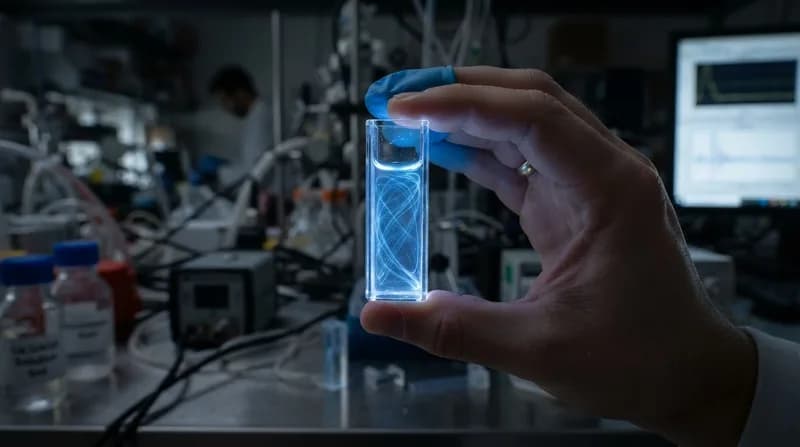
BVR-X belongs to the class of materials known as metal-organic frameworks (MOFs). These are highly modular, crystalline architectures composed of positively charged metal ions linked together by organic molecules, forming a series of microscopic, cage-like pores. The genius of the BVR-X design lies in its internal organization. By engineering the internal surface of these pores to be spatially compartmentalized, the researchers have managed to direct water and carbon dioxide molecules into distinct, separate regions within the material.
Because the water vapor is essentially quarantined from the carbon-trapping zones, it no longer competes for space. This structural sophistication allows the material to continue absorbing CO2 effectively, even when the emission stream is highly saturated with water. The adaptability of MOFs—where scientists can theoretically combine millions of different metal and organic permutations—suggests that BVR-X is not just a one-off success, but a proof-of-concept for a new generation of selective, site-specific capture materials.
Why It Matters: Bridging the Industrial Gap
The potential implications for climate mitigation are substantial. Currently, industrial processes such as fossil fuel-based energy production account for roughly 30% of greenhouse gas emissions in the United States. While direct air capture technologies are emerging, intercepting CO2 directly from industrial exhaust remains a more established and immediate pathway for reducing the net carbon output of the world's most carbon-intensive facilities.
- Resilience: BVR-X maintains high performance in environments with significant water vapor, mimicking real-world industrial conditions.
- Durability: The material has been proven to undergo dozens of capture-and-release cycles without losing efficiency, a critical requirement for commercial sustainability.
- Efficiency: By eliminating the need for energy-intensive gas dehydration, the overall cost-per-ton of captured CO2 is significantly reduced.
The research team, which includes collaborators from the University of California, Berkeley, and the ARAMCO Research and Development Center, has already filed for a patent on the innovation. By successfully demonstrating the material's ability to extract CO2 from gas streams containing only 4% carbon dioxide—a concentration typical of natural gas burning—the team has moved the needle toward a more sustainable future for industrial manufacturing.