E-BUZZ ME Logo
ScienceTechnical Deep Dive

Metamaterial Breakthrough Enhances MRI Imaging for Brain and Eyes

Published
Metamaterial Breakthrough Enhances MRI Imaging for Brain and Eyes
1 min read189 words

The Gist

Researchers have redesigned MRI hardware using metamaterials to produce high-resolution images of the brain and eye in record time.

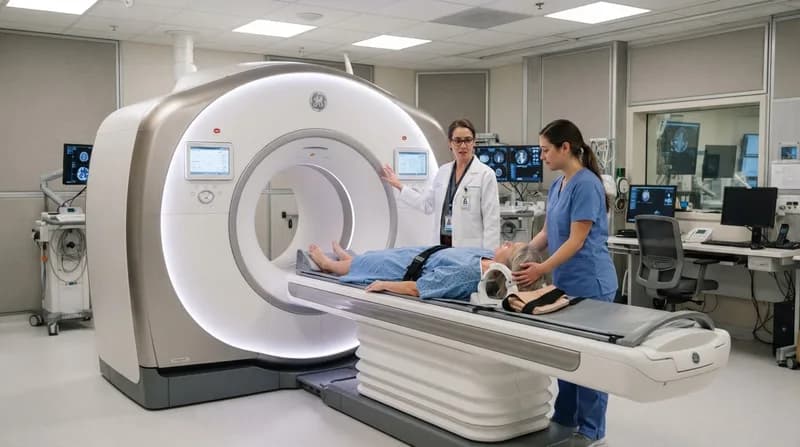
A significant advancement in medical imaging technology has emerged as scientists successfully redesigned critical MRI hardware using metamaterials. This innovation allows existing scanners to capture significantly clearer images of complex anatomical structures, such as the human eye and brain, which have historically been difficult to visualize with high precision.

Enhanced Precision and Efficiency

By integrating metamaterials—engineered materials with properties not found in nature—into the MRI coil systems, researchers have boosted the sensitivity of the scanning process. This improvement enables the hardware to produce superior image quality without requiring the purchase of entirely new, expensive MRI machines. The resulting scans offer a level of detail previously unattainable, providing a clearer window into the neurological and ocular systems.

Improving Patient Outcomes

Beyond technical clarity, this breakthrough has practical implications for patient care. The increased efficiency means that scans can be completed in less time, reducing the duration patients must remain still inside the scanner. This not only improves patient comfort but also increases the throughput of diagnostic facilities. Experts believe this development will lead to more accurate diagnoses and pave the way for novel medical imaging applications and targeted treatment strategies.

Related Stories

Semantically matched articles, ranked by topic overlap and freshness.

Breakthrough Fluoride-Free Gel Could Regrow Damaged Tooth Enamel
Science69%

Breakthrough Fluoride-Free Gel Could Regrow Damaged Tooth Enamel

Researchers have developed a protein-inspired gel that mimics natural tooth formation to repair microscopic cracks and rebuild enamel.

The Future of Medical Imaging: Insights from Simon R. Cherry
Science65%

The Future of Medical Imaging: Insights from Simon R. Cherry

Former PMB editor-in-chief Simon R. Cherry discusses the evolving landscape of molecular imaging and non-invasive technologies in medical physics.

Neural Switch Discovered Controlling Bee Colony Labor Division
Science65%

Neural Switch Discovered Controlling Bee Colony Labor Division

Researchers have identified specific brain circuits that dictate the professional roles of honeybees as they age.

Predictable Antarctic Ice Loss Offers Decades for Sea Level Preparation
Science63%

Predictable Antarctic Ice Loss Offers Decades for Sea Level Preparation

New research suggests that Antarctic ice retreat may remain predictable through 2050, giving governments a critical window to implement coastal defenses.

Natural Plant Compound Shows Promise in Combating Rheumatoid Arthritis
Science63%

Natural Plant Compound Shows Promise in Combating Rheumatoid Arthritis

Researchers have identified a plant-derived compound that reduces joint damage and rebalances immune activity in animal models, offering a potential new treatment pathway.

Simple AI Prompt Resolves Decades-Old Mathematical Conjecture
Science62%

Simple AI Prompt Resolves Decades-Old Mathematical Conjecture

For the second time in a week, artificial intelligence has disproved a long-standing mathematical conjecture using surprisingly basic prompts.

Acoustic Stimulation: Can Sound Frequencies Boost Crop Yields?
Science62%

Acoustic Stimulation: Can Sound Frequencies Boost Crop Yields?

Startup Haivya is utilizing specialized acoustic signals to boost plant development, reporting significant yield increases in crops like soybean and pepper.

NASA to Conduct Orbital Rehearsals with SpaceX and Blue Origin Landers
Science61%

NASA to Conduct Orbital Rehearsals with SpaceX and Blue Origin Landers

NASA astronauts will perform critical docking tests with prototype lunar landers from SpaceX and Blue Origin during the Artemis III mission in 2027.