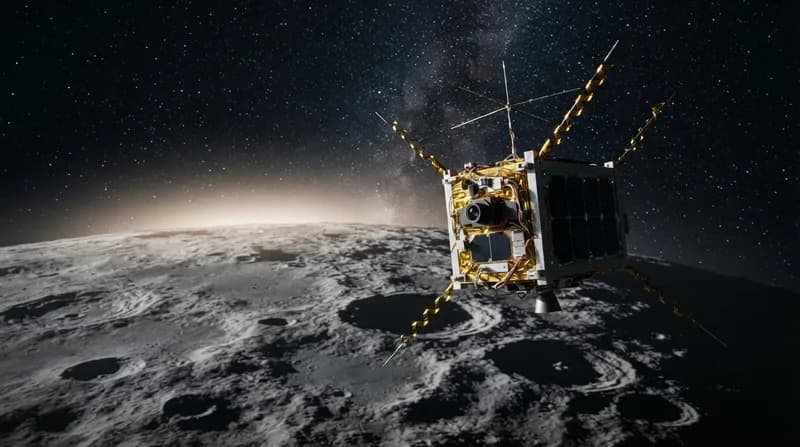
A groundbreaking discovery in deep space is forcing astronomers to rethink the fundamental definition of a moon. Researchers have identified a massive candidate for an 'exosatellite' within a unique three-tiered hierarchical system centered around the star CD-35 2722.
A Complex Orbital Dance
The system's structure is notably complex: the primary star, CD-35 2722, is orbited by a brown dwarf—an object often described as a 'failed star' because it is more massive than a planet but lacks the mass to sustain nuclear fusion. In a surprising twist, this brown dwarf is itself orbited by a newly discovered body, classified as an exosatellite candidate.
Redefining Planetary Science
This discovery is significant because of the scale involved. While we are accustomed to moons orbiting planets, the existence of a giant satellite orbiting a brown dwarf blurs the lines between planetary and stellar classifications. This hierarchical arrangement provides new insights into how celestial bodies form and remain gravitationally bound in multi-object systems.