The Privacy Paradox in AI
As AI agents become increasingly ingrained in our digital workflows, the inherent trade-off between productivity and privacy has never been more apparent. Users are increasingly forced to choose between the convenience of automated assistants—which can scan emails, manage calendars, and navigate browsers—and the security of their personal information. Maple, a startup co-founded by former Apple engineer Mark Suman and security expert Anthony Ronning, is attempting to solve this dilemma by building an AI ecosystem that is fundamentally designed to be "blind" to its users' data.
With a newly closed $5.3 million seed round led by Epic Ventures, Maple is scaling its vision of a zero-knowledge AI architecture. Unlike industry incumbents that may use user interactions to train future models or store sensitive data in accessible cloud environments, Maple employs a hardware-based privacy model that prevents the company from seeing the information flowing through its systems. This approach is intended to provide a secure, auditable experience that appeals to both individual users and security-conscious businesses.
Hardware-Encrypted Intelligence
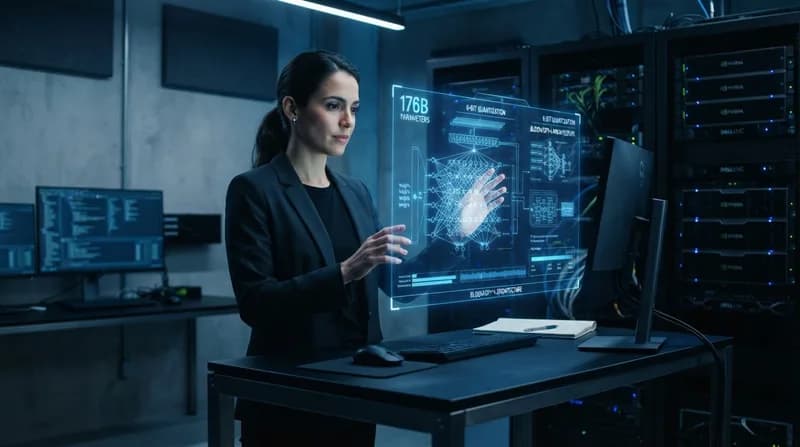
At the core of Maple’s technical infrastructure is the use of Trusted Execution Environments (TEEs). When a user interacts with Maple, their data is encrypted locally on their own device using a unique key known only to them. This encrypted data is then transmitted to a secure, hardware-isolated enclave within a data center. The AI model operates on the decrypted data only within this isolated environment, effectively performing its tasks without ever exposing the raw information to Maple’s own servers or staff. Once the task is complete, the output is re-encrypted before being returned to the user.
This "end-to-end" privacy pipeline means that even in the event of a catastrophic system breach or a government subpoena, Maple would have no readable data to surrender. The company supports this claim through open-source code and verifiable TEE configurations, allowing users and auditors to confirm exactly how the software behaves. The platform is model-agnostic, currently supporting an array of open-source models including DeepSeek, Google’s Gemma, and OpenAI’s GPT OSS, allowing users to select the underlying intelligence that best fits their specific needs.
Expansion into Agentic Workflows
Maple’s product suite is expanding rapidly, transitioning from a simple chatbot interface to a robust "agentic" tool. Its new desktop application, Maple Work, is designed to act as a digital assistant capable of interfacing with local files and third-party apps. A unique feature of this desktop client is its ability to spin up sub-agents that operate under the Agent Client Protocol (ACP), allowing users to delegate specific tasks to other AI models while maintaining a privacy-hardened boundary.
Looking ahead, the company is preparing to launch cloud-based agents that operate independently of the user’s device power state, keeping Maple competitive with major players like Meta’s Muse. With reported growth of 60x over the last quarter, the startup is now focusing on enterprise expansion, pursuing SOC 2 compliance, and planning for a Series A round in early 2027. By positioning itself as a secure utility rather than a data-hungry platform, Maple is carving out a necessary niche in an increasingly automated world.
Why It Matters
- Verification over Trust: By utilizing hardware-level encryption (TEEs), Maple shifts the burden of trust from corporate policies to verifiable technical infrastructure.
- Model Agnostic: The platform allows users to swap between various models, preventing vendor lock-in while maintaining a consistent security layer.
- Enterprise Potential: With the upcoming push into enterprise pilot programs, Maple is targeting organizations that are currently blocked from AI adoption due to strict data residency and privacy regulations.